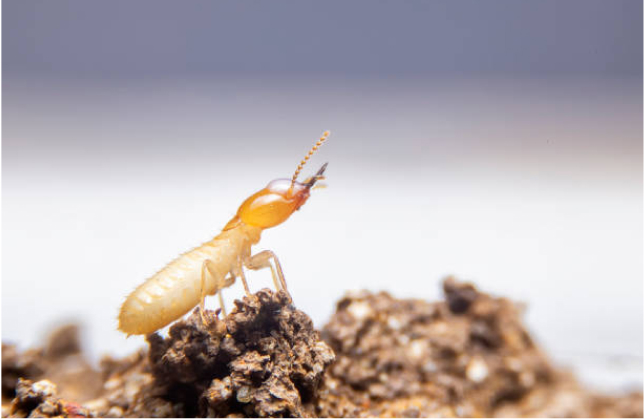
Concrete buildings may appear resistant to termites, but wooden fixtures inside them can still become infested. In Singapore, narrow mud tubes behind cabinets, small pellets beneath furniture or weakened door frames may be the first signs of concealed termite activity.
Effective termite pest control in Singapore begins with identifying the termite species, investigating its entry routes and selecting treatment based on the findings. Subterranean termites can travel through existing cracks and service openings to reach timber, while drywood termites may establish colonies entirely inside wooden doors, cabinets or furniture.
Singapore’s warm, humid climate allows termite activity throughout the year. HDB flats, condominiums, landed houses, offices and industrial buildings can all be affected, although the likely causes and treatment requirements differ.
This guide explains how termites enter concrete structures, how specialists investigate concealed activity, which treatments may be suitable, what treatment costs and how to protect properties during renovations and future maintenance.
Can Termites Damage Concrete Buildings in Singapore?
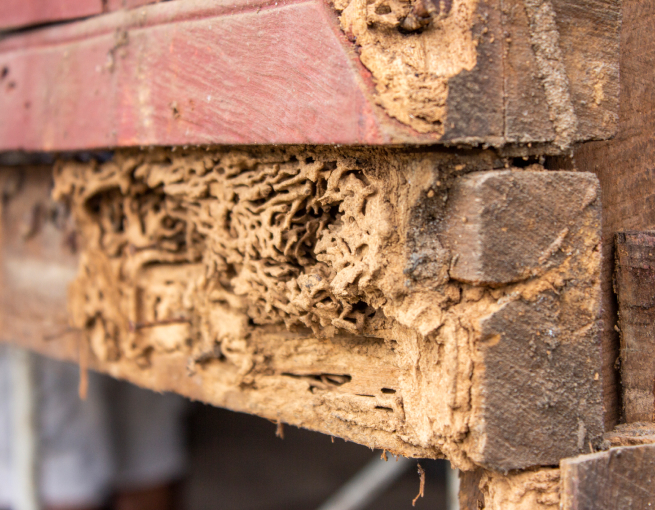
Yes. Termites can damage wooden materials inside concrete buildings, although they do not consume sound concrete as a food source.
Subterranean termites may exploit existing cracks, construction joints, gaps around pipes and other accessible openings to reach timber and cellulose-containing materials.
For example, a reinforced concrete office building may contain wooden doors, built-in cabinets, partitions, shelving and stored cardboard. These materials can provide food even though the main building structure is concrete.
Termite activity may develop behind apparently intact finishes, particularly where concealed routes and suitable moisture conditions are present.
The important distinction is that termites generally use existing openings in concrete as pathways rather than eating through sound concrete.
An effective inspection should therefore investigate both the damaged wooden materials and the routes termites may have used to reach them.
How Do Termites Enter Homes and Commercial Buildings?
Termite entry depends on the species involved, construction details and surrounding environmental conditions.
Subterranean termites commonly approach from soil-connected areas or other suitable moisture sources. Drywood termites can establish colonies directly within wooden materials without requiring an underground connection.
Construction Joints, Cracks and Service Openings
Concrete buildings contain junctions and service penetrations that may create concealed access routes.
These include openings around plumbing pipes, electrical conduits, floor-to-wall joints and other service installations.
Subterranean termites may exploit suitable gaps and construct protective shelter tubes where necessary.
In commercial properties, concealed service corridors and built-in fixtures can make termite activity difficult to trace.
A mud tube discovered inside a kitchen cabinet, for example, may indicate a travel route rather than the actual colony location.
The specialist needs to investigate the surrounding areas instead of assuming the infestation begins and ends at the damaged cabinet.
Wooden Materials Introduced During Renovation
Drywood termites present a different concern because their colonies can remain concealed inside timber.
Furniture, wooden doors, built-in wardrobes and decorative fittings may contain activity that only becomes visible after installation.
A newly renovated shop or apartment is therefore not automatically termite-free.
Small pellets, unexplained openings or unusual timber damage appearing after installation should be investigated.
The objective is to determine whether activity is confined to the affected wooden component or extends into neighbouring fixtures.
Moisture and External Building Conditions
Persistent moisture can create favourable conditions for certain termite groups.
Leaking pipes, poor drainage, deteriorating timber and damp concealed spaces may contribute to termite activity.
Landed properties can have additional exposure through gardens, soil contact and external wooden structures.
Correcting moisture-related defects may therefore be necessary alongside professional treatment.
What Are the Warning Signs of Termites?
The most common signs of termite activity are mud tubes, hollow timber, recurring pellets and discarded wings.
However, these signs do not always confirm that an active infestation remains present.
Mud Tubes Along Walls and Foundations
Subterranean termites construct narrow, brown, soil-like passages known as mud tubes.
These protect termites from dry conditions while allowing movement between feeding areas.
Mud tubes may appear behind cabinets, along skirting boards, near service penetrations and around building foundations.
Their presence indicates that termites have used the route, but it does not necessarily reveal the colony’s location or whether activity continues.
Photograph the tubes and avoid destroying the entire structure before inspection.
Hollow Timber and Damaged Wooden Fixtures
Termites may consume timber internally while leaving its outer surface relatively intact.
Affected materials can become soft, hollow-sounding or fragile.
Common locations include door frames, skirting boards, wooden flooring and built-in cabinets.
However, moisture damage and fungal decay may produce similar symptoms.
A specialist should assess the evidence before concluding that termites are responsible.
If load-bearing timber appears unsafe, arrange an appropriate structural assessment.
Small Pellets Beneath Furniture
Drywood termites produce small, hard pellets known as frass.
These are expelled through tiny openings in infested timber and may accumulate beneath doors, cupboards and wooden furniture.
Recurring pellets can suggest ongoing activity, although their appearance alone is not sufficient for a definite diagnosis.
Photograph the evidence and examine neighbouring wooden fixtures for similar signs.
Discarded Wings Near Windows
Winged reproductive termites may emerge from established colonies and shed their wings after landing.
These wings may accumulate near windows, doors and indoor lights.
A single swarming event does not necessarily confirm a colony inside the property because the insects may have entered from outdoors.
Repeated indoor sightings, particularly alongside timber damage or mud tubes, warrant further investigation.
What Should You Do After Discovering Termites?
If you suspect termites, photograph the evidence, avoid unnecessary disturbance and arrange an inspection.
Household insecticides may kill exposed termites without reaching a concealed colony.
Breaking open mud tubes or dismantling cabinets can also make termite movement harder to investigate.
If termites appear during renovation, avoid immediately covering the affected area with replacement materials.
Preserve the evidence where practical and have the activity assessed before installation continues.
Where timber appears structurally weakened, protecting occupants and arranging a building-safety assessment should take priority.
The first objective is to establish which termites are present, whether they remain active and how extensively the property may be affected.
How Do Specialists Trace Termites Inside Concrete Buildings?
Tracing concealed termite activity requires examining physical evidence, potential access routes and surrounding building conditions.
An inspection should distinguish the location where termites are feeding from the route they may be using to reach that location.
Step 1: Identify the Termite Type
Subterranean termites, drywood termites and dampwood termites have different nesting behaviours.
Subterranean termites commonly maintain connections with soil or moisture sources and may construct mud tubes.
Drywood termites establish colonies inside wood without requiring soil contact.
Dampwood termites are associated with timber containing substantial moisture.
Identifying the termite group helps determine which areas need further examination.
Step 2: Investigate Accessible Routes
The specialist may examine skirting boards, doors, cabinetry, plumbing penetrations, service openings and accessible building perimeters.
For landed properties, external timber, gardens and soil-connected structures may also be relevant.
An important part of the inspection is determining whether evidence appears in several connected locations.
For example, mud tubes extending from a wall junction into adjacent cabinetry may warrant examination of nearby accessible routes.
However, the exact colony location cannot always be established from visible evidence alone.
Step 3: Assess Concealed Activity With Appropriate Tools
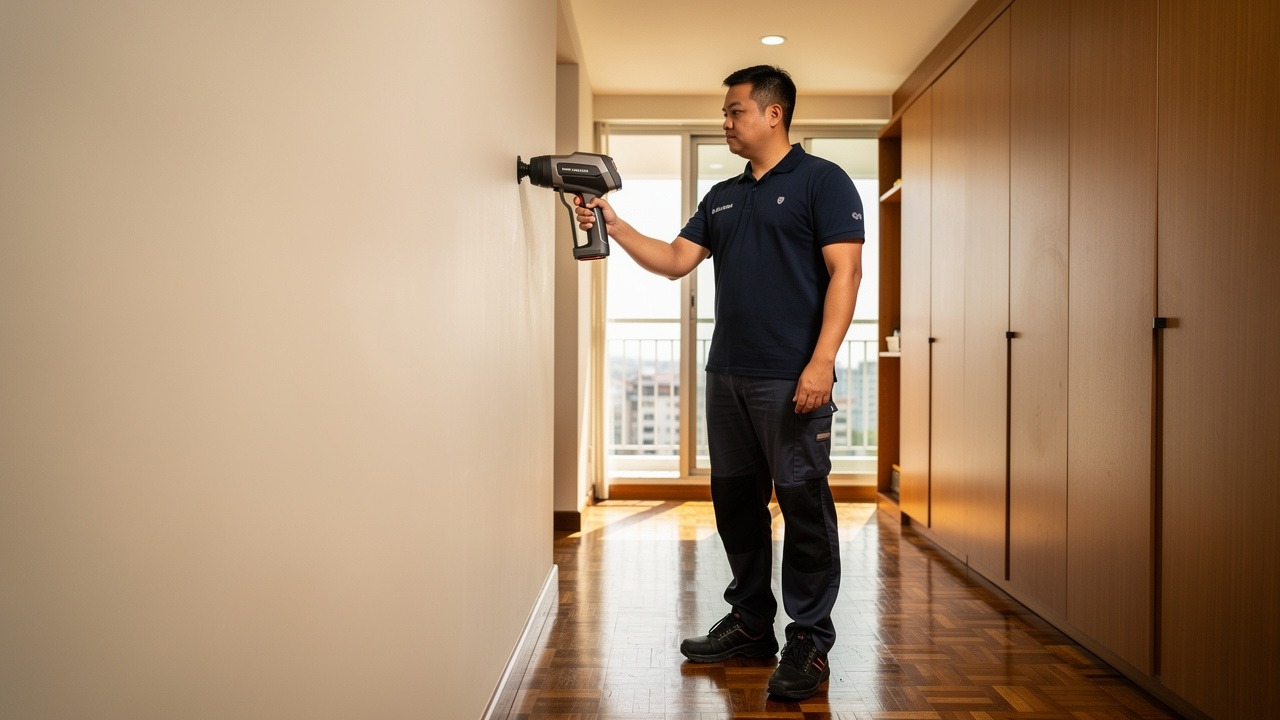
Aardwolf Pestkare uses TermiCam thermal-imaging technology to support suitable investigations involving suspected subterranean termite activity.
Thermal imaging can identify temperature variations that may help direct further examination.
It does not directly photograph every termite through solid surfaces.
Moisture, pipes and surrounding construction materials can also influence temperature readings.
For this reason, thermal imaging should support physical evidence and professional judgement rather than replace them.
Its practical value is helping specialists focus investigations while potentially reducing unnecessary dismantling of built-in structures.
Step 4: Determine Whether Activity Is Current
Not all damaged timber contains active termites.
Damage may remain visible long after a previous infestation has ended.
A specialist may examine live termites, shelter-tube activity, recurring pellets and other relevant findings to assess whether the infestation remains active.
Where concealed areas prevent a definite conclusion, additional investigation or monitoring may be appropriate.
Step 5: Explain the Findings
A useful inspection report should identify the termite type, evidence discovered, affected locations and areas that could not be fully inspected.
It should also explain why the proposed treatment is suitable.
For example, a localised drywood infestation may require treatment directed at one wooden component, while confirmed subterranean activity may call for a colony-focused approach.
The recommendation should follow the evidence rather than rely on a predetermined treatment package.
Which Termite Treatment Is Most Suitable in Singapore?
The appropriate treatment depends on the termite species, infestation extent, building construction and accessibility.
Different methods address different problems.
| Treatment Method | Main Purpose | Suitable Situation | Limitation |
| Termite baiting | Control subterranean colony activity | Confirmed subterranean infestations | Requires feeding and monitoring |
| Soil treatment | Manage termite movement through treated soil | Ground-connected structures | May require drilling or perimeter access |
| Spot treatment | Address activity in a defined location | Localised infestations | May not reach a wider colony |
| Corrective treatment | Address established activity in existing buildings | Confirmed termite entry or feeding areas | Scope depends on site conditions |
| Drywood timber treatment | Reach termites living inside wood | Infested doors, cabinets and furniture | Hidden colonies may require wider assessment |
Termite Baiting for Subterranean Colonies
Termite baiting uses stations containing a suitable food source and active ingredient.
Worker termites discover and consume the bait, allowing its effects to extend beyond the individuals feeding at the station.
The objective is to suppress or eliminate subterranean colony activity.
Baiting may be suitable where the colony is concealed or cannot be accessed directly.
However, it is not an instant process.
Termites must locate and consume the bait, and technicians need to monitor feeding activity and the colony’s response.
Soil Treatment for Ground-Connected Buildings
Soil treatment involves applying an appropriate termiticide to selected soil areas around or beneath a building.
Its purpose is to manage subterranean termite movement through treated soil and help protect structures against soil-connected activity.
It may be considered for landed houses and suitable ground-level commercial properties.
Depending on construction conditions, application may require soil preparation, perimeter access or drilling.
Soil treatment does not necessarily eliminate an existing colony elsewhere.
The proposed work should clarify whether it is intended for protection, corrective control or both.
Corrective and Spot Treatments
Corrective treatment addresses established termite activity in an existing building.
It may involve targeted applications to identified entry routes or affected areas.
Spot treatment focuses on a defined location where activity has been confirmed.
This may be appropriate when the infestation is sufficiently localised.
However, treating one visible location does not guarantee that a larger subterranean colony has been controlled.
Drywood Termite Treatment
Drywood termites require treatment directed at the infested timber.
Depending on the extent and accessibility of the infestation, methods may include targeted applications, appropriate drilling, heat treatment, fumigation or replacement of severely affected materials.
Not every method is suitable for every wooden fixture.
A specialist should determine whether activity is confined to one item or extends into neighbouring timber before selecting the treatment.
Does a New Building or Renovated Shop Need Termite Protection?

Yes. New buildings and renovated premises can still experience termite activity.
Concrete construction does not eliminate existing gaps or service routes, while wooden materials introduced during renovation may already contain concealed drywood colonies.
Before major renovation work, property owners should review any previous termite findings and investigate suspicious timber damage.
If termites are discovered during demolition, preserve the affected area for inspection where practical.
An Illustrative Renovation Scenario
Consider a newly fitted retail shop where mud tubes appear behind a wooden display cabinet.
The building is constructed primarily from concrete, but concealed service openings and wall junctions may provide possible routes.
A specialist would first identify the termite group and examine available evidence.
If subterranean termites are confirmed, the assessment may focus on concealed travel routes and whether a wider colony-focused treatment is needed.
If drywood termites are found living entirely within the cabinet, timber-focused treatment may be more appropriate.
This is a hypothetical example illustrating how inspection findings influence treatment decisions, not a documented customer case.
For commercial renovations, inspection and treatment may also require coordination with contractors, facilities staff or building management.
How Do Termite Risks Differ Across Singapore Properties?
Termite exposure varies according to building design, soil contact, moisture conditions and the amount of timber present.
HDB Flats and Condominiums
Drywood termites may affect furniture, doors and built-in cabinetry without direct soil contact.
Subterranean termites may also reach certain units through suitable concealed building pathways.
Where common property or shared services may be involved, coordination with the relevant Town Council, managing agent or Management Corporation Strata Title (MCST) may be necessary.
Landed Houses
Landed properties often have additional soil exposure through gardens, foundations and external timber.
Inspections may need to consider wooden decking, garden structures, external door frames and moisture-affected locations.
Properties with previous subterranean activity may benefit from appropriate continued monitoring.
Commercial and Industrial Buildings
Offices, restaurants, retail shops and warehouses may contain wooden partitions, shelving, doors and cellulose-based stored materials.
For premises in Jurong, Woodlands, Ubi and Tuas, inspection and treatment planning may need to account for equipment, inventory, operating hours and building access.
Shared structural routes may also require coordination with property management.
How Much Does Termite Pest Control Cost in Singapore?
Termite treatment costs depend on the termite species, property size, affected areas and treatment method.
Aardwolf Pestkare’s published 2026 pricing guidance provides these approximate ranges.
Localised spot or wood treatment: S150–S500 per visit.
Termite baiting programme: S800–S3,000 or more.
Liquid soil treatment: S1,000–S3,500 or more.
These are indicative planning ranges rather than fixed quotations or guaranteed prices.
A localised infestation inside one cabinet may require substantially different work from subterranean activity affecting several parts of a landed property.
Treatment costs may also depend on drilling, access requirements, preparation, monitoring and follow-up visits.
Before approving a quotation, confirm what areas will be treated, which visits are included and whether surface reinstatement or warranty coverage applies.
For additional information, read Aardwolf Pestkare’s termite treatment cost guide.
How Long Does Termite Treatment Take?
Treatment duration depends on the termite type, infestation extent and selected method.
A targeted application may be completed during a scheduled visit, while subterranean termite baiting can require monitoring over several weeks or months.
Termites must discover and consume the bait before colony activity can be affected.
Completing the initial application does not necessarily confirm that the infestation has been eliminated.
Follow-up monitoring helps determine whether activity remains and whether further intervention is necessary.
Is Termite Soil Treatment Regulated in Singapore?
Yes. Singapore’s National Environment Agency (NEA) establishes environmental requirements for termiticide applications in soil.
These requirements address groundwater protection, chemical preparation, application conditions and prevention of water contamination.
For example, NEA states that soil treatment must not be carried out when the groundwater table is less than 0.5 metres below soil level.
Certain controlled hazardous substances also require the applicable licences or permits.
Treatment providers must follow the relevant environmental safeguards and product instructions.
Read NEA’s official termiticide requirements.
How Can You Reduce the Risk of Future Termite Infestations?
No preventive measure can guarantee that termites will never enter a property.
However, good maintenance and monitoring can help reduce favourable conditions and identify new activity earlier.
Manage Moisture and Drainage
Repair leaking pipes, investigate water seepage and maintain appropriate drainage.
Pay particular attention to kitchens, bathrooms, utility areas and exterior walls where moisture may accumulate.
Reduce Timber Contact With Soil
Avoid placing untreated timber directly against soil where practical.
Remove unnecessary scrap wood, decaying branches and deteriorating timber near building foundations.
For landed properties, inspect external wooden structures periodically.
Inspect Materials Before Installation
Examine secondhand furniture and wooden materials for suspicious pellets, small openings and unexplained damage.
During renovation, consider appropriately treated or termite-resistant materials where suitable.
Maintain Monitoring and Treatment Records
Keep inspection findings, treatment details and relevant warranty information.
Where monitoring stations have been installed, keep them accessible and follow the agreed inspection schedule.
New mud tubes, pellets or timber damage should be investigated even after previous treatment.
Why Consider Aardwolf Pestkare for Termite Management?
Established in Singapore in 1997, Aardwolf Pestkare provides pest management services for residential, commercial and industrial properties.
Its termite services include baiting, in-ground stations, soil treatment, corrective applications and targeted spot treatment.
The company also uses TermiCam thermal-imaging technology to support suitable investigations involving suspected subterranean termite activity.
Aardwolf’s technical team includes Dr. Jerry Hu, Termite Management Specialist, who joined the company in 2011 following postdoctoral training at the University of Georgia and Universiti Sains Malaysia.
Its published technical services also include pest identification, investigation reports and programme assessments.
These capabilities support a structured approach to identifying termite activity and selecting appropriate management methods.
However, the recommended treatment still depends on the evidence found at each property.
Learn more about Aardwolf Pestkare’s termite control services or contact the team to discuss suspected activity.
Frequently Asked Questions
Can Termites Damage Concrete Without Eating It?
Yes. Termites can exploit existing cracks, construction joints and service openings to reach wooden materials inside concrete buildings. They do not consume sound concrete as a food source. Inspection should consider both the damaged timber and possible entry routes.
What Should I Do if I Find Termites During Renovation?
Photograph the evidence and avoid immediately covering affected areas with new materials. Arrange a termite inspection to determine whether activity is localised or connected to a wider infestation. Addressing active termites before installing replacement timber can help reduce further damage.
Is Baiting Better Than Soil Treatment?
Neither method is automatically better. Baiting aims to control subterranean colonies through feeding behaviour, while soil treatment manages termite movement through treated soil. The appropriate method depends on infestation findings, property construction and treatment objectives.
Can Termites Return After Professional Treatment?
Yes. New colonies may enter through different routes, or concealed activity may remain elsewhere. Moisture management, maintenance, monitoring and prompt investigation of new warning signs help reduce future risks.
Conclusion: Effective Termite Management Begins With the Source
Concrete buildings in Singapore can still experience termite infestations when concealed openings allow termites to reach wooden materials.
Subterranean, drywood and dampwood termites have different nesting behaviours, making species identification essential before treatment.
Professional inspection helps identify affected areas, investigate potential entry routes and determine suitable control methods.
Aardwolf Pestkare provides termite management services for residential, commercial and industrial properties throughout Singapore.
If you discover mud tubes, recurring pellets or unexplained timber damage, contact Aardwolf Pestkare to discuss an assessment.
The most effective approach is to understand where termite activity originates, choose treatment based on the findings and monitor the property for evidence of continued or recurring activity.