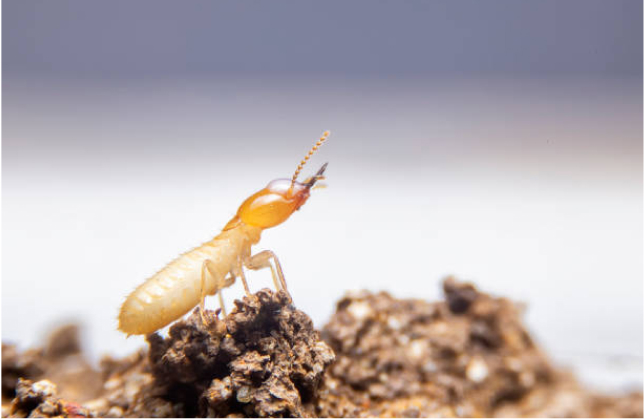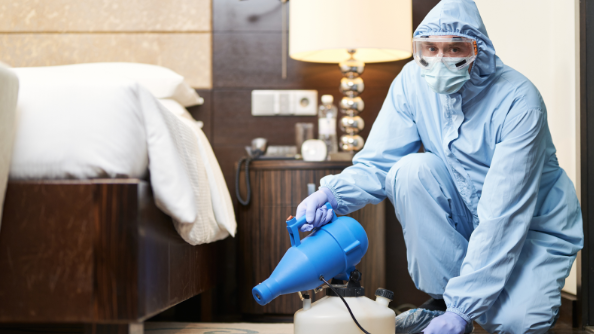

Finding termite damage inside your home can raise several immediate questions. Are the termites still active? Has the infestation spread beyond the visible damage? Will you need to remove your cabinets or flooring? Most importantly, who can identify the problem accurately before unnecessary treatment or repairs begin?
A termite specialist in Singapore is a pest management professional who investigates termite activity, identifies the type involved, assesses affected areas and recommends an appropriate treatment plan. Unlike general surface spraying, specialist termite management focuses on understanding where termites are feeding, how they enter a property and whether a concealed colony remains active.
Singapore’s warm, humid conditions allow termites to remain active throughout the year. They can affect HDB flats, condominiums, landed houses, commercial buildings and industrial properties.
However, not every termite problem requires the same treatment. A drywood termite infestation inside a cabinet is different from a subterranean colony travelling through concealed structural openings.
This guide explains what to expect from a termite specialist, how professional inspections work, which treatment methods may be suitable and what to check before agreeing to a quotation.
Key Takeaways
- A qualified termite specialist should identify the termite type and investigate the infestation before recommending treatment.
- Physical evidence, property conditions and inspection findings are more reliable than assumptions based on damaged wood alone.
- Thermal imaging can assist investigations but should not replace professional assessment.
- Termite baiting, soil treatment and targeted timber applications serve different purposes.
- Singapore’s termite treatment requirements differ from the licensing framework for vector-control services.
- Written treatment scopes, follow-up arrangements and warranty conditions are essential when evaluating a quotation.
What Does a Termite Specialist in Singapore Actually Do?

A termite specialist identifies termite activity, investigates its possible source and determines which treatment method is appropriate for the property.
The work involves more than applying chemicals to damaged timber.
For example, if termites appear behind a kitchen cabinet, the specialist needs to establish whether they are living inside the wood or travelling there from a larger colony.
That distinction can change the treatment recommendation considerably.
A professional assessment generally involves four responsibilities.
1. Identifying the Termite Type
Different termite groups have different nesting and feeding behaviours.
Subterranean termites commonly maintain connections with soil or other moisture sources. Drywood termites can establish colonies inside wooden materials without contacting the ground.
Identifying the group involved helps determine whether treatment should focus on a concealed colony, surrounding soil or individual timber structures.
2. Assessing the Extent of Activity
Visible damage does not always indicate the full extent of an infestation.
A specialist examines surrounding materials and accessible entry routes to determine whether activity appears localised or potentially connected to a wider problem.
The inspection should also distinguish active termite feeding from damage caused by an earlier infestation.
3. Selecting an Appropriate Treatment
A treatment recommendation should reflect the evidence found.
Depending on the situation, the specialist may recommend termite baiting, soil treatment, spot treatment, timber-focused applications or a combination of methods.
The objective is to address the actual infestation rather than simply remove visible insects.
4. Planning Follow-Up and Prevention
Some treatments require repeated monitoring to assess whether termite activity has declined or stopped.
The specialist may also recommend correcting moisture problems, improving drainage or maintaining existing termite monitoring systems.
These measures help manage conditions that could contribute to future infestations.
When Should You Contact a Termite Specialist?
Arrange a termite inspection when you find signs of activity that cannot be explained by ordinary timber wear or moisture damage.
Common warning signs include:
Mud Tubes Along Walls and Skirting Boards
Subterranean termites construct narrow, soil-like passages to move between their colony and feeding locations while maintaining the moisture they need.
These tubes may appear along skirting boards, behind cabinets, near plumbing openings and around building foundations.
What to do: Photograph the tubes and avoid destroying them before inspection. Their location and condition may provide useful information about termite movement.
Small Pellets Beneath Wooden Furniture
Drywood termites produce small, hard pellets known as frass.
These may collect beneath wooden doors, cabinets, shelves and furniture.
Recurring piles deserve attention, particularly when accompanied by small openings in the timber.
However, not all sawdust-like material comes from termites. Other wood-damaging insects can produce similar-looking debris.
Hollow or Weakened Timber
Termites may consume timber internally while leaving the outer surface largely intact.
Affected areas can develop a hollow sound, feel unusually soft or begin to crumble.
Wood decay and water damage can create similar symptoms, so the cause should be established before treatment.
If a beam, staircase, floor or other structural component appears unsafe, restrict access where necessary and arrange assessment by a qualified building professional.
Discarded Wings Near Windows
Winged reproductive termites may shed their wings after emerging from an established colony.
Finding wings near windows or lights does not automatically mean termites are nesting inside the property.
However, repeated indoor swarming, especially alongside other evidence, warrants further investigation.
Termites Discovered During Renovation
Renovation work may expose concealed termite activity behind cabinets, flooring or wall finishes.
When this happens, avoid immediately covering the affected area with new materials.
Determining whether termites remain active before replacement work continues can help prevent further damage.
What Happens During a Professional Termite Inspection?
A professional termite inspection should establish what evidence is present, where activity may be occurring and whether treatment is necessary.
The exact procedure depends on the property’s layout, the affected materials and the accessibility of concealed areas.
Step 1: Reviewing the Property’s History
The specialist may first ask when the damage appeared, whether the property has experienced previous infestations and whether any treatments have already been carried out.
Information about recent renovations, water leakage, new furniture and recurring signs can also be relevant.
For instance, pellets repeatedly accumulating beneath one wooden cabinet may suggest a different issue from mud tubes extending across several rooms.
This background helps the specialist decide where to investigate.
Step 2: Examining Accessible Timber and Entry Points
The physical inspection may cover:
- Wooden doors, cabinets and built-in wardrobes.
- Skirting boards and timber flooring.
- Plumbing penetrations and service openings.
- Accessible wall junctions and structural gaps.
- External foundations and soil-adjacent areas.
- Garden timber, tree trunks and storage structures where relevant.
The specialist looks for live termites, mud tubes, feeding damage, termite pellets and conditions that may support activity.
Inspection limitations should also be explained.
A concealed space that cannot be accessed should not automatically be described as termite-free.
Step 3: Investigating Concealed Areas
Termites can remain hidden behind built-in fixtures and other inaccessible surfaces.
Additional detection tools may help investigate these areas without immediately dismantling surrounding materials.
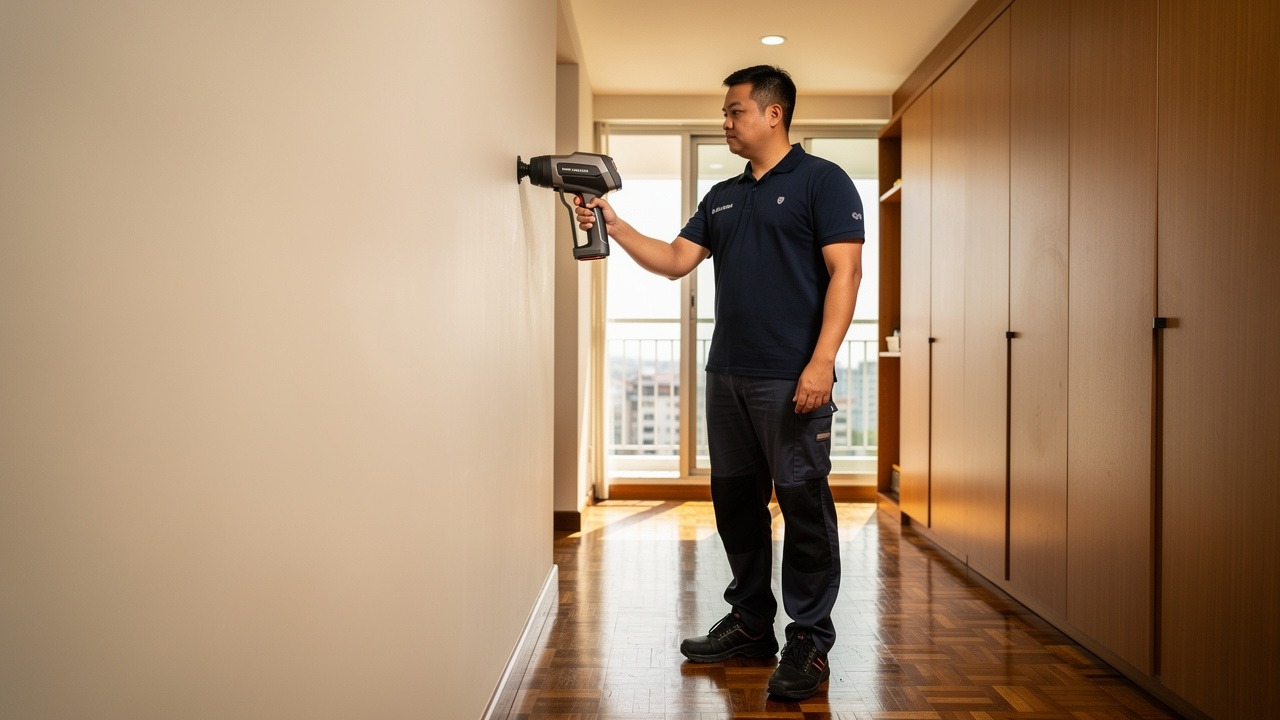
Aardwolf Pestkare uses TermiCam thermal-imaging technology to assist with the investigation of suspected subterranean termite activity in suitable locations, including built-in structures and tree trunks.
Thermal imaging identifies temperature variations that may help direct further inspection.
However, it does not directly photograph every termite through solid materials. Environmental conditions, moisture and surrounding construction materials can influence the readings.
For that reason, thermal imaging findings should be evaluated alongside physical evidence and professional judgement.
Its main practical benefit is helping specialists identify areas that may require closer examination.
Step 4: Assessing Whether the Infestation Is Active
One of the most important questions is whether termites are still feeding within the property.
Old termite damage can remain visible after a previous infestation has ended.
A specialist may examine current evidence, such as live termites, active shelter tubes, recurring pellets and other findings, to assess whether further treatment is necessary.
No single sign always provides a complete answer.
Where evidence is inconclusive, the specialist should explain the uncertainty and whether additional inspection or monitoring is appropriate.
Step 5: Explaining the Recommended Treatment
After the inspection, the property owner should understand:
- Which termite type has been identified or is suspected.
- Where the evidence was discovered.
- Whether activity appears localised or potentially widespread.
- Which treatment is recommended and why.
- What areas the treatment will cover.
- Whether follow-up inspections or monitoring will be required.
A good explanation distinguishes confirmed findings from assumptions.
For example, discovering termites in a cabinet does not automatically establish that the entire building contains an active colony.
The recommended treatment should reflect what the inspection actually supports.
What Should Be Included in a Termite Inspection Report?
A useful termite inspection report should document the evidence, affected locations, inspection limitations and recommended next steps.
Not every provider uses the same report format, but clear documentation makes it easier to understand the problem and evaluate treatment proposals.
An effective report may include:
| Report Component | What It Should Explain |
| Property information | Address, property type and inspected areas |
| Termite identification | Confirmed or suspected termite group |
| Evidence observed | Mud tubes, live termites, pellets or timber damage |
| Affected locations | Rooms, fixtures or structural areas showing evidence |
| Inspection limitations | Concealed or inaccessible areas not fully examined |
| Recommended action | Treatment, monitoring or further investigation |
| Follow-up requirements | Expected monitoring and reassessment process |
Photographs can be particularly useful when evidence is concealed behind cabinetry or located in areas that the owner cannot easily access.
For commercial premises, documented findings may also support maintenance planning and communication with building management.
A practical question to ask: “Can you show me which findings support the treatment you are recommending?”
A specialist should be able to explain the connection between the evidence and the proposed work.
Seven Questions to Ask Before Hiring a Termite Specialist in Singapore
Choosing a termite specialist involves evaluating technical knowledge, inspection practices, treatment suitability and the clarity of the proposed service.
These seven questions can help property owners make a more informed decision.
1. How Will You Identify the Termite Species?
Ask whether the specialist will distinguish subterranean termites from drywood termites and explain why the identification matters.
Subterranean termites commonly require colony-focused or soil-related management.
Drywood termites may require treatment within individual wooden materials.
A provider should not assume that every infestation requires the same chemical application.
2. Will You Inspect Before Recommending Treatment?
A proper assessment should establish the extent and likely source of activity before a treatment plan is finalised.
Photographs supplied by homeowners may help with preliminary enquiries, but they may not reveal concealed movement or nearby infestations.
The inspection should guide the recommendation rather than simply confirm a predetermined treatment package.
3. How Will You Investigate Concealed Termite Activity?
Ask which areas will be inspected and whether additional detection equipment may be useful.
Tools such as thermal imaging can support an investigation, but they have limitations.
A specialist should explain what the equipment can detect and whether its findings need further confirmation.
4. Why Is This Treatment Suitable for My Property?
An appropriate recommendation should consider the termite type, building construction and distribution of activity.
For example, a subterranean colony affecting several parts of a landed property may require a different approach from drywood termites confined to an isolated piece of furniture.
Ask the specialist to explain why the recommended method is preferable for the specific findings.
5. What Exactly Is Included in the Quotation?
A quotation should identify the treatment area, application method, number of visits and any necessary preparation.
If drilling or access work is required, ask whether surface reinstatement is included.
For baiting programmes, confirm whether monitoring and bait replenishment are covered.
A clear quotation helps avoid misunderstandings about the service scope.
6. How Will You Determine Whether Treatment Has Worked?
The answer depends on the method used.
For baiting, specialists may monitor feeding activity, station conditions and evidence of remaining termites.
For targeted treatments, follow-up may involve checking the affected timber and surrounding areas.
The provider should explain what observations will be used to evaluate the results.
7. What Happens if Termites Are Found Again?
Ask whether any warranty or callback arrangement applies.
A warranty may cover only designated areas, specific termite types or defined treatment conditions.
It is important to understand what is included, what is excluded and whether additional monitoring or treatment would involve extra charges.
A longer warranty is not automatically better if its scope is unclear.
Does a Termite Specialist Need an NEA Licence in Singapore?
Termite treatment is not subject to the same Vector Control Operator (VCO) licensing requirement as services targeting public-health vectors such as mosquitoes, flies, cockroaches and rats.
Singapore’s National Environment Agency (NEA) has clarified that termites are considered non-vector pests under the relevant vector-control licensing framework.
This distinction matters because the phrase “NEA-licensed termite specialist” can be misleading if it implies that termite treatment itself requires a dedicated VCO licence.
However, other regulatory requirements can still apply.
For example, NEA’s termiticide guidelines establish environmental precautions for termite soil treatment.
Operators must take appropriate measures to prevent contamination of drains, groundwater and other water resources.
The handling or use of certain controlled hazardous substances may also require the relevant licence or permit.
What Is Singapore Standard SS 721:2025?
Singapore Standard SS 721:2025 is the Code of Practice for the Performance of Pest Management Services.
It incorporates Integrated Pest Management principles, including prevention, risk assessment, appropriate treatment selection and continued monitoring.
The framework encourages pest management based on the actual conditions found rather than unnecessary reliance on chemical applications.
Its principles are applicable to termite management.
Property owners can refer to NEA’s explanation of SS 721:2025 when learning about professional pest-management practices.
When evaluating a termite specialist, relevant experience, technical competence, safe application practices and transparent documentation remain important.
Which Termite Treatment Might a Specialist Recommend?
The appropriate termite treatment depends on whether the infestation involves subterranean termites, drywood termites or another termite group.
Different methods have different objectives.
| Treatment | Main Purpose | When It May Be Appropriate |
| Termite baiting | Manage an active subterranean colony | Confirmed subterranean termite activity |
| Soil treatment | Manage termite movement through treated soil | Ground-connected buildings and suitable perimeter areas |
| Spot treatment | Address activity in a defined location | Sufficiently localised infestations |
| Corrective treatment | Address confirmed activity in an existing structure | Established infestations requiring targeted intervention |
| Drywood timber treatment | Reach termites living within wood | Infested furniture, doors and wooden fixtures |
Termite Baiting for Subterranean Termites
Termite baiting uses stations containing a suitable food source and active ingredient.
When subterranean termites discover and consume the bait, the effects can extend beyond the individual insects feeding at the station.
The objective is to suppress or eliminate colony activity.
Baiting is particularly relevant when the colony is concealed and cannot be accessed directly.
However, it requires time and monitoring.
Termites must locate and consume the bait, and the specialist must assess the colony’s response.
Results can vary according to colony activity, environmental conditions and station placement.
Soil Treatment for Ground-Connected Properties
Soil treatment involves applying an appropriate termiticide to designated soil areas to help manage termite movement towards or beneath a structure.
It may be considered for landed houses and other buildings with relevant soil-connected entry routes.
Depending on the building’s construction, applications may involve perimeter access, soil preparation or drilling through selected surfaces.
Soil treatment does not necessarily eliminate an existing colony.
The specialist should explain whether the proposed treatment is intended for protection, corrective control or both.
Spot Treatment for Localised Infestations
Spot treatment involves applying a suitable product directly to an identified area of activity.
It may be appropriate when the infestation is sufficiently localised and a larger treatment programme is unnecessary.
However, treating one affected location does not automatically address a wider subterranean colony.
The specialist needs to establish whether other areas are connected to the infestation.
Timber-Focused Treatment for Drywood Termites
Drywood termites live within timber and do not depend on a soil-connected colony.
Treatment may involve targeted timber applications or other appropriate measures, depending on accessibility and the extent of infestation.
In some cases, severely damaged wood may need to be removed and replaced.
Before replacing affected furniture or cabinets, nearby timber should be assessed for additional activity.
Aardwolf Pestkare provides termite baiting, soil treatment, spot treatment and corrective applications, with treatment selection based on the site conditions.
For more details, see its termite control services in Singapore.
Practical Examples: How Inspection Findings Affect Treatment Decisions
The following examples are illustrative scenarios, not documented Aardwolf Pestkare customer cases. They demonstrate why termite species identification and property conditions are important.
Scenario 1: Termite Pellets Beneath an HDB Cabinet
A homeowner notices small, grain-like pellets beneath a built-in wooden cabinet.
The surrounding walls show no obvious mud tubes.
A specialist would need to inspect the affected timber and neighbouring fixtures to determine whether drywood termites are present.
If the activity is confirmed to be confined to one accessible wooden component, targeted timber treatment may be considered.
A full perimeter soil treatment would not normally address a colony living entirely within that cabinet.
Key lesson: The location and termite type matter more than the property size alone.
Scenario 2: Mud Tubes Behind Kitchen Cabinets in a Landed House
A landed homeowner discovers mud tubes extending from a wall junction into the kitchen cabinetry.
The property also has garden areas and several soil-connected structures.
The specialist would investigate the visible routes, possible entry points and other accessible areas that may be connected to the activity.
If subterranean termites are confirmed, a colony-focused baiting programme or other suitable corrective treatment may be recommended.
Soil treatment may also be considered where appropriate for the building’s exposure and conditions.
Key lesson: Treating one visible cabinet may not resolve termite activity originating elsewhere.
Scenario 3: Timber Damage in a Commercial Unit
A business operating in an industrial building notices weakened wooden shelving and damage near a storage area.
The specialist would need to determine whether the damage is current, which materials are affected and whether termite activity extends into concealed building spaces.
Treatment planning may also need to account for stored inventory, equipment, workplace access and operational schedules.
If common building areas are involved, coordination with the property manager may be necessary.
Key lesson: Commercial termite management should consider both the infestation and the practical requirements of the premises.
How Much Does a Termite Specialist Cost in Singapore?
Termite treatment costs depend on the treatment method, termite species, property size, affected areas and follow-up requirements.
Aardwolf Pestkare’s published 2026 pricing guidance provides the following approximate ranges:
| Treatment Method | Indicative Cost (SGD) |
| Localised spot or wood treatment | S150–S500 per visit |
| Termite baiting programme | S800–S3,000+ |
| Liquid soil treatment | S1,000–S3,500+ |
These figures are indicative planning ranges, not fixed quotations or guaranteed Singapore-wide prices.
Actual costs may differ following inspection.
What Factors Affect the Final Price?
Extent of activity: Treating one wooden cabinet may involve less work than managing subterranean activity across several rooms.
Property conditions: Limited access, extensive built-in fixtures or concrete surfaces may affect the application method.
Treatment requirements: Baiting, soil treatment and timber-focused applications involve different materials and labour.
Monitoring: Some programmes require multiple visits over an extended period.
Additional work: Drilling, surface preparation, repairs and reinstatement may affect the final scope.
The most useful quotation identifies what treatment is being provided and the reason it is necessary.
For a more detailed breakdown, read Aardwolf Pestkare’s termite treatment cost guide.
How Long Does Professional Termite Treatment Take?
The treatment timeframe depends on the termite type, infestation severity and method selected.
A targeted application may be completed during a scheduled visit.
However, completing the application does not necessarily confirm that all termite activity has stopped.
Subterranean termite baiting may require several weeks or months because termites must discover and consume the bait before the colony responds.
The specialist should explain:
- When the initial application or installation will take place.
- Whether follow-up inspections are required.
- How changes in termite activity will be assessed.
- What may happen if activity continues.
- When monitoring or reassessment is expected to conclude.
Homeowners should be cautious about universal promises of immediate colony elimination, particularly when the infestation extends into inaccessible areas.
A realistic treatment plan should explain how progress will be monitored.
Does Termite Treatment Require You to Leave Your Home?
Not every termite treatment requires occupants to vacate their property.
The necessary precautions depend on the products, application methods and locations being treated.
Before work begins, inform the specialist if children, pets, aquariums or sensitive equipment are present.
Ask whether particular rooms must remain unoccupied temporarily and when treated areas can be accessed again.
Food preparation surfaces, stored goods and personal belongings may require protection depending on the treatment.
For soil applications, the specialist should also explain any drilling, access or environmental precautions.
Follow the provider’s product-specific instructions rather than assuming all termite treatments have identical safety requirements.
Do HDB Flats, Condominiums and Commercial Properties Need Different Inspection Approaches?
Yes. Property construction and management arrangements can affect how a termite inspection is carried out.
HDB Flats
HDB residents may discover termite activity in cabinets, wooden doors, furniture and built-in fittings.
If the infestation appears confined to a single wooden fixture, the initial assessment may focus on that location and nearby accessible timber.
Where the evidence suggests activity affecting shared structures or common areas, residents may need to contact the relevant Town Council or responsible property management party.
Condominiums
Condominium residents may encounter termites in timber flooring, doors, cabinets or built-in fixtures.
Where activity appears connected to common property, service shafts or shared building areas, inspection and treatment may require coordination with the managing agent or Management Corporation Strata Title (MCST).
Access permission may be necessary before investigating areas beyond an individual unit.
Landed Properties
Landed houses may have additional exposure through soil, gardens, external timber and drainage areas.
Inspections may need to consider foundations, external structures, garden timber and potential soil-related entry routes.
A specialist may also assess whether preventive monitoring is appropriate after a previous subterranean infestation.
Commercial and Industrial Buildings
Offices, shops, warehouses and industrial premises may contain timber shelving, partitions, cabinets and stored cellulose-based materials.
In business areas such as Jurong, Tuas, Woodlands and Ubi, treatment planning may need to account for operational access, machinery and stored inventory.
Identifying the infestation’s extent helps determine whether treatment can be carried out locally or requires coordination across a larger section of the building.
How Can You Prepare for a Termite Inspection?
Proper preparation helps the specialist assess the evidence without unnecessary disturbance.
Before the appointment, take clear photographs of the suspected activity and record when it first appeared.
Where practical, keep the affected area accessible.
Avoid dismantling cabinetry, removing mud tubes or applying household insecticides immediately before the inspection.
Inform the specialist about:
- Previous termite treatments.
- Recurring damage or termite activity.
- Recent renovation or carpentry work.
- Water leakage and persistent moisture problems.
- Inaccessible spaces or building access restrictions.
For larger or managed properties, arrange the relevant access permission beforehand.
If the concern involves a weakened structural element, restrict use of the affected area until its safety can be assessed.
What Should You Do After Termite Treatment?
Post-treatment care depends on the method used and the monitoring arrangements recommended.
The specialist should provide instructions on how to manage the treated area and what signs to watch for.
Follow the Monitoring Schedule
Where baiting stations are installed, keep them accessible and avoid moving them without consulting the provider.
Scheduled monitoring can help establish whether termite activity is declining or whether additional action is necessary.
Manage Moisture Problems
Repair leaking pipes, investigate seepage and maintain suitable drainage.
Persistent moisture may contribute to favourable conditions for some termites and can also cause timber deterioration that complicates future inspections.
Inspect Wooden Fixtures Periodically
Look for new mud tubes, recurring pellets, damaged timber and changes around previously affected areas.
New evidence should be reported even if the earlier treatment appeared successful.
Keep Treatment Records
Retain the inspection findings, quotation, treatment details and follow-up documentation.
These records may be useful during renovations, future inspections or discussions with property management.
Understand the Warranty Conditions
Confirm which termite types and treatment locations are covered.
If new activity appears, follow the provider’s stated reporting and callback process.
No treatment guarantees that a different termite colony will never reach the property in the future.
Why Consider Aardwolf Pestkare for Termite Management?
Aardwolf Pestkare was established in Singapore on 8 April 1997 and provides pest management services for residential, commercial and industrial properties.
The company’s approach emphasises accurate pest identification and appropriate management rather than relying solely on reactive treatment.
Its termite services include:
- Termite inspection and assessment.
- TermiCam thermal-imaging-assisted detection.
- Subterranean termite baiting.
- In-ground termite stations.
- Soil treatment.
- Spot treatment and corrective applications.
- Management of drywood termite activity.
Aardwolf’s technical team also includes Dr. Jerry Hu, Termite Management Specialist, who joined the company in 2011 following postdoctoral training at the University of Georgia and Universiti Sains Malaysia.
His published professional background includes termite-management expertise, scientific research and technical leadership within the company.
These capabilities give Aardwolf access to several approaches when evaluating termite problems in different property environments.
However, the appropriate treatment still depends on the actual findings at each site.
The most useful starting point is an inspection that establishes which termites are present, where they are active and what intervention is justified.
For more information, visit Aardwolf Pestkare’s termite services or contact the team to discuss the signs you have noticed.
Frequently Asked Questions About Termite Specialists in Singapore
1. How Do I Know Whether I Need a Termite Specialist?
You should consider a termite inspection when you discover mud tubes, recurring termite pellets, discarded wings indoors or unexplained timber damage. These signs do not always confirm an active infestation, but professional assessment can help identify the cause and determine whether treatment is necessary.
2. Can a Termite Specialist Detect Termites Behind Walls?
A specialist can investigate suspected concealed activity using physical evidence, accessible structural areas and additional tools where appropriate. Thermal imaging may help identify temperature variations associated with suspected termite activity, but it cannot guarantee detection behind every surface. Further examination may be necessary.
3. Is It Better to Arrange an Inspection Before Replacing Damaged Wood?
Generally, yes. If termites remain active, replacing damaged timber without addressing the infestation may expose the new material to further damage. The specialist should first investigate whether activity continues. Severely weakened structural elements may require urgent safety assessment and repair regardless of the termite treatment schedule.
4. Can a Specialist Determine Whether Termite Damage Is Old?
A specialist can assess whether there is evidence of current activity, such as live termites, active shelter tubes or recurring pellets. However, old damage and concealed conditions can sometimes make the conclusion uncertain. Further inspection or monitoring may be recommended when the evidence is inconclusive.
5. Is a More Expensive Termite Treatment Always Better?
No. The most suitable treatment depends on the termite type, infestation extent and property conditions. An expensive whole-property treatment may be unnecessary for a confirmed localised drywood infestation, while a small spot treatment may be inadequate for a widespread subterranean colony. The treatment scope should follow the inspection findings.
6. How Often Should I Arrange a Termite Inspection?
Inspection frequency depends on the property’s exposure, previous infestations and environmental conditions. Annual professional inspections may be a reasonable starting point for some properties, while those with previous activity or substantial soil exposure may benefit from closer monitoring. New warning signs should prompt investigation regardless of the routine schedule.
7. Can Termites Return After Professional Treatment?
Yes. New colonies may enter through different routes, and termite activity may recur if conditions remain favourable or concealed activity persists. Monitoring, moisture management and timely investigation of new signs can help manage future risks.
8. What Information Should I Provide When Contacting a Termite Specialist?
Provide the property type, location of the suspected activity, when the signs first appeared and whether there has been previous termite treatment. Clear photographs of mud tubes, pellets, discarded wings or damaged timber may also help the specialist understand the concern before visiting.
Conclusion: Choose a Termite Specialist Who Investigates Before Treating
Termite management should begin with an accurate understanding of the problem.
The visible damage may be limited to one wooden fixture, or it may be connected to activity elsewhere in the building. These situations require different decisions.
A reliable termite specialist should be able to explain the evidence, identify the likely termite type, recommend an appropriate treatment and describe the monitoring or follow-up required.
For Singapore property owners, the most important considerations are not simply treatment price or how quickly a chemical can be applied. They are whether the infestation has been investigated properly and whether the proposed work addresses the actual risk.
Aardwolf Pestkare provides termite inspection and treatment services throughout Singapore, supported by its termite-management experience, technical specialists and available detection and treatment methods.
If you suspect termite activity in your home or business premises, contact Aardwolf Pestkare to discuss an assessment.
Identifying the problem early can help avoid unnecessary treatment, support better repair decisions and reduce the risk of further timber damage.