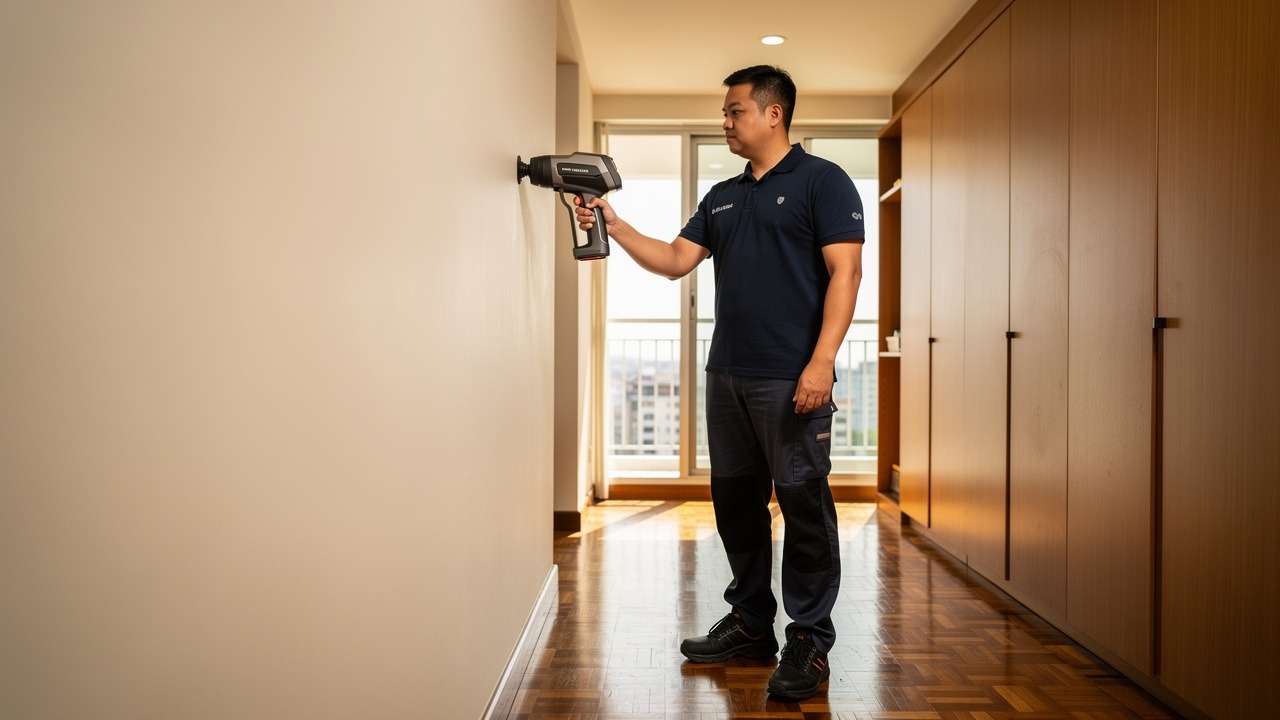
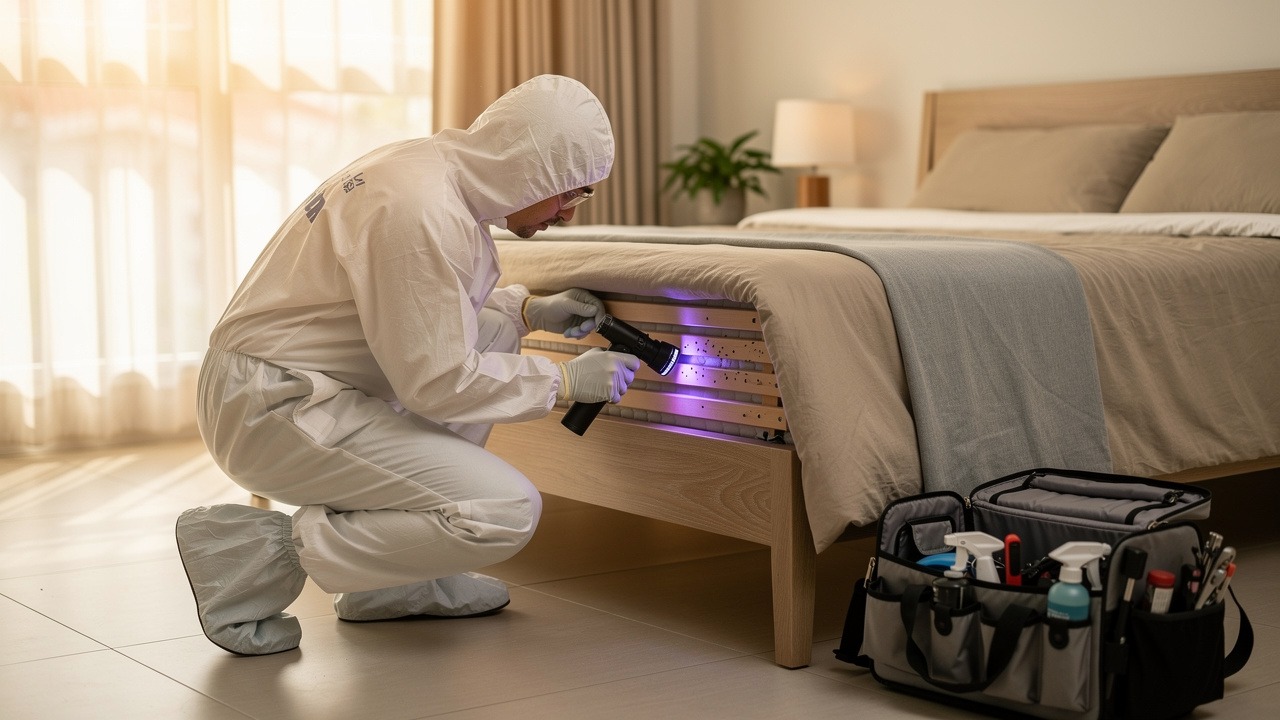
Seeing a rat near a rubbish bin, finding droppings behind a kitchen cabinet or hearing scratching above a false ceiling usually deserves more attention than simply placing a trap nearby.
Rodents establish themselves where they can repeatedly find food, water, shelter and concealed travel routes. Removing the animals without correcting those conditions can leave the same property vulnerable to reinfestation.
Effective rodent control in Singapore should therefore combine inspection, population reduction, proofing, sanitation, monitoring and follow-up rather than relying on trapping alone.
Aardwolf Pestkare was established in Singapore in 1997 and provides rodent management for homes, F&B premises, commercial buildings and other properties. Its current rodent service combines inspection, eradication, monitoring and reporting with methods including trapping, baiting where appropriate, exclusion work and wireless camera monitoring for concealed or after-hours activity.
This guide explains what to do if you see a rat, which rodent species are common in Singapore, how to recognise an infestation, how professional control works, what treatment may cost, what Singapore businesses need to know about current NEA requirements and how to reduce the chance of rats or mice returning.
What Should You Do Immediately If You See a Rat?
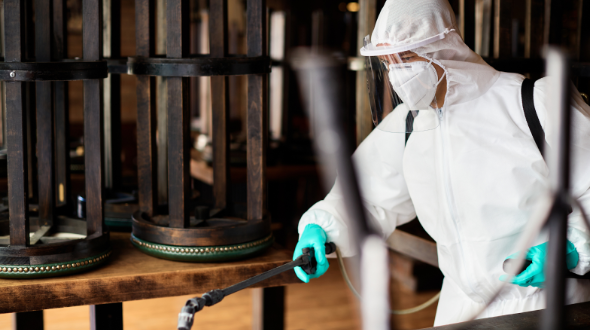
If you see a rat inside your home or business, avoid chasing, cornering or handling it directly.
Start by securing food and rubbish, then note where the animal was seen and where it appeared to travel. Look nearby for droppings, gnaw marks, rub marks, holes, damaged packaging or openings that could provide access to a wall void, ceiling space, service riser or refuse area.
One sighting does not reveal exactly how many rodents are present, but it should not automatically be dismissed as a random event. NEA notes that live rat sightings can indicate the presence of a larger infestation because rats are social animals that commonly live in groups.
If the sighting occurs inside private premises and further signs appear, arrange an inspection before the problem becomes established.
For rat activity in public neighbourhood areas, NEA advises residents to report sightings through the OneService app. Information such as the location, time, estimated number of rats and photographs or videos can help agencies investigate the activity more effectively.
The practical response is therefore to observe, document, secure food and waste, identify possible entry routes and investigate recurring activity early.
Does Seeing One Rat Mean You Have an Infestation?
Not necessarily, but one rat should still be taken seriously.
A single sighting cannot tell you whether the animal entered temporarily or belongs to an established population nearby.
The wider evidence matters.
Repeated sightings, fresh droppings, new gnaw marks, greasy rub marks, burrows, scratching sounds or activity captured in the same area over several nights are more consistent with an ongoing problem.
The surrounding conditions matter too.
A rat that enters a property where food waste is accessible, doors have large gaps and concealed shelter is available has a stronger reason to remain than one that briefly passes through an otherwise inaccessible area.
This is why professional rodent control should investigate both the animal and the environment supporting it.
What Rodent Species Are Common in Singapore?
NEA identifies the Norway rat, roof rat and house mouse as three common urban rodent species in Singapore. Correct identification matters because they use buildings differently and can concentrate activity in different locations.
Norway Rats
Norway rats, also known as brown rats or sewer rats, are strongly associated with ground-level environments.
They may use burrows, drains, bin areas, back lanes, landscaping and ground-level service spaces before entering a building in search of food.
A round burrow opening in soil, activity around refuse areas and low-level travel routes may therefore warrant attention during an inspection.
Roof Rats
Roof rats are agile climbers and are more likely to use elevated travel routes.
They can move along pipes, ledges, beams, service structures and ceiling spaces.
Scratching above false ceilings or activity in upper service areas can therefore justify inspection above floor level rather than focusing only on kitchens and bin areas.
House Mice
House mice are smaller and can enter through narrow openings.
They may be found around cupboards, food-storage areas, pantries, storerooms, cabinets and service penetrations.
Their smaller size allows them to exploit gaps that a larger rat might not use.
The practical difference is important because the likely harbourage and movement routes can change according to the species involved.
Rat or Mouse: How Can You Tell the Difference?
Size is the most obvious starting point, but location and behaviour also provide clues.
Norway rats are generally larger and more associated with ground-level areas, burrows, drains and refuse environments.
Roof rats are also larger than mice but are more strongly associated with climbing and elevated travel routes.
House mice are considerably smaller and can exploit narrow indoor gaps around cabinets, food areas and storage spaces.
Droppings can provide additional clues, but homeowners should avoid relying on droppings alone to identify the exact species.
The location, size of the animal, travel route, gnawing pattern and surrounding environment together give a technician a better basis for identification.
What Are the Early Signs of a Rodent Infestation?
A rodent problem often becomes visible indirectly before someone sees several animals.
Fresh droppings are one of the most common signs. They are often found close to food sources, behind equipment or along established travel routes.
Gnaw marks can appear on food packaging, wood, plastics, insulation and electrical cables because rodents need to wear down continuously growing teeth.
Greasy rub marks can develop where rats repeatedly brush against walls, pipes or beams while following the same route.
Burrows may appear in landscaped or soil areas, particularly where Norway rats are active.
Scratching, movement or gnawing sounds at night can also indicate activity in false ceilings, wall voids, risers or storerooms.
NEA emphasises early detection because rat populations can increase quickly when food, water and harbourage remain available.
The strongest conclusion normally comes from several signs occurring together rather than from one isolated clue.
Why Do Rodent Infestations Keep Returning?
Rodent infestations commonly return because the property remains attractive or accessible even after some animals have been removed.
Food is one of the biggest factors.
Poorly secured waste, food spills, open ingredients, pet food, overflowing bins and refuse areas can support continuing activity.
Water also matters. Leaking taps, standing water, wet service areas and drainage problems can provide a reliable source.
Harbourage is another factor. Cluttered storerooms, unused materials, voids, false ceilings and poorly maintained service spaces create places where rodents can hide.
Finally, structural access allows them to move between those resources.
Gaps under doors, cracks around pipes, openings in walls, damaged refuse facilities and holes around service penetrations can all become entry routes.
NEA specifically states that addressing potential access and entry points can be more effective than relying only on reactive or short-term rat-control measures.
This is why repeatedly catching rats without changing the property can become an endless cycle.
How Does Professional Rodent Control Work?
A useful rodent programme can be understood as:
inspect → reduce the active population → remove food and harbourage → close access routes → monitor → report and adjust.
Each stage serves a different purpose.
Inspection and Identification
The first step is to understand where rodents are moving and why they are using the property.
Technicians may examine droppings, gnaw marks, rub marks, burrows, nesting material, food sources and possible entry points.
The layout also matters.
A kitchen, refuse room, false ceiling, loading bay, storeroom and landscaped perimeter all present different risks.
Aardwolf’s technical services include pest identification, site assessment, pest-trend analysis and programme reviews, allowing findings to be considered over time rather than treating every visit as an isolated event.
Population Reduction
Once the main activity areas are understood, trapping or baiting may be used to reduce the active population.
The exact approach should depend on the site.
A home with one accessible indoor travel route does not require the same programme as a warehouse with several loading areas or an F&B premises with kitchens and refuse infrastructure.
Aardwolf currently uses methods including snap traps and strategically applied rodenticides where appropriate, together with exclusion and monitoring.
The objective should not be to place as many devices as possible.
It is to position treatment according to observed rodent behaviour and site risk.
Proofing and Exclusion
Removing rodents without blocking their routes creates an obvious reinfestation risk.
Proofing can involve closing identified gaps beneath doors, around pipes, within walls, around ceiling spaces or at other structural openings.
NEA advises premises owners to identify and rectify access points, defects and harbourage conditions as part of rat prevention.
Proofing should follow inspection so the most relevant routes are addressed rather than sealing random gaps without understanding whether rodents use them.
Monitoring
Monitoring answers a critical question:
Is rodent activity actually reducing?
Aardwolf’s current rodent programme includes wireless mini-video cameras that can record activity when a rodent enters a monitored area and alert technicians to the incursion. This can be useful in false ceilings, storerooms and commercial environments where activity often occurs outside occupied hours.
Monitoring also prevents the control programme from becoming a repeated routine of replacing bait or traps without knowing whether rodents continue to use the same route.
Reporting and Programme Adjustment
A professional programme should produce information that can guide the next action.
If camera activity falls but fresh droppings continue in another room, the treatment plan may need adjustment.
If rodents stop appearing but an external door gap remains open, proofing may still be necessary.
For commercial properties, service reporting becomes even more important because the premises manager needs a record of findings, corrective work and ongoing activity.
Traps, Bait or Proofing: Which Is Most Important?
These methods solve different parts of the problem.
Traps help remove active rodents.
Baiting may form part of a managed control programme where appropriate.
Proofing makes it more difficult for additional rodents to use known access routes.
Monitoring then confirms whether activity is continuing.
The mistake is treating any one of these methods as a complete solution in every situation.
Trapping without proofing can remove current rodents while leaving the route open.
Proofing without checking whether animals are already inside can also create complications.
Bait placement without housekeeping improvements can leave alternative food sources competing with the treatment.
The strongest programme therefore uses the methods that match the conditions found during inspection.
What Changed for Rat Control in Singapore From April 2025?
Singapore strengthened its enforcement approach to rat-related lapses from 1 April 2025.
NEA said it would focus more strongly on three areas: poor refuse management and housekeeping that create favourable conditions for rats, defects in refuse-handling facilities that can provide access and the presence of rat nests or harbourage.
In 2024, NEA and SFA jointly took more than 1,000 enforcement actions against premises owners or occupiers for rat-related lapses, almost double the 670 actions taken in 2023. Nearly half of the 2024 actions involved poor refuse management.
That stronger enforcement continued after the April 2025 change.
NEA later reported around 1,300 rat-related enforcement actions during 2025, including approximately 620 associated with poor refuse management.
What Is the Latest Rat Situation in Singapore in 2026?
The latest NEA figures show improvement, but they also reinforce why prevention remains important.
In the first half of 2026, NEA recorded an average of about 3,400 rat burrows per two-month surveillance cycle, compared with around 5,400 during the same period in 2025.
From January to June 2026, NEA and SFA jointly took approximately 490 enforcement actions against premises owners for rat-related lapses, including around 260 cases relating to poor refuse management.
Earlier 2026 data had already shown the same downward direction, with the January-to-April surveillance cycles averaging around 2,900 burrows compared with about 4,900 per cycle in 2025.
The improvement does not mean businesses can relax housekeeping.
NEA continues to emphasise that rat populations can rebound when food sources and harbourage return.
For businesses, that means rodent control remains as much an operational and property-management issue as a pest-control issue.
What Does SS 721:2025 Mean for Rodent Control?
Singapore Standard SS 721:2025 provides a national framework for professional pest-management services based on Integrated Pest Management principles.
NEA describes the framework as emphasising prevention, risk-based assessment, the use of multiple suitable control methods, reduced unnecessary pesticide dependency and continuous monitoring.
Rats are specifically within the scope of the standard.
This aligns closely with effective rodent management.
Instead of waiting for a rat sighting and applying a short-term treatment, the focus becomes identifying why activity is occurring, removing environmental support, choosing suitable control methods and monitoring whether the outcome lasts.
Do Businesses Need a Licensed Pest-Control Company for Rats?
Yes.
Under Singapore’s vector-control framework, rats are classified as vectors for licensing purposes.
NEA’s April 2026 clarification states that only licensed Vector Control Operators may advertise or provide vector-control services for rats and other listed vectors.
For business premises with an infestation, NEA advises engaging a licensed Vector Control Operator and establishing a sustained surveillance and control programme tailored to the premises.
This matters especially for F&B premises, shopping centres, warehouses and other sites where refuse, loading activity, storage and customer areas create several potential rodent routes.
What Records Should Businesses and Property Managers Keep?
A useful rodent-control report should show what was inspected, what evidence was found, what treatment was carried out and whether activity is changing.
For businesses, this can include the location of monitoring devices, rodent signs, animals caught where applicable, identified entry points, sanitation concerns, proofing recommendations and follow-up findings.
NEA states that VCOs should provide comprehensive service reports and recommendations at agreed intervals and demonstrate whether the results achieved match the agreed pest-control objectives. It also requires inspections, findings and treatment works to be recorded in service reports.
This makes reporting more than administrative paperwork.
It allows a property manager to see whether the programme is working and which building or operational problems continue to support rodent activity.
How Much Does Rodent Control Cost in Singapore?
Rodent-control cost depends on the property, infestation level, number of visits, treatment method, monitoring requirements and whether proofing or corrective work is required.
Aardwolf’s current 2026 pricing guidance gives approximately S$450 for a four-week HDB rodent programme, typically involving four weekly visits with trapping, baiting and monitoring.
Its broader 2026 price guide also lists rodent programmes at around S450forHDBpropertiesandapproximatelyS500 or more for landed homes, while F&B and warehouse programmes are generally customised according to site requirements.
These are Aardwolf-published planning figures rather than universal Singapore market rates or guaranteed quotations.
A small HDB case and a large commercial property should not be compared as if they require the same service.
A warehouse may require multiple monitoring zones, loading-bay inspection, roof-space checks, proofing and recurring documentation.
An F&B outlet may have kitchen, storage, dining, refuse and delivery areas that all need consideration.
The quotation should therefore explain what the programme actually includes.
What Should a Rodent-Control Quotation Include?
A useful quotation should state the areas being inspected, the number and frequency of visits and the main treatment methods proposed.
It should make clear whether trapping, baiting, monitoring or proofing are included and whether structural repairs beyond basic exclusion will be separately quoted.
For a recurring programme, the owner should also understand how follow-up activity is assessed.
If rats continue to appear after the first visit, does the programme already include adjustments and additional monitoring, or does every return visit create a separate charge?
For commercial properties, the quotation should also clarify whether service reports, monitoring maps, activity trends and corrective recommendations form part of the contract.
Comparing the scope before comparing the final price makes quotations much easier to evaluate.
What Can Singapore Homeowners Do to Prevent Rats and Mice?
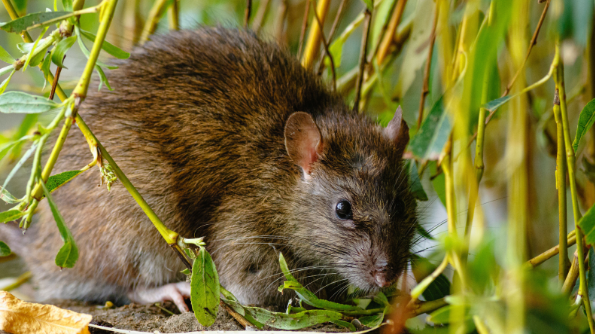
Home prevention centres on controlling food, reducing shelter and closing access routes.
Food should remain in closed containers where practical, while crumbs, cooking residue and spills should be cleaned rather than left overnight.
Rubbish should be tied and disposed of properly, and bin lids should remain closed.
Pet food should not remain accessible unnecessarily.
Clutter also deserves attention because cardboard, stored bags and unused materials can provide concealed harbourage.
Potential entry routes should be inspected around doors, walls, pipes, floor traps, service openings and false ceilings.
NEA advises households and premises owners to seal holes and cracks, maintain refuse areas and remove the conditions that allow rats to obtain food or shelter.
For repeated activity, professional inspection can help identify routes that are not obvious from occupied areas.
What Should F&B and Commercial Premises Do Differently?
Commercial properties generally require a more structured rodent-management programme because they face continuing exposure from food handling, deliveries, refuse generation, loading bays, customer traffic and large service areas.
Good housekeeping must extend beyond front-of-house cleanliness.
Overflowing bins, food debris beneath equipment, damaged refuse doors, cluttered storerooms and loading-bay gaps can all support rodent activity even when customer-facing areas appear clean.
NEA advises premises owners to maintain proper refuse management, repair defective facilities and remove conditions that create rat harbourage. Where an infestation is present, businesses should engage a licensed VCO for a sustained surveillance and control programme.
Technician findings should also lead to operational changes.
If a service report repeatedly identifies one damaged door or overflowing bin as the source of activity, continuing to trap rats without correcting that problem is unlikely to provide a durable result.
How Do You Know Whether Rodent Control Worked?
The disappearance of one visible rat is not enough to judge the programme.
Success should be assessed over time.
A useful result would involve no fresh droppings, no new gnawing, declining or absent camera detections, no recurring sightings, no new active burrows and inactivity at previously monitored travel routes.
The exact evidence will vary according to the property.
In a home, several weeks without new signs after proofing and treatment may indicate that activity has stopped.
In a commercial premises, monitoring devices and service reports can provide stronger evidence because the technician can compare activity between visits.
If signs shift to another area rather than disappear, the programme may need to be adjusted rather than declared complete.
Aardwolf’s use of continuing monitoring and video-camera surveillance is relevant here because the programme can assess activity during periods when staff or residents are not present.
The objective should be evidence of declining activity, not simply the absence of a rat during one daytime inspection.
Why Consider Aardwolf Pestkare for Rodent Control?
Aardwolf Pestkare was established in Singapore on 8 April 1997 and describes its wider philosophy as moving from reactive pest control towards pest management based on accurate problem identification and sustainable solutions.
Its current rodent programme includes inspection, eradication, monitoring and reporting.
Depending on the conditions found, the company uses traps, baiting, exclusion measures and digital monitoring.
Its wireless mini-video camera system can record rodent incursions and alert technicians, which is particularly useful for concealed or nighttime activity.
Aardwolf also provides technical services including pest identification, site assessment, trend analysis and programme review.
For vector-control work involving rats, Singapore regulations distinguish between the registered Vector Control Operator company, licensed Vector Control Technicians and certified Vector Control Workers. Aardwolf publicly states that it uses licensed personnel, while NEA requires registered VCOs to deploy appropriately licensed or certified personnel for vector-control operations.
For homeowners, the practical value is the ability to address both the rodents and the routes or conditions supporting them.
For businesses, the combination of monitoring, reporting and corrective recommendations can support a more structured long-term programme.
Frequently Asked Questions About Rodent Control in Singapore
What Should I Do if I See a Rat in My Home?
Avoid touching or cornering the rat. Secure exposed food and rubbish, note where it was seen and look for droppings, gnaw marks or entry gaps. If further signs appear, arrange an inspection. For rat activity in public areas, NEA advises reporting through the OneService app.
Does One Rat Mean There Are More?
One sighting cannot confirm the size of the population, but it should not automatically be treated as an isolated event. NEA notes that live sightings may indicate a larger infestation because rats commonly live in groups. Recurring sightings, droppings, burrows, gnaw marks or sounds provide stronger evidence.
What Are the Most Common Rodents in Singapore?
NEA identifies the Norway rat, roof rat and house mouse as three common urban rodents. Norway rats are more associated with ground-level and burrow environments, roof rats are strong climbers and house mice are smaller rodents that can exploit narrow indoor gaps.
What Is the Difference Between a Rat and a Mouse?
Mice are generally much smaller and can move through narrower openings. Rats are larger, while their preferred routes depend on the species. Norway rats favour lower-level areas and burrows, while roof rats are more likely to use elevated routes.
Are Traps Enough to Get Rid of Rats?
Traps can help reduce active rodents, but they do not remove food, water, shelter or entry routes. Effective control normally combines population reduction with sanitation, exclusion and monitoring.
Is Rat Bait Better Than Traps?
Neither method is automatically better. The appropriate method depends on the property, activity pattern and risk conditions. A professional programme may use trapping, baiting or both, together with proofing and monitoring.
Why Do Rats Keep Coming Back?
Rats commonly return when food, water, harbourage or entry routes remain available. Removing the current animals without changing those conditions allows another rodent to use the same environment.
How Much Does Rodent Control Cost in Singapore?
Aardwolf currently publishes approximately S450forastructuredfour-weekHDBrodentprogrammeandaroundS500 or more as a planning figure for landed-home rodent work. Commercial programmes are generally customised. These figures are planning references rather than fixed Singapore-wide prices.
How Long Does Rodent Control Take?
There is no single timeline because the programme depends on infestation severity, property size, available food, entry routes and how quickly proofing and housekeeping problems are corrected. A structured residential programme may involve several weekly visits rather than one appointment.
Can Rats Live in False Ceilings?
Yes. Roof rats in particular are capable climbers and can use elevated spaces, pipes, ledges and ceiling voids. Nighttime scratching above ceilings can justify inspection of those areas.
What Does Rodent Proofing Mean?
Rodent proofing means reducing access by sealing or correcting identified entry routes such as gaps around doors, pipes, walls, ceilings or other structural openings. The work should follow inspection so the relevant routes are addressed.
Do Businesses Need a Licensed Vector Control Operator for Rats?
Yes. Rats are vectors under Singapore’s vector-control framework, and NEA states that licensed VCOs must be engaged to provide vector-control services.
What Changed in Singapore’s Rat-Control Enforcement in 2025?
From 1 April 2025, NEA tightened enforcement against premises managers and owners for poor refuse management and housekeeping, defective refuse-handling facilities and rat nests or harbourage.
What Is the Latest 2026 Rat-Control Data in Singapore?
NEA reported an average of about 3,400 rat burrows per two-month surveillance cycle in the first half of 2026, down from about 5,400 in the same period of 2025. Around 490 rat-related enforcement actions were jointly taken by NEA and SFA between January and June 2026, with roughly 260 relating to poor refuse management.
How Do You Know Rat Treatment Has Worked?
Look for the absence of fresh droppings, gnawing, burrows and recurring sightings together with declining activity at monitoring locations. For commercial properties, repeated service reports and monitoring data can provide stronger evidence than a single visual inspection.
What Is SS 721:2025?
SS 721:2025 is Singapore’s Code of Practice for the Performance of Pest Management Services. It promotes Integrated Pest Management principles including prevention, risk assessment, appropriate combinations of control methods, reduced unnecessary chemical use and continuous monitoring. Rats are included within its scope.
Does Aardwolf Provide Rodent Monitoring?
Yes. Aardwolf’s current rodent programme includes monitoring and reporting and uses wireless mini-video cameras for suitable locations to detect rodent activity outside normal occupied hours.
Conclusion
Rodent in Singapore works best when the problem is treated as more than a trapping exercise.
Norway rats, roof rats and house mice use the built environment differently, but they all benefit when food, water, shelter and access remain available.
The practical sequence is therefore:
identify the activity → reduce the active population → remove food and harbourage → close entry routes → monitor the result → adjust the programme if activity continues.
Singapore’s current enforcement and pest-management direction supports the same approach.
NEA has tightened action against poor refuse management, structural defects and rat harbourage, while SS 721:2025 promotes prevention, risk-based control and continuous monitoring rather than relying only on short-term chemical treatment.
Aardwolf Pestkare provides rodent inspection, eradication, monitoring and reporting for Singapore homes and businesses, combining traditional control methods with exclusion and digital surveillance.
For homeowners, lasting control means keeping food and rubbish secured, reducing clutter, correcting access points and investigating recurring signs early.
For F&B outlets, warehouses and managed properties, those same principles need to be supported by structured inspection, refuse management, licensed vector-control services and documented follow-up.
The goal is not simply to remove the rat seen today.
It is to make the property harder for the next rodent to enter, feed, hide and establish itself.