Termites in Singapore can remain hidden for months while feeding inside timber, behind built-in carpentry or along concealed routes from the soil. By the time a homeowner notices a mud tube, recurring pellets, hollow-sounding wood or discarded wings, the visible evidence may represent only a small part of the infestation.
If you suspect termites, the most useful immediate response is to photograph the evidence, avoid unnecessary spraying or disturbance, arrange an inspection, identify the termite type and only then choose an appropriate treatment.
The right response is therefore not simply to spray the termites you can see. Subterranean termites, drywood termites and dampwood termites behave differently. A subterranean colony may involve soil and concealed travel routes, while drywood termites can live entirely inside furniture or built-in timber. Treatment should follow the species, infestation extent, property type and likely entry route rather than one standard termite product.
Aardwolf Pestkare was established in Singapore in 1997 and provides termite management for residential, commercial and industrial properties. Its current termite services include inspection, TermiCam-assisted detection, termite baiting, in-ground stations, soil treatment, corrective treatment and targeted treatment, with separate remedial approaches for drywood termites.
This guide explains how to recognise termite signs, distinguish the main termite types found in Singapore, understand the available treatments, estimate potential treatment costs and reduce the risk of another infestation after the immediate problem has been addressed.
What Should You Do Immediately If You Find Termites?
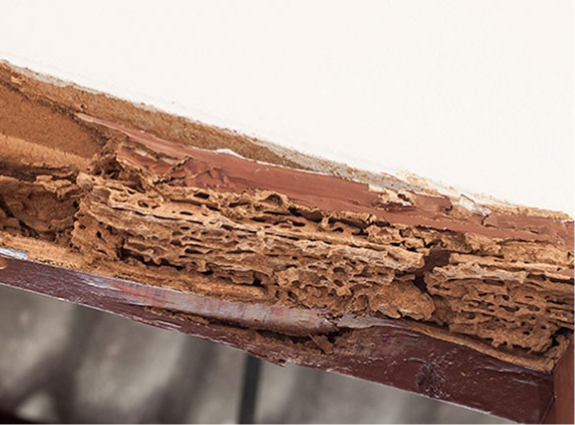
If you discover a suspected termite mud tube, pellet-like droppings, discarded wings or unusual timber damage, avoid immediately spraying the area or destroying active termite trails where practical.
Take clear photographs of what you found and note where the evidence appeared. If pellets keep returning, wings repeatedly appear in the same room or an active mud tube reforms after being disturbed, that information can help the technician understand the pattern of activity.
Preserving the evidence can be especially useful with subterranean termites because the workers visible inside one mud tube represent only part of a colony that may be located elsewhere. Destroying the visible trail or killing a small number of termites does not establish that the colony has been eliminated.
The practical sequence is therefore simple: document the evidence, minimise unnecessary disturbance, arrange an inspection, identify the termite type and then choose treatment according to the findings.
Why Are Termites a Year-Round Concern in Singapore?
Singapore’s warm and humid environment allows termite activity to continue without the long winter interruption found in colder climates. This makes termites a year-round property-management issue rather than a seasonal one.
Climate is only part of the risk. Termites also need suitable food, moisture and entry routes. Leaking pipes, poor drainage, persistent dampness, roof or wall water ingress, decaying timber, tree stumps, stored wood and direct wood-to-soil contact can all make a property more favourable to termite activity.
Property type also affects the exposure.
Landed homes have direct contact with soil, gardens, foundations, trees and outdoor timber, which can create additional opportunities for subterranean termites.
HDB flats and condominiums can still experience termite problems. Drywood termites do not require soil contact and can live inside furniture, doors, wardrobes, kitchen cabinets, skirting or other wooden components. Subterranean termites can also exploit concealed building routes where suitable conditions exist.
Living above ground level therefore does not automatically make a property termite-proof.
What Types of Termites Are Found in Singapore?
The three broad termite groups commonly discussed in Singapore are subterranean termites, drywood termites and dampwood termites.
The distinction matters because they live differently and therefore require different treatment strategies.
Subterranean termites are normally associated with soil and commonly reveal themselves through mud shelter tubes. Drywood termites can live completely inside timber without maintaining any connection to soil and are often detected through small pellet-like droppings known as frass. Dampwood termites are more strongly associated with timber that remains wet, decaying or exposed to persistent moisture.
Identifying which group is involved helps determine whether the problem is primarily colony-related, timber-related or linked to moisture conditions.
What Are Subterranean Termites?
Subterranean termites normally establish colonies associated with soil and travel through concealed routes to reach cellulose-based materials.
One of their most recognisable signs is the mud shelter tube. These earth-coloured passages allow termites to move between the colony and feeding areas while helping them retain the moisture they require.
Mud tubes may appear along walls, skirting, foundations, cabinets, pipes or concealed building areas.
The important point is that the visible tube is a route rather than necessarily the location of the colony. The colony can be some distance from the place where the homeowner first notices termite activity.
This is why killing the visible workers or removing one mud tube does not prove that the infestation has been resolved.
Aardwolf currently uses treatment options including termite baiting, in-ground stations, soil treatment, corrective treatment and targeted treatment for appropriate subterranean termite problems.
What Are Drywood Termites?
Drywood termites behave differently because they can survive entirely inside comparatively dry timber without an underground nest.
They may infest furniture, doors, frames, cabinets, built-in carpentry and other timber components.
Homeowners often discover them through frass rather than mud tubes. Frass consists of small, relatively uniform pellets that drywood termites push out of their galleries inside the wood.
If these pellets are cleaned away and later reappear in the same location, the affected timber should be inspected.
Aardwolf lists remedial options for drywood termites that can include targeted liquid treatment, spot treatment, heat treatment, fumigation and replacement of affected timber. The appropriate approach depends on where the infestation is located and how extensive it appears to be.
What Are Dampwood Termites?
Dampwood termites are more closely associated with timber that contains substantial moisture.
They may occur around decaying timber, tree stumps, fallen branches or wooden materials affected by persistent dampness.
Finding dampwood termite activity can therefore indicate two connected problems. The termites need to be addressed, but the reason the timber remains damp should also be investigated.
If a leaking pipe, roof defect, drainage problem or other source of water keeps the wood wet, correcting that moisture source forms part of reducing future termite risk.
What Are the Main Warning Signs of Termites?
The most common warning signs include mud shelter tubes, pellet-like frass, discarded wings, hollow-sounding wood, unexpectedly soft timber, damaged skirting and finishes that appear to bubble or deteriorate around affected wood.
Not every termite species leaves the same evidence.
Mud tubes are strongly associated with subterranean termites, while recurring frass is more characteristic of drywood termites.
Discarded wings can also be significant. Winged reproductive termites leave mature colonies during swarming. After landing, they shed their wings, which may accumulate near windows, doors, floors or light sources.
An outdoor termite swarm does not automatically mean the property itself is infested. Repeated swarming inside a room, especially when combined with frass, mud tubes or timber damage, deserves closer investigation.
Timber that sounds hollow when tapped can also indicate internal feeding, although hollow wood by itself does not prove that termites are responsible. The more useful approach is to evaluate several signs together.
Are They Termites or Flying Ants?
Winged termites are frequently mistaken for flying ants.
Termites generally have a broader, less constricted waist, straighter antennae and two pairs of wings that are relatively similar in length.
Flying ants normally have a clearly narrowed waist, elbowed antennae and front wings that are noticeably longer than the rear wings.
These physical differences can help with an initial observation, but treatment should not be chosen purely from a homeowner’s visual identification.
If winged insects repeatedly appear indoors or are accompanied by mud tubes, frass or timber damage, professional confirmation is more useful before pest treatment begins.
Can HDB Flats Get Termites?
Yes. HDB flats can experience termite infestations even though they do not have the same direct ground exposure as landed homes.
Drywood termites are particularly relevant because they can live entirely inside timber.
Built-in wardrobes, platform beds, kitchen cabinets, parquet flooring, skirting, door frames and wooden furniture can all provide suitable material.
Infested second-hand or imported furniture can also introduce drywood termites into a property.
Subterranean termites may potentially travel through concealed routes within a building where suitable conditions exist.
The absence of a garden or direct soil contact therefore reduces some types of exposure but does not eliminate termite risk entirely.
Can Condominiums Get Termites?
Yes. Condominiums can experience both timber-related and concealed termite activity.
Internally, the risks can resemble those of an HDB flat, particularly where the unit contains extensive built-in carpentry, parquet flooring or wooden furniture.
If activity appears to involve shared walls, building voids, façade areas or other common property, the owner may also need to coordinate with the managing agent or MCST.
The inspection should determine whether the problem appears to be contained within the individual unit or may extend beyond it.
How Does Aardwolf Detect Hidden Termite Activity?
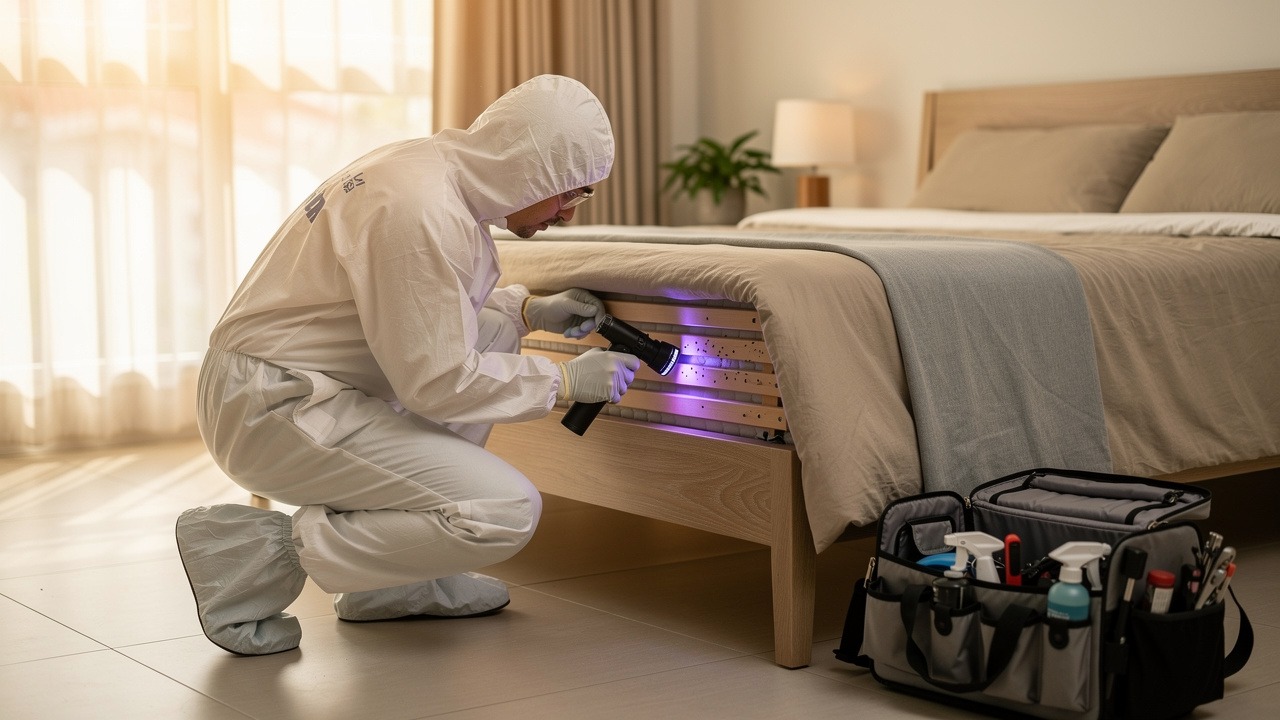
A termite inspection should ideally answer three questions: what termite type is present, where the activity is concentrated and how extensive the infestation appears to be.
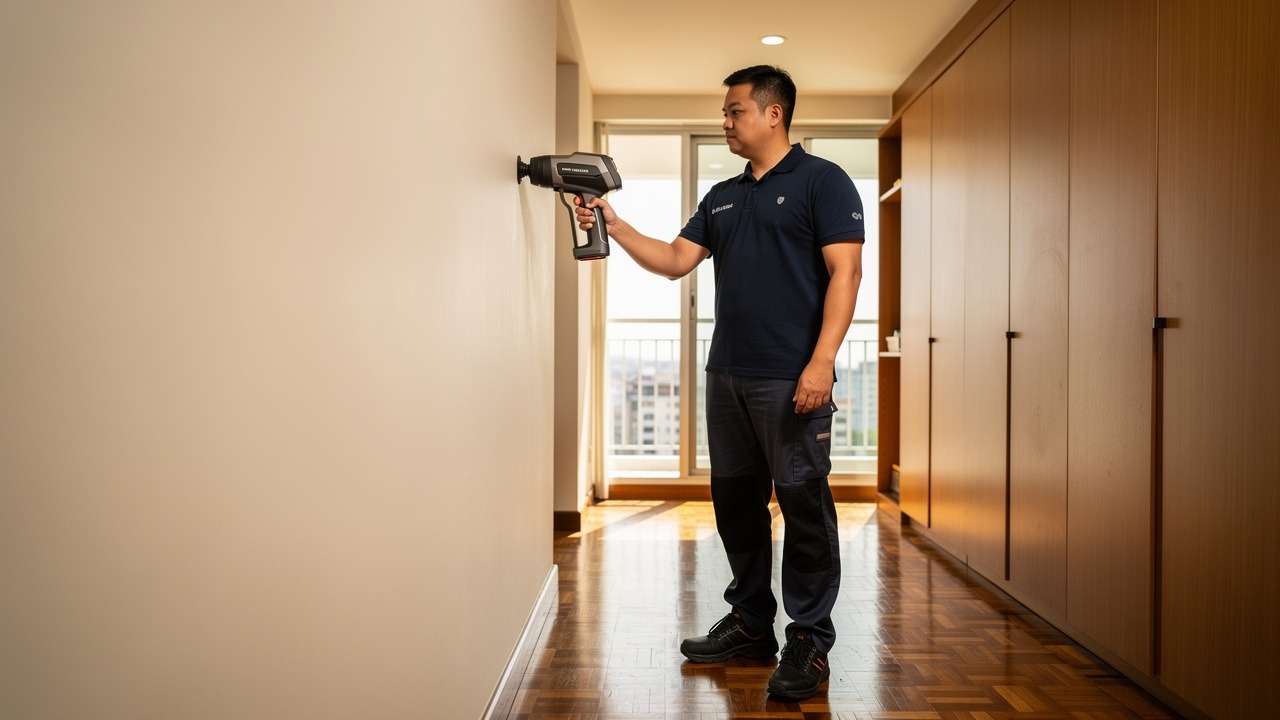
Aardwolf combines visual inspection with TermiCam thermal-imaging-assisted detection for suspected subterranean termite activity.
Thermal imaging can help technicians investigate concealed areas such as built-in structures, doors or other locations where termite activity may not be immediately visible.
However, thermal imaging should be understood as an inspection aid rather than a substitute for technician judgement.
The findings still need to be interpreted alongside physical evidence such as mud tubes, timber damage, property layout, moisture conditions and termite behaviour.
This approach can be particularly useful in Singapore homes containing extensive built-in carpentry or premium finishes, where unnecessarily opening surfaces can create additional repair work.
Which Termite Treatment Do You Need?
There is no single termite treatment that is automatically best for every property.
A subterranean colony and a drywood infestation inside a cabinet should not receive the same treatment simply because both involve termites.
For an active subterranean colony, termite baiting may be considered. For landed properties where subterranean termites are interacting with soil around the building, soil treatment may also form part of the strategy.
Where activity appears genuinely localised, corrective or spot treatment may be appropriate.
Drywood termites generally require a timber-focused approach because the colony remains inside the wood rather than travelling back to an underground nest. Depending on the extent, this may involve targeted liquid treatment, heat treatment, fumigation or replacement of the affected timber.
Where termite activity is associated with persistently damp wood, controlling the insects should be accompanied by correction of the moisture condition.
The central principle is that treatment should follow the termite type and site conditions rather than the homeowner choosing a preferred product first.
How Does Termite Baiting Work?
Termite baiting is primarily used for subterranean termites.
Worker termites locate the bait, consume it and continue interacting with other termites within the colony.
The treatment is designed to work gradually. This allows the bait to move through termite feeding and social behaviour instead of killing only the small number of workers present at one location.
Technicians monitor the stations, observe feeding and replenish bait where required.
Aardwolf’s current guidance describes baiting as a process that can take several weeks to several months. Some of its published cost guidance has used approximately 45 to 90 days as a planning estimate for certain programmes, but actual timing depends on colony size, feeding activity, environmental conditions and the number of active areas.
The important point is that baiting is not intended to produce an instant visible kill.
How Do You Know Whether Termite Baiting Is Working?
Baiting progress should be assessed through monitoring rather than by looking at one station once.
Technicians may look at whether termites continue consuming bait, whether active mud tubes are declining, whether fresh damage is appearing and whether activity at monitored locations is reducing.
A station becoming inactive does not automatically prove that the entire colony has been eliminated.
The useful endpoint is when the monitoring results support the conclusion that the targeted colony activity has been brought under control.
Termite Baiting or Soil Treatment: Which Is Better?
Neither treatment is automatically better.
Baiting works through termite feeding behaviour and gradual colony impact.
Soil treatment instead creates a treated zone in selected ground areas where subterranean termites may travel.
The choice depends on the infestation, building design, property exposure and treatment objective.
A landed property with substantial soil interaction may require a very different termite-management programme from an apartment where activity is concentrated inside wooden fixtures.
Some situations may also justify a combination of approaches rather than relying on one treatment alone.
The more useful question is not which treatment sounds stronger.
It is which treatment addresses the infestation and entry routes identified at the property.
When Is Soil Treatment Used?
Soil treatment is designed mainly for subterranean termite risk associated with the ground around or beneath a property.
The treatment scope can depend on the property perimeter, foundation conditions, soil access and potential termite entry routes.
The quantity of treatment and preparation can therefore differ considerably from one property to another.
Singapore also has environmental controls governing termiticide use.
NEA requires pest-control operators carrying out soil treatment to take precautions to prevent direct or indirect contamination of water resources. Additional hazardous-substance requirements may apply depending on the termiticide being used.
Soil treatment should therefore be considered a controlled technical application rather than simply applying insecticide around the perimeter of a building.
What Are Corrective and Spot Termite Treatments?
Corrective or spot treatment focuses on a defined active area.
This may be appropriate when inspection indicates that the infestation is genuinely localised.
For drywood termites, treatment may sometimes focus directly on a piece of infested timber because the colony remains inside the wood.
The limitation is that one visible termite location does not necessarily represent the full infestation.
Localised treatment should therefore be selected because the inspection supports it, not simply because it is cheaper or less disruptive than a larger programme.
How Much Does Termite Treatment Cost in Singapore?
Termite treatment prices should be compared according to the treatment method because different infestation types require very different scopes.
Aardwolf currently publishes approximately S150toS500 per visit for localised spot or wood treatment.
For a termite baiting programme, its published planning range is approximately S800toS3,000 or more.
Liquid soil treatment is published at approximately S1,000toS3,500 or more.
These figures are Aardwolf’s published planning ranges rather than universal Singapore market prices or guaranteed quotations.
A local drywood infestation inside one timber item should not be compared directly with a subterranean colony affecting a large landed property.
The final price can change according to the termite species, property size, number of active areas, infestation severity, accessibility, number of bait stations, treatment method, follow-up visits and applicable warranty or callback terms.
The most useful cost comparison therefore happens after inspection.
What Should a Termite-Control Quotation Include?
A useful termite quotation should explain the treatment logic rather than present only a final price.
It should identify the termite type or suspected species group, the active areas found during inspection and the treatment being recommended.
The scope should make clear which areas will be treated and which areas are excluded.
For baiting, the quotation should explain whether station installation, monitoring and bait replenishment are included.
For soil treatment, the treatment area and preparation should be clear.
For drywood treatment, owners should understand which timber items or locations are covered.
The quotation should also explain the follow-up schedule, applicable warranty or callback period and any conditions that could affect coverage.
If additional work could become necessary after treatment begins, the approval process should be clear rather than open-ended.
Why Can DIY Termite Sprays Make the Problem Harder to Assess?
Spraying visible termites may kill the insects directly exposed to the product.
It does not automatically reach the colony or hidden galleries.
This is particularly important with subterranean termites because the workers visible on a wall represent only a small part of a much larger system.
Heavy disturbance can also alter the visible activity before a technician has had the opportunity to understand where the termites are travelling.
The better sequence is to document the evidence, avoid unnecessary disturbance, identify the infestation and then apply a method suited to that termite type.
Is Termite Treatment Safe for Children and Pets?
There is no responsible universal answer such as “all termite treatments are completely safe.”
Safety depends on the product, concentration, application method and treatment location.
Baiting, targeted timber treatment, heat treatment, fumigation and liquid soil treatment do not involve identical exposure considerations.
Before treatment, homeowners should tell the pest-management company if there are young children, pets, aquariums, food-preparation areas or other sensitive conditions in the property.
The provider should then explain the preparation and access instructions for the specific treatment selected.
This is more useful than relying on a generic safety claim that ignores the actual method being used.
Does a Termite Company Need an NEA Licence?
This point is often misunderstood.
Singapore’s Vector Control Operator licensing framework applies to vector-control services involving pests such as mosquitoes, flies, cockroaches, rats and rat fleas.
Termites are non-vector pests, so termite work itself is not subject to that VCO licensing requirement in exactly the same way.
That does not mean termite treatment is unregulated.
Environmental safeguards, pesticide-handling requirements, hazardous-substance rules and treatment-specific requirements can still apply.
For example, soil termiticide application is subject to NEA measures intended to protect water resources, while controlled hazardous substances may require the appropriate licence or permit.
For homeowners, the practical lesson is not to use the phrase “NEA-licensed termite company” as the only measure of expertise.
Termite-specific experience, inspection quality, treatment planning, product handling, monitoring and applicable regulatory compliance are more useful indicators.
What Does Singapore Standard SS 721:2025 Mean for Termite Control?
Singapore Standard SS 721:2025 provides a Code of Practice for the Performance of Pest Management Services and incorporates Integrated Pest Management principles that also apply to termite management.
The framework emphasises preventing pest problems where possible, assessing risk before treatment, choosing an appropriate combination of control measures, reducing unnecessary chemical dependence and continuing to monitor the result.
For termites, this supports a more useful approach than simply reacting whenever visible insects appear.
The process becomes one of identifying the pest, understanding the risk, selecting the appropriate treatment, correcting contributing conditions and monitoring whether the intervention has worked.
This is especially relevant because the termites visible on the surface rarely represent the complete infestation.
Can Termites Return After Professional Treatment?
Yes.
Professional treatment can eliminate or control the targeted infestation without making the property permanently immune to termites.
Another colony may later reach the property through a different soil route. Drywood termites could also be introduced through another infested timber item.
Changes in drainage, moisture, building condition or landscaping can create new risk.
The treatment objective should therefore be twofold: deal with the existing infestation and reduce the conditions that make future infestation easier.
How Can Homeowners Reduce the Risk of Termites Returning?
Moisture management is one of the most important preventive measures.
Leaking pipes, roof leaks, drainage problems, persistent dampness and water accumulation near a landed property should be corrected rather than expecting termite treatment alone to compensate for them.
Timber around the property also deserves attention.
Decaying stumps, discarded wood and timber debris can provide termite food sources. Direct wood-to-soil contact should be reduced where practical.
Used or imported wooden furniture should also be checked before being introduced into the property because drywood termites can live entirely inside timber.
After treatment, previously affected areas should continue to be observed. If mud tubes, pellets or wings reappear, the activity should be documented and reported.
Properties with previous infestation or greater ground and moisture exposure may also benefit from a monitoring schedule based on their actual risk.
Why Is Property Type Important When Planning Termite Control?
An HDB flat, condominium and landed home do not present the same termite-control challenges.
An HDB flat may have less direct soil exposure but extensive built-in carpentry, wooden flooring and furniture that can support drywood termite activity.
A condominium can have similar internal risks while also introducing common-property and management considerations if activity extends beyond the individual unit.
Landed homes typically have more direct exposure to soil, gardens, timber decks, foundations, trees, stumps and outdoor wooden structures. Subterranean termite inspection may therefore need to consider internal activity together with the external perimeter and soil conditions.
Commercial and industrial properties introduce different concerns again because floor area, storage, fit-outs, operating schedules and access can all influence the treatment plan.
The termite programme should therefore follow the property as well as the termite species.
How Do You Know Whether Termite Treatment Worked?
Success should be judged according to the treatment and infestation type.
For baiting, technicians monitor termite feeding and changes in colony activity over time.
For local drywood treatment, the relevant question is whether frass or live termite evidence continues to appear from the treated timber.
For other treatment programmes, previously active locations can be checked for new mud tubes, fresh damage or other signs of continuing activity.
The disappearance of visible termites immediately after treatment does not automatically prove that the infestation has been eliminated.
The more useful measure is whether new activity stops and follow-up monitoring supports the conclusion that control has been achieved.
Why Consider Aardwolf Pestkare for Termite Control?
Aardwolf Pestkare has operated in Singapore since 1997 and provides termite management across homes, businesses and industrial properties.
Its current termite programme combines inspection and TermiCam-assisted detection with several treatment options for subterranean termites, including baiting, in-ground stations, soil treatment, corrective treatment and targeted treatment.
For drywood termites, the company also lists timber-focused treatment options that can include liquid treatment, spot treatment, heat treatment, fumigation and replacement of affected timber.
The practical advantage of having several treatment routes is not that every method should be used.
It is that the method can follow the termite species and actual site conditions.
A subterranean colony affecting a landed home should not automatically receive the same treatment plan as drywood termites found inside one piece of furniture.
Homeowners should still review the proposed scope, monitoring programme, price and applicable warranty conditions before treatment begins.
Frequently Asked Questions About Termites in Singapore
What Should I Do if I Find Termites at Home?
Take photographs of the evidence and avoid heavily disturbing or randomly spraying an active area where practical. Arrange an inspection so the termite type, extent of activity and likely entry routes can be assessed before treatment is chosen.
What Are the Most Common Signs of Termites?
Common warning signs include mud shelter tubes, recurring frass, discarded wings, hollow-sounding timber, soft wood, bubbling finishes and repeated damage around wooden fixtures.
What Is the Difference Between Subterranean and Drywood Termites?
Subterranean termites are normally associated with soil and commonly use mud shelter tubes to travel. Drywood termites can live completely inside timber without soil contact and are often detected through pellet-like frass.
Are Termites and Flying Ants the Same?
No. Winged termites usually have broader waists, straighter antennae and relatively equal-sized wings, while flying ants usually have narrow waists, elbowed antennae and longer front wings.
Can HDB Flats Get Termites?
Yes. Drywood termites can infest furniture and built-in timber without any soil connection. Subterranean termites can also potentially travel through concealed building routes.
Can Condominiums Get Termites?
Yes. Condominium units can experience both drywood and subterranean termite activity. Where common property may be involved, owners may also need to coordinate with the managing agent or MCST.
Can New Homes Get Termites?
Yes. A newer property is not automatically termite-proof. Soil routes, moisture, landscaping, building details and infested timber can still create risk.
How Much Does Termite Treatment Cost in Singapore?
Aardwolf currently publishes approximately S150toS500 per visit for localised spot or wood treatment, S800toS3,000 or more for termite baiting and S1,000toS3,500 or more for liquid soil treatment. These are planning ranges rather than fixed quotations.
How Long Does Termite Baiting Take?
Baiting generally takes several weeks to several months because it relies on termite feeding and colony interaction rather than immediate surface kill. The exact duration varies according to colony size, feeding activity and property conditions.
Is Termite Baiting Better Than Soil Treatment?
Neither method is universally better. Baiting works through termite feeding behaviour, while soil treatment creates a treated zone against subterranean termite movement. The inspection findings determine which approach is more appropriate.
Can I Spray Termites Myself?
Spraying exposed termites may kill only the insects you can see without reaching the colony or hidden infestation. Preserving the evidence and arranging identification is usually more useful than immediately spraying an active trail.
Is Termite Treatment Safe for Children and Pets?
Safety depends on the product and application method. Tell the provider about children, pets, aquariums and sensitive areas before treatment and follow the preparation and access instructions for the selected method.
Can Termites Return After Treatment?
Yes. Another colony may later enter through a different route or termites may be introduced through new timber. Moisture management, monitoring and property maintenance therefore remain important after treatment.
Does Termite Control Require an NEA Vector-Control Licence?
Termites are non-vector pests, so termite treatment itself does not fall under Singapore’s VCO licensing requirement in the same way as mosquito, fly, cockroach and rat control. Other environmental, hazardous-substance and treatment-specific requirements can still apply.
What Is SS 721:2025?
SS 721:2025 is Singapore’s Code of Practice for the Performance of Pest Management Services. Its Integrated Pest Management principles emphasise prevention, risk assessment, appropriate combinations of control methods and continuing monitoring.
What Should a Termite-Control Quotation Include?
A useful quotation should identify the suspected termite type, affected areas, proposed treatment, treatment scope, monitoring requirements, important exclusions and applicable follow-up or warranty conditions.
Does Aardwolf Treat Both Subterranean and Drywood Termites?
Yes. Aardwolf currently provides subterranean termite management through methods including baiting, soil and targeted treatment, while its drywood services include timber-focused options such as targeted liquid treatment, heat treatment, fumigation and timber replacement where appropriate.
Conclusion
Termites in Singapore are best managed by identifying the infestation before selecting the treatment.
Subterranean termites can travel from soil through concealed routes and may require baiting, soil treatment, corrective treatment or a combination of measures.
Drywood termites can remain entirely inside timber and need a treatment capable of reaching the affected wood.
Dampwood termite activity can also indicate persistent moisture or decaying timber that should be corrected alongside the pest treatment.
The practical sequence is to preserve the evidence, identify the termite type, assess how extensive the infestation is, select an appropriate treatment, monitor the result and reduce the conditions that could support future activity.
Aardwolf Pestkare has operated in Singapore since 1997 and currently combines inspection and TermiCam-assisted detection with several termite-management methods for different infestation types.
Singapore’s SS 721:2025 framework reinforces the same broader principle. Effective pest management should prioritise prevention, risk assessment, appropriate intervention and continued monitoring rather than relying only on reactive chemical treatment.
For homeowners, the objective should therefore not simply be to kill the termites visible today.
It is to understand what termites are present, where the activity is coming from, which treatment addresses that infestation and what needs to change to reduce the risk of another colony.