
Finding a mud trail on a wall, unexplained pellets beneath a cabinet or timber that suddenly sounds hollow can be worrying. Termites in Singapore often remain concealed while feeding, which means homeowners may not realise there is a problem until evidence begins appearing around skirting, doors, built-in furniture or other wooden areas.
Termites are particularly relevant to Singapore properties because warm and humid conditions allow subterranean termite colonies to remain active throughout the year. Drywood termites create a different problem because they can live entirely inside timber without maintaining the same connection to soil.
The correct response therefore depends on what type of termite is present and where the activity originates.
Aardwolf Pestkare has operated in Singapore since 1997 and provides termite management for residential, commercial and industrial properties. Its current services include inspections, thermal-imaging-assisted detection, termite baiting, in-ground stations, soil treatment, corrective treatment and targeted spot treatment, with different approaches for subterranean and drywood termites.
For Singapore property owners, the objective should not simply be to make the termites visible today disappear. It should be to identify the infestation early enough to choose a treatment that addresses the underlying source.
Quick Answer: What Should You Do If You Find Termites in Singapore?
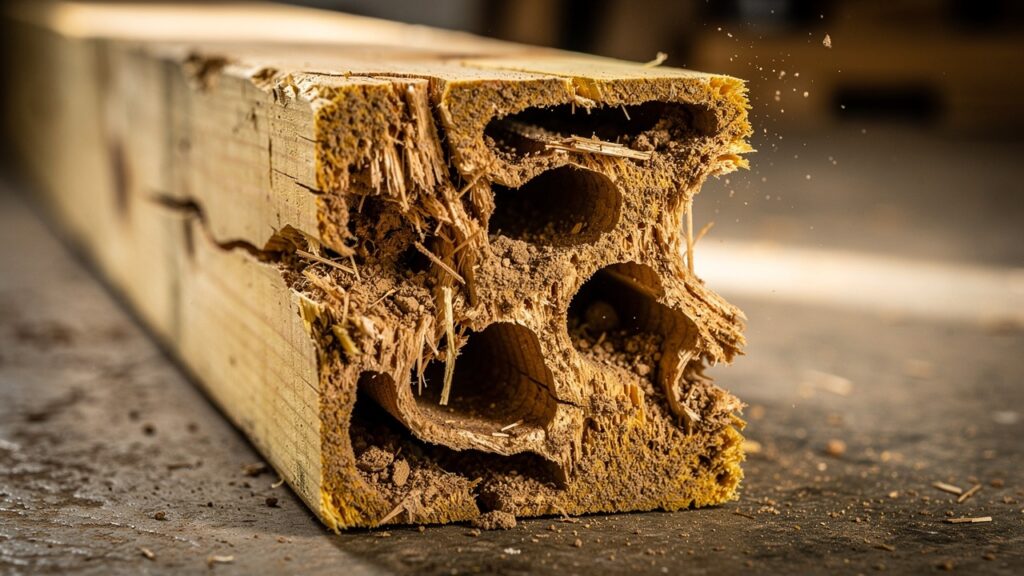
If you find mud tubes, recurring frass, discarded wings or suspicious timber damage, avoid randomly spraying or destroying the active area before it can be assessed.
Photograph the evidence where practical and arrange an inspection to determine whether the problem involves subterranean termites, drywood termites or another wood-damaging pest.
Subterranean termites may require baiting, soil treatment, targeted treatment or a combination of approaches. Drywood termites require treatment focused on the affected timber because their colonies can remain entirely within wood.
The most important sequence is therefore simple: identify the termite, understand where the activity originates, determine how extensive it is and then choose the treatment.
What Causes Termite Infestations in Singapore?
Termite infestations usually develop when termites gain access to cellulose materials such as timber under conditions that support feeding and survival.
Common risk factors include soil access, moisture, leaking pipes, poor drainage, wood-to-soil contact, decaying timber and wooden materials already carrying drywood termites.
Subterranean termites generally approach a building from soil and search for suitable cellulose-based food sources. Drywood termites can establish themselves directly within furniture, doors, cabinetry or other timber without maintaining an underground colony.
Singapore’s climate does not itself cause termite infestations, but warm and humid conditions mean homeowners cannot rely on a cold winter season to interrupt termite activity.
Does Moisture Attract Termites?
Moisture can contribute to termite risk, particularly for subterranean and dampwood termites.
Leaking pipes, roof problems, poor drainage and persistent water accumulation can create favourable conditions around buildings. Damp or decaying timber can also become more vulnerable.
For landed properties, gardens, drainage systems, external timber and areas where wood is close to soil deserve particular attention.
Repairing the moisture source is important because termite treatment alone does not correct a leaking pipe or persistently wet timber.
What Types of Termites Are Found in Singapore?
The three broad termite groups commonly discussed in Singapore are subterranean termites, drywood termites and dampwood termites.
Their behaviour is different enough that correct identification matters before treatment is selected.
A treatment designed for a soil-connected subterranean colony should not automatically be applied to a drywood colony living inside a cabinet.
What Are Subterranean Termites?
Subterranean termites live in colonies associated with soil and travel to timber and other cellulose-containing materials to feed.
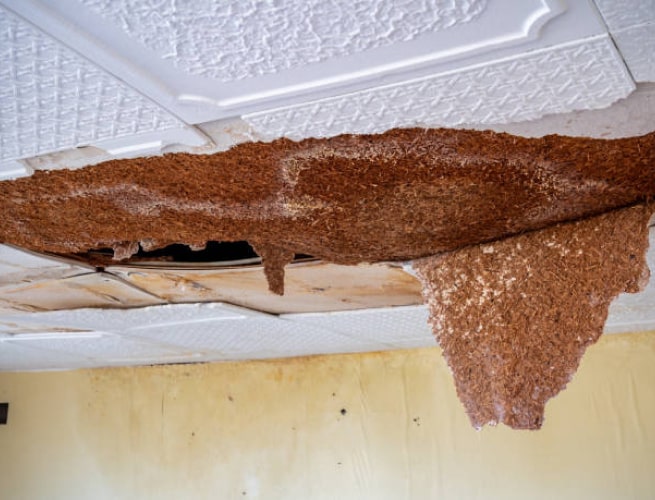
One of their clearest warning signs is a mud shelter tube.
These narrow earth-coloured passages allow termites to move between their colony and food source while maintaining the moisture they need. Tubes may appear along walls, skirting, foundations, cabinets or concealed building areas.
Because the colony can remain some distance from the visible damage, killing a group of workers inside one mud tube does not necessarily eliminate the infestation.
Aardwolf currently lists termite baiting, spot treatment and soil treatment among its approaches for subterranean termites.
What Are Drywood Termites?
Drywood termites live directly inside comparatively dry timber and do not depend on an underground nest.
They can infest furniture, doors, frames, cabinetry and other wooden components.
Because the colony can remain completely enclosed within the timber, drywood infestations may occur without visible mud tubes.
One important clue is frass, which appears as small dry pellets pushed out of the galleries created inside the wood.
Aardwolf currently lists remedial options including wood replacement, liquid treatment, spot treatment, heat treatment and fumigation according to the extent and location of the infestation.
What Are Dampwood Termites?
Dampwood termites favour timber with a high moisture content.
They are more strongly associated with wet or decaying wood, tree stumps, fallen branches and persistently damp timber than with ordinary dry furniture.
Their presence can therefore signal both a pest problem and an underlying maintenance problem.
If a leaking pipe, poor drainage or water ingress is keeping timber wet, correcting that condition becomes an important part of reducing future risk.
What Are the Main Warning Signs of Termites?
Common termite warning signs include mud tubes, hollow-sounding timber, recurring frass, discarded wings and unexplained deterioration of wooden components.
Different termite species leave different evidence, so homeowners should not expect every infestation to produce every sign.
The appearance of one suspicious symptom does not always confirm termites, but several warning signs appearing together justify further investigation.
What Do Termite Mud Tubes Look Like?
Mud tubes usually appear as narrow brown or earth-coloured tracks attached to walls or other surfaces.
They are particularly associated with subterranean termites because the tubes provide protected travel between the soil-connected colony and a food source.
If you find a suspected active mud tube, avoid destroying every section before inspection.
Its location and direction can provide useful evidence about where termites may be travelling.
Why Does Wood Sound Hollow?
Termites can consume timber internally while leaving part of the outer surface intact.
As the interior material disappears, tapping an affected section can sometimes produce a hollow or papery sound.
Hollow wood alone does not confirm termites. Timber can deteriorate for other reasons.
However, hollow areas combined with mud tubes, frass, blistering surfaces or discarded wings should be investigated.
What Does Termite Frass Look Like?
Drywood termite frass normally appears as small, hard and relatively uniform pellets beneath or beside infested timber.
The termites push the waste out from galleries inside the wood.
Cleaning away the pellets removes the visible sign but does not affect the colony.
If similar piles repeatedly return beneath the same cabinet, door frame or piece of furniture, the timber should be assessed.
What Do Discarded Termite Wings Mean?
Winged reproductive termites leave established colonies during swarming and later shed their wings.
Homeowners may therefore find clusters of similar wings around windows, doors, floors or lights.
An isolated outdoor swarm does not automatically prove that the property itself is infested.
Repeated indoor swarming or recurring piles of wings are more significant and should be investigated.
Are These Termites or Flying Ants?
Flying ants and winged termites are frequently confused.
Termites generally have a broad or relatively uniform waist, straight antennae and two pairs of wings that are roughly equal in length.
Flying ants have a narrower, constricted waist, elbowed antennae and front wings that are generally longer than the rear wings.
These differences are useful for an initial comparison, but homeowners should avoid making treatment decisions entirely from appearance.
If swarming repeatedly occurs indoors or is accompanied by mud tubes, frass or timber damage, professional identification is more reliable.
How Much Damage Can Termites Cause?

Termites can damage wooden materials internally before significant deterioration becomes visible from the outside.
Affected areas may include skirting, doors, cabinets, flooring, partitions and other concealed timber components.
The seriousness of an infestation depends heavily on what is affected and how far activity has spread.
A drywood colony inside one removable item of furniture is a different problem from subterranean termite activity extending through several built-in areas.
This is why a visible sign alone cannot reliably determine either treatment scope or repair cost.
What Should You Do When You Find Termites?
Keep enough of the evidence intact for identification.
Photograph mud tubes, frass, wings or damaged timber where possible and avoid unnecessarily dismantling large built-in areas.
Surface insecticide may kill exposed termites without reaching a subterranean colony or a drywood colony hidden inside timber.
Aardwolf similarly advises against relying on visible surface spraying as the solution to subterranean termite activity because the underlying colony can remain active.
If termites are uncovered during renovation, assessing the activity before replacing all affected timber can also help prevent the underlying source from being overlooked.
Does DIY Termite Treatment Work?
DIY products may kill individual termites that are directly exposed.
That does not necessarily mean they can eliminate the infestation.
For subterranean termites, workers visible inside a building may represent only a small part of a colony located elsewhere.
For drywood termites, the colony may be protected inside timber where a surface application cannot reach it effectively.
The more important question is therefore not whether a household product can kill a termite.
It is whether the treatment reaches and controls the infestation responsible for the ongoing activity.
How Does a Professional Termite Inspection Work?
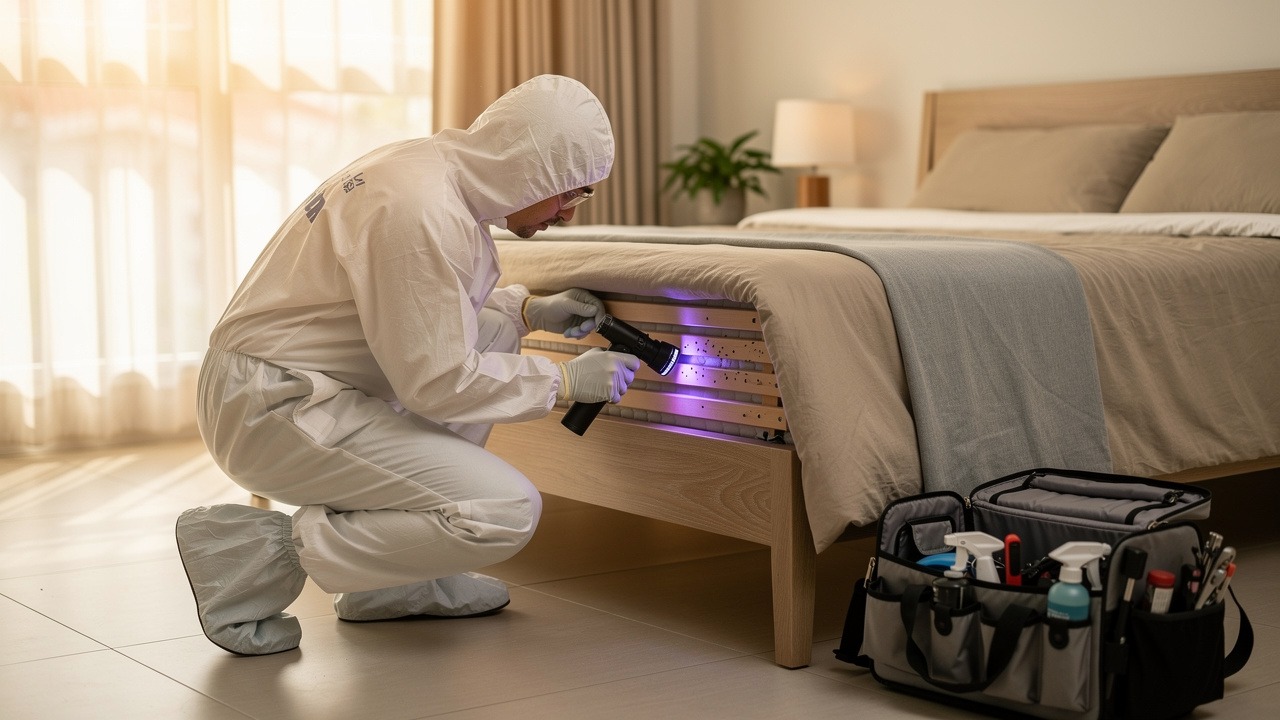
A termite inspection assesses visible evidence together with likely entry routes, timber condition, moisture and surrounding property conditions.
Depending on the building, technicians may inspect skirting, door frames, cabinets, plumbing areas, external soil, gardens, trees and other locations where termite activity may originate or travel.
For subterranean termites, the objective is often to understand how workers are reaching the building from a soil-connected colony.
For drywood termites, the technician needs to determine which timber sections may contain active colonies.
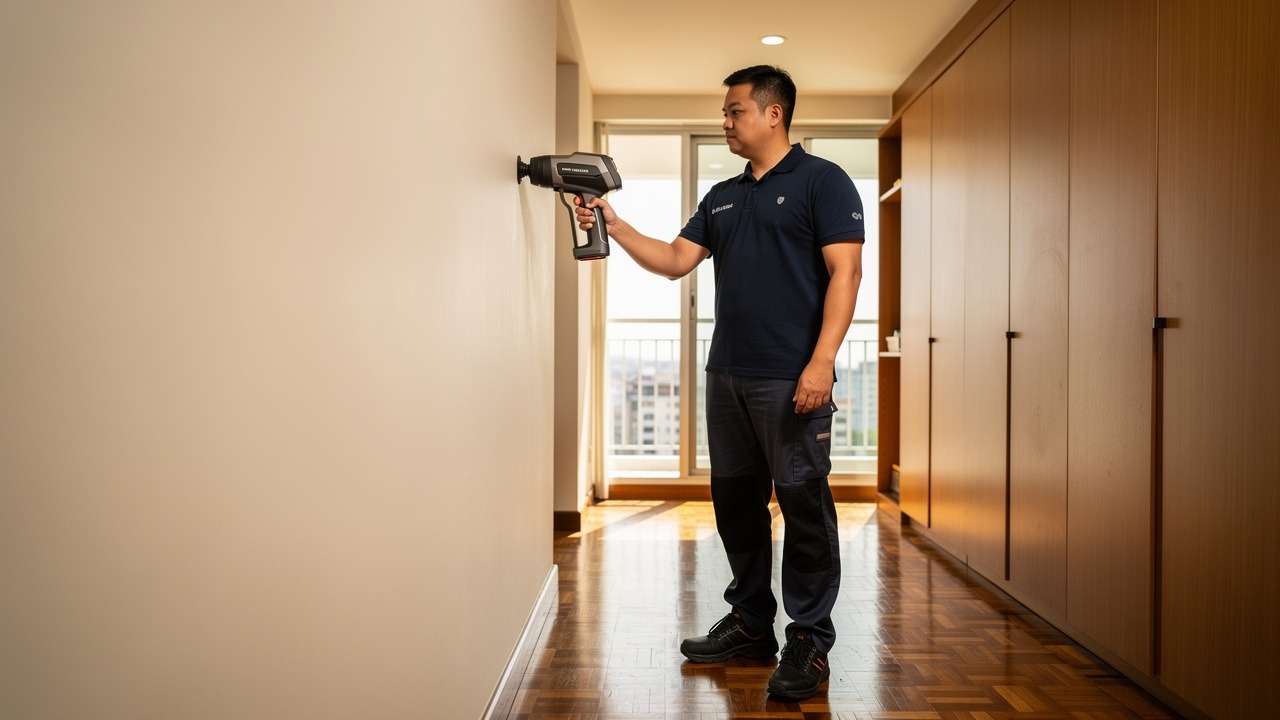
Aardwolf also uses thermal imaging as an additional inspection tool for suitable subterranean termite cases.
How Does Thermal Imaging Help Find Termites?
Aardwolf reports that it began using TermiCam thermal-imaging technology under an arrangement with TermiCam Australia in 2002 and states that its thermographers receive specialist training.
Thermal imaging should not be understood as a camera that directly photographs every termite behind a wall.
It detects thermal patterns that trained personnel interpret together with visible evidence and property conditions.
Its practical value is providing another source of information when concealed subterranean termite activity is suspected, potentially helping the inspection before unnecessary hacking or dismantling is considered.
How Does Termite Baiting Work?
Termite baiting is primarily used for subterranean termites.
Worker termites locate and consume the bait before transferring food within the colony.
Because the active ingredient is designed to work gradually, termite activity does not normally disappear immediately after a station is installed.
The programme requires monitoring so technicians can check feeding activity and determine whether colony activity is declining.
Aardwolf notes that termite baiting can take several weeks or months depending on colony activity and site conditions.
The advantage of baiting is that it uses termite feeding behaviour to influence more of the colony rather than treating only the insects visible at one feeding point.
What Is Soil Treatment for Termites?
Soil treatment applies an appropriate termiticide to selected soil areas to create a treated zone against subterranean termite movement.
The treatment design depends on building structure, soil conditions, access and where termites are likely to enter.
It can be particularly relevant to landed properties, ground-floor units and other structures with significant soil interaction.
Termiticide application also carries environmental responsibilities in Singapore.
NEA requires measures to prevent soil-treatment chemicals from contaminating water resources. Its requirements include consideration of groundwater levels, site preparation and measures to prevent direct or indirect pollution. Operators using termiticides containing controlled hazardous substances may also require the relevant Hazardous Substances Licence or Permit.
Soil treatment should therefore be treated as a controlled technical application rather than simply applying insecticide around a property.
Termite Baiting vs Soil Treatment: Which Is Better?
Neither termite baiting nor soil treatment is automatically better for every property.
They work differently.
Baiting uses the feeding behaviour of subterranean termites to influence the colony and therefore requires monitoring over time.
Soil treatment creates a treated zone in relevant ground areas to reduce subterranean termite access to the building.
A landed property with substantial soil contact may present different treatment considerations from an apartment where activity has appeared around one internal location.
Some properties may be suitable for baiting, some for soil treatment, and some situations may justify using different measures as part of a wider programme.
Aardwolf currently offers both approaches and describes treatment selection as dependent on termite species, property layout and infestation conditions.
The better question is therefore not “Which treatment is stronger?”
It is “Which treatment addresses the termite activity identified at this property?”
What Is Spot Treatment?
Spot treatment focuses a termite-control application on a defined area of activity.
It can be appropriate when the infestation is genuinely localised.
For example, a limited drywood infestation within a particular wooden component may not require treatment of an entire property.
The important limitation is that the visible treatment area does not necessarily reveal the full size of a hidden infestation.
If activity belongs to a larger subterranean colony, treating only one location may leave the source untouched.
Inspection should therefore confirm that a localised treatment is appropriate.
What Are Corrective Treatments and In-Ground Stations?
Corrective treatments address existing termite activity in identified parts of a property.
In-ground stations are installed in suitable ground locations around a property and can form part of a subterranean termite-management programme.
Aardwolf currently lists baiting, in-ground stations, corrective treatment, soil treatment and spot treatment within its termite services.
The arrangement should follow the property rather than a standard layout imposed on every site.
How Are Drywood Termites Treated?
Drywood termites require timber-focused control because their colonies can live entirely inside the affected wood.
Treatment depends on how much timber is involved and whether the infestation is limited to one removable object or extends through multiple built-in components.
Aardwolf lists options including wood replacement, liquid treatment, spot treatment, heat treatment and fumigation.
The appropriate choice depends on location, accessibility and extent.
This is why subterranean termite baiting should not automatically be recommended whenever the word “termite” appears.
How Long Does Professional Termite Treatment Take?
There is no single timeframe for every termite infestation.
Termite baiting is intentionally gradual and may require weeks or months because termites need to discover and continue feeding on the bait before colony activity declines.
Soil and spot treatments may be physically applied within a shorter period, but completing the application does not necessarily mean monitoring is complete.
Drywood treatment varies according to access, the amount of affected timber and whether drilling, removal, heat treatment, fumigation or another remedial method is used.
A responsible treatment plan should therefore provide a timeframe based on the actual infestation rather than promising the same completion period for every property.
Can Termites Return After Treatment?
Yes.
Termite treatment does not make a property permanently immune to future infestation.
New subterranean colonies may approach from surrounding soil, previously inaccessible routes may become active, moisture conditions may change and drywood termites can potentially be introduced through infested timber or furniture.
A recurrence also does not automatically mean the original treatment failed. It may represent new activity after the earlier infestation was controlled.
This is why post-treatment monitoring and property maintenance matter.
Singapore’s SS 721:2025 pest-management framework similarly emphasises prevention, risk-based assessment, appropriate combinations of control measures and continuous monitoring rather than relying only on reactive chemical treatment.
What Should You Expect After Termite Treatment?
The post-treatment process depends on the method.
Baiting requires continued monitoring while termites interact with the bait and colony activity changes.
After soil or spot treatment, technicians may still need to check whether activity has stopped or appeared elsewhere.
Damaged timber may also require repair or replacement after termite control has addressed the active infestation.
Homeowners should continue watching for new mud tubes, recurring frass, discarded wings or new deterioration rather than assuming one completed treatment means the property never needs observation again.
Is Termite Treatment Safe for Children and Pets?
Safety depends on the product, application method, location and precautions required for the specific treatment.
A bait station, targeted wood treatment, heat treatment and liquid soil application do not have identical exposure considerations.
Homeowners should tell the pest specialist before work begins if the property contains young children, pets, aquariums, food-preparation areas or other circumstances that may affect treatment planning.
The provider should explain preparation, access restrictions and post-treatment precautions for the product being used.
For soil termiticide application, Singapore’s environmental requirements also demonstrate why application needs to be carefully controlled to prevent contamination of water resources.
Avoid relying on blanket claims that every termite treatment is “completely harmless.” The more useful information is what product and method are being used and which precautions apply.
How Much Does Termite Treatment Cost in Singapore?
Termite treatment can range from relatively small targeted work to several thousand dollars for a larger programme.
Aardwolf’s current 2026 pricing guide gives broad ranges of approximately S$150 to S$500 per visit for localised spot or wood treatment, S$800 to more than S$3,000 for termite baiting, and S$1,000 to more than S$3,500 for liquid soil treatment. These are Aardwolf-published planning ranges rather than fixed Singapore market prices or guaranteed quotations.
Property size, species, infestation extent, access, drilling or preparation requirements and follow-up monitoring can all affect the final quotation.
A small drywood infestation in furniture is therefore not directly comparable with subterranean activity around a large landed property.
The most useful price comparison comes after the infestation has been identified.
Can HDB Flats and Condominiums Get Termites?
Yes.
Termites are not restricted to landed houses.
Drywood termites can live entirely inside furniture or built-in timber, which means soil contact is not necessary.
Subterranean termites can also travel through concealed building routes when suitable conditions exist.
Property type influences risk and treatment design rather than determining whether termites are possible.
Landed homes generally have greater direct soil exposure, gardens and larger external perimeters, while apartments may present different access routes and timber-related risks.
Can New Homes Get Termites?
Yes.
A newer property is not automatically termite-proof.
Drywood termites can enter through already infested wooden materials or furniture, while subterranean termites may exploit suitable routes through or around the structure.
Construction age is therefore only one factor.
Moisture, soil exposure, timber use, construction details and surrounding termite activity can all influence risk.
Suspicious signs in a newer HDB flat, condominium or landed home should still be investigated.
How Often Should You Check for Termites?
Inspection frequency should depend on property risk rather than one universal rule.
Aardwolf currently recommends approximately annual professional inspections for many Singapore homes and around six-monthly inspections for landed properties, citing their greater soil, vegetation and moisture exposure. These are Aardwolf’s recommendations rather than a statutory Singapore inspection schedule.
Properties with previous termite problems or significant moisture issues may justify closer monitoring.
Between professional inspections, homeowners can watch for mud tubes, frass, wings, dampness and unexplained timber changes.
How Can You Reduce the Risk of Future Termites?
Termite prevention focuses on reducing conditions that make access and survival easier.
Leaks should be repaired promptly and drainage should remain functional.
Decaying stumps, unused timber and wooden materials should not remain unnecessarily close to a property where they can stay damp.
Wood-to-soil contact should be minimised where practical, and cracks, water ingress and deteriorated timber should be repaired rather than ignored.
The U.S. Environmental Protection Agency similarly recommends keeping soil around structures appropriately drained, repairing leaks, reducing openings through foundations and keeping wood debris away from structures as general termite-prevention measures.
Singapore’s SS 721:2025 framework supports the same broader principle of prevention, targeted intervention and continued monitoring.
What Is SS 721:2025 and Why Does It Matter for Termite Management?
SS 721:2025 is Singapore’s Code of Practice for the Performance of Pest Management Services.
The standard was developed through a working group co-led by NEA and the Singapore Pest Management Association and establishes Singapore’s first national framework for professional pest-management services.
It promotes Integrated Pest Management principles including prevention first, objective risk assessment, combining different control methods where appropriate, reducing unnecessary pesticide dependence and continuous monitoring.
NEA specifically includes termites among the pest types to which the standard’s IPM approach can be applied.
For property owners, the practical message is straightforward.
Good termite management should investigate why the infestation is occurring, select control according to actual risk and monitor the outcome rather than automatically applying the same chemical treatment to every site.
Why Consider Aardwolf Pestkare for Termite Management?
Aardwolf Pestkare’s main first-party distinction is the range of termite-management methods it currently provides.
Its services include termite baiting, in-ground stations, corrective treatment, soil treatment, spot treatment and species-specific management for subterranean and drywood termites. Thermal imaging is also used as an additional investigation tool for suitable subterranean cases.
The company has operated in Singapore since 1997 and also lists Dr Jerry Hu as its Termite Management Specialist within its technical team.
The practical advantage of having several treatment approaches is that a subterranean soil-entry problem, a localised drywood infestation and concealed termite activity do not need to be treated as though they were identical.
The treatment can follow the diagnosis.
Frequently Asked Questions About Termites in Singapore
What Should I Do Immediately If I Find Termites?
Avoid randomly spraying or destroying the suspected activity. Photograph mud tubes, frass, wings or timber damage where practical and arrange an inspection. Identifying the termite type and extent of activity should come before choosing treatment.
What Is the Best Termite Treatment in Singapore?
There is no single best termite treatment for every property. Subterranean termites may be managed with baiting, soil treatment, spot treatment or a combination of approaches. Drywood termites require timber-focused treatment. The correct method depends on the species, property and extent of infestation.
Termite Baiting or Soil Treatment: Which Is Better?
Neither is universally better. Baiting works through subterranean termite feeding behaviour and requires monitoring, while soil treatment creates a treated zone to reduce termite movement from soil into a structure. The right choice depends on property design, termite activity and treatment objectives.
How Long Does Termite Baiting Take?
Baiting is not an instant treatment. Aardwolf states that colony reduction may take several weeks to several months depending on termite activity, colony size, feeding behaviour and site conditions.
Can Termites Come Back After Treatment?
Yes. A property can experience future termite activity from new colonies, new entry routes, moisture problems or newly introduced infested timber. Monitoring and prevention remain important even after an infestation has been controlled.
Are Flying Ants the Same as Termites?
No. Winged termites generally have broader waists, straighter antennae and wings of similar length. Flying ants normally have narrower waists, elbowed antennae and front wings longer than their rear wings.
Is Termite Treatment Safe Around Children and Pets?
Precautions depend on the specific treatment and product. Homeowners should tell the provider about children, pets, aquariums and other site-specific concerns before treatment and follow the preparation and access instructions given for the selected method.
How Much Does Termite Treatment Cost in Singapore?
Aardwolf’s current guide gives broad planning ranges of approximately S$150–S$500 for localised spot or wood treatment, S$800–S$3,000+ for baiting and S$1,000–S$3,500+ for liquid soil treatment. Actual prices depend on species, property size, severity and treatment scope.
Can HDB Flats and Condos Get Termites?
Yes. Drywood termites can infest furniture and built-in timber without soil contact, while subterranean termites can potentially travel through concealed building routes. Landed homes generally have more direct soil exposure, but apartment living does not eliminate termite risk.
Does Aardwolf Pestkare Treat Homes and Businesses?
Yes. Aardwolf currently provides termite management for residential, commercial and industrial properties in Singapore, including inspection, baiting, in-ground stations, soil treatment, corrective treatment, spot treatment and separate approaches for subterranean and drywood termites.
Final Thoughts: What Should You Do About Termites in Singapore?
Termites are easier to manage when suspicious activity is investigated before the evidence is destroyed or covered with insecticide.
Mud tubes can point towards subterranean termites travelling from a hidden soil-connected colony.
Recurring frass can indicate drywood termites living inside furniture or built-in timber.
Persistent dampness can create another set of conditions that need to be corrected alongside treatment.
The correct solution therefore begins with identification.
Aardwolf Pestkare’s current termite programme combines inspection with several possible treatment methods, including baiting, in-ground stations, soil treatment, corrective treatment and spot treatment. Thermal imaging provides an additional inspection tool for suitable subterranean cases.
For Singapore homeowners, signs such as fresh mud tubes, recurring frass, discarded wings and unexplained hollow timber are worth investigating even while the property still appears usable.
Once the termite type and extent of activity are understood, treatment can be selected according to the actual problem rather than the most familiar treatment name.
That is the more useful objective of termite management: not simply making today’s visible insects disappear, but bringing the underlying infestation under control and reducing the conditions that could allow termites to become a larger problem again.