Mosquito pest control in Singapore works best when it starts with the source of the problem rather than the mosquitoes you happen to see.
Adult mosquitoes may be the most obvious nuisance, but repeated biting usually continues when stagnant water, sheltered resting areas or nearby breeding habitats remain untreated. Fogging may reduce exposed adult mosquitoes temporarily, yet new mosquitoes can continue emerging if eggs, larvae or pupae remain in untreated water.
Singapore’s National Environment Agency identifies preventing mosquito breeding as the most effective way to control mosquito populations. Aedes mosquitoes can breed in surprisingly small quantities of stagnant water, including water collected in plant trays, pails, vases, drains, roof gutters and other containers around homes and businesses.
The practical mosquito-control sequence is therefore:
inspect → remove breeding water → treat water that cannot be removed → control adult mosquitoes where justified → monitor whether activity returns.
Aardwolf Pestkare has operated in Singapore since 1997 and currently provides mosquito management for residential and commercial properties. Its mosquito programme combines inspection for actual and potential breeding habitats with larviciding and adult mosquito treatments such as water-based fogging and misting where site conditions justify them.
This guide explains what to do when mosquitoes keep appearing, where they commonly breed, how larviciding, fogging and misting differ, when professional treatment becomes useful, what mosquito pest control may cost and how to tell whether the treatment is actually working.
What Should You Do If Mosquitoes Keep Biting Around Your Property?
If mosquito activity suddenly increases, the first step should not automatically be fogging.
Start by asking where new mosquitoes could be coming from.
Inspect areas capable of holding stagnant water, particularly plant containers, trays, pails, roof gutters, drains, outdoor equipment, decorative containers and objects exposed to rain. Water that can be emptied or prevented from accumulating should be removed at the source.
If mosquito larvae are found in water that cannot easily be eliminated, professional larviciding may be appropriate.
If significant adult mosquito activity remains after breeding risks have been investigated, adult-control methods such as fogging or misting may then be considered according to the property and level of activity.
NEA’s mosquito-control guidance follows the same principle. Permanent removal of breeding habitats is preferred, while a competent pest-control operator should be engaged where mosquito-breeding habitats cannot be permanently removed.
The useful question is therefore not simply:
“How do I kill the mosquitoes?”
It is:
“Why are mosquitoes continuing to appear here?”
Why Is Mosquito Control Important in Singapore?
Mosquito control is closely connected to public health.
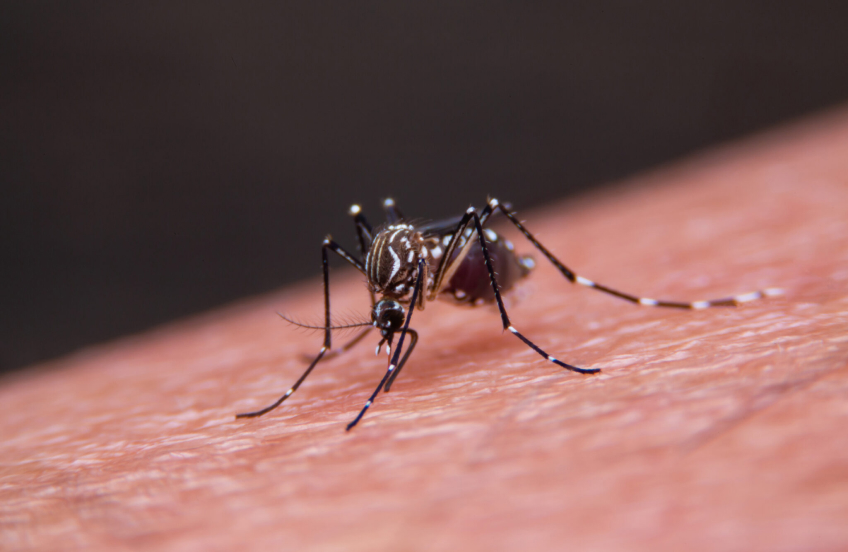
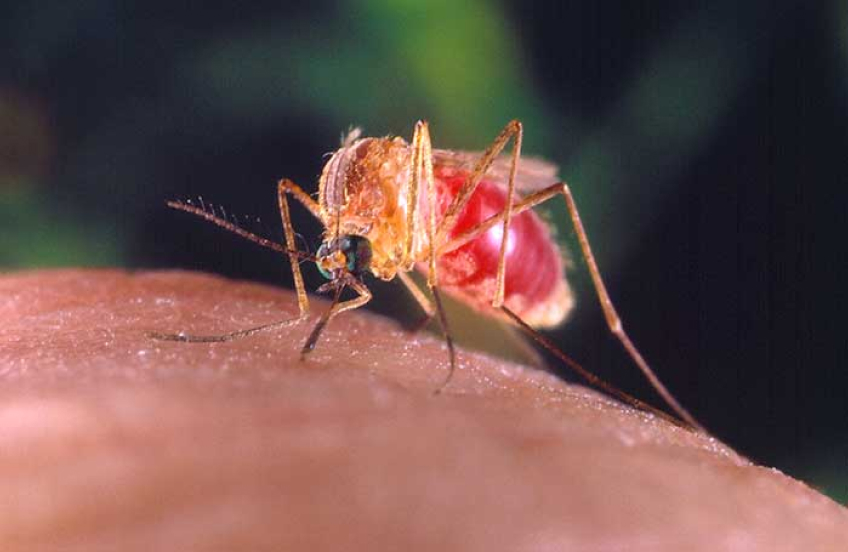
The female Aedes aegypti mosquito is Singapore’s primary vector for dengue and Zika. NEA describes the species as particularly well adapted to Singapore’s urban environment, where human hosts and small artificial water containers are readily available.
Mosquito activity is a year-round concern, although vigilance becomes particularly important during Singapore’s traditional dengue peak season from May to October.
In 2025, NEA conducted approximately 565,730 mosquito inspections across Singapore and detected about 20,469 mosquito-breeding habitats. In dengue cluster areas, approximately 65% of detected Aedes breeding was found in homes. More than 9,800 enforcement actions were taken against owners and occupiers for mosquito breeding during the same year.
These figures show why mosquito prevention is not only an issue for visibly neglected properties.
A clean-looking home, condominium or business can still contain a small breeding habitat inside a flowerpot plate, blocked drain, roof gutter, planter, container or service area.
Which Mosquitoes Are Most Relevant in Singapore?
Not every mosquito seen in Singapore is an Aedes mosquito.
Singapore has many mosquito species, but some are more relevant to public health or household nuisance than others.
Aedes aegypti is the primary vector of dengue and Zika in Singapore and is strongly associated with urban environments and man-made containers holding relatively clean stagnant water.
Aedes albopictus can also transmit dengue and is more frequently associated with outdoor greenery and habitats such as tree holes and natural or artificial containers.
Singapore’s urban environment also contains Culex mosquitoes. Culex quinquefasciatus commonly breeds in locations such as blocked drains and is primarily active at night.
NEA notes that Project Wolbachia specifically targets Aedes aegypti rather than every mosquito species. This means people can still experience mosquito bites from other species even in Wolbachia release areas, reinforcing the need for source reduction.
For property owners, the key takeaway is that persistent mosquito activity still deserves environmental investigation even if the mosquito species is not immediately known.
Where Do Mosquitoes Commonly Breed Around Singapore Properties?
Mosquitoes need stagnant water to complete the aquatic stages of their life cycle.
For Aedes mosquitoes, this can involve remarkably small water-holding locations.
Around homes, common risks include flowerpot plates, ornamental containers, pails, vases, outdoor bins and items exposed to rain.
Around larger properties, breeding opportunities can include open or blocked drains, roof gutters, gully traps, planter boxes, air-conditioner trays, basement drains, car-park sumps, fountains and rooftop areas.
NEA’s specific guidance for condominium estates includes checks of drains, gully traps, ground puddles, outdoor bins, flower troughs, plant boxes, ponds, fountains, air-conditioner trays, rooftops, pump rooms and water tanks.
The important point is that mosquito breeding does not require a visibly dirty pond.
A small hidden pocket of stagnant water can be sufficient.
That is why regular inspection is more useful than waiting until biting activity becomes obvious.
How Often Should You Check for Mosquito Breeding?
NEA recommends regular mosquito-breeding checks at least once a week.
This frequency matters because mosquitoes can develop quickly under Singapore’s warm conditions.
Homeowners should pay particular attention to items that repeatedly collect rain or irrigation water.
Plant pot plates require more than simply tipping the water away. Their surfaces should also be cleaned because mosquito eggs can remain attached near the waterline.
Roof gutters and drains should remain clear so water can flow instead of forming stagnant pockets.
Pails and containers that are not being used should be stored in a way that prevents rainwater accumulation.
NEA continues to promote regular source reduction as the foundation of mosquito prevention, especially during the traditional May-to-October dengue peak period.
What Is the Best Mosquito Pest Control Method?
There is no single mosquito treatment that solves every mosquito problem.
The most effective programme matches the treatment to the mosquito’s life stage and the conditions found on the property.
Source reduction prevents mosquitoes from reproducing by removing the water required for breeding.
Larviciding targets immature mosquitoes developing in water that cannot reasonably be removed.
Fogging and misting primarily target adult mosquitoes.
Monitoring shows whether mosquito activity and breeding risk actually decline after intervention.
The mistake is treating these methods as interchangeable.
They solve different parts of the same mosquito problem.
Aardwolf’s current mosquito approach follows this broader sequence by inspecting for breeding risks, using larviciding where appropriate and applying water-based fogging or misting when adult mosquito control is required.
Why Is Source Reduction the First Step?
Source reduction means eliminating the conditions mosquitoes need to reproduce.
If rainwater repeatedly accumulates inside an unused container, removing the container solves more of the problem than spraying adult mosquitoes nearby every week.
If a roof gutter is blocked, clearing the gutter is more sustainable than continually treating the water that collects inside it.
If a leaking area produces permanent puddles, fixing the leak addresses the underlying condition.
NEA describes removal of mosquito breeding habitats as the most effective way to control mosquito populations. It also cautions that mosquito traps and other supporting tools cannot replace source reduction because suitable breeding environments remain abundant in Singapore.
This is the central principle behind effective mosquito management:
stop producing mosquitoes before repeatedly trying to kill them after they emerge.
What Is Mosquito Larviciding?
Larviciding targets mosquitoes during their immature aquatic stages.
An appropriate larvicide is applied to water where mosquito larvae may be developing, interrupting the life cycle before those larvae become flying adults.
This can be useful where water cannot be permanently removed.
Aardwolf currently includes larviciding within its mosquito-control services and combines it with inspection of actual and potential breeding areas.
Larviciding should not, however, become a substitute for basic maintenance.
If stagnant water exists because a disposable container has been forgotten outside, removing the container is preferable to repeatedly treating it.
If a drain can be cleared, improving the drainage is preferable to allowing the same water to accumulate indefinitely.
The treatment should therefore follow the condition rather than become the condition’s permanent replacement.
What Is Mosquito Fogging?
Fogging is primarily an adult mosquito-control method.
An appropriate insecticide is dispersed as fine droplets into the treatment area, reducing mosquitoes that are exposed during the application.
This can be useful when adult mosquito populations need to be reduced quickly as part of a wider control programme.
What fogging does not do is eliminate breeding habitats.
Eggs, larvae and pupae can remain in stagnant water after adult mosquitoes have been reduced.
New mosquitoes can therefore emerge after treatment.
Mosquitoes can also fly in from neighbouring areas.
NEA consequently discourages routine thermal fogging purely as a preventive measure. Its guidance says fogging should instead be used when adult mosquito populations are high or when mosquito-borne disease transmission or nuisance conditions justify it.
Why Do Mosquitoes Keep Coming Back After Fogging?
The most common reason is that fogging reduced the adults but did not remove the source producing new mosquitoes.
Imagine a property with a blocked gutter containing larvae.
Fogging may kill some flying adults around the garden today.
The larvae in the gutter can still continue developing.
Several days later, another generation emerges and mosquito activity rises again.
The same thing can happen when adult mosquitoes are entering from surrounding properties.
NEA has repeatedly explained that fogging has a temporary effect when breeding habitats remain and that source reduction is more sustainable.
Repeated return after fogging should therefore trigger another inspection rather than an assumption that the only solution is more frequent fogging.
What Is Mosquito Misting?
Misting is another method used primarily against adult mosquitoes.
Fine droplets of an appropriate insecticide are applied to selected mosquito-prone areas.
Aardwolf currently offers misting alongside larviciding and water-based fogging for suitable properties.
Like fogging, misting does not make breeding prevention unnecessary.
If stagnant water continues producing mosquitoes, the adult population can recover after treatment.
The usefulness of misting therefore depends on where adult mosquitoes are active, the layout of the property and what other mosquito-control measures are already being used.
Fogging, Misting and Larviciding: What Is the Difference?
The simplest distinction is the mosquito life stage being targeted.
Larviciding targets immature mosquitoes developing in water. Fogging and misting target adult mosquitoes. Source reduction removes the breeding environment itself.
This is why asking whether fogging is “better” than larviciding can be misleading.
If larvae are developing in a drain that cannot be emptied, larviciding addresses that problem.
If high numbers of adult mosquitoes are already present, an adult-control treatment may be appropriate.
If the breeding habitat can simply be removed, source reduction should normally take priority.
A strong mosquito-control programme uses the method that matches the problem identified during inspection.
Do Mosquito Traps Actually Work?
Mosquito traps can catch some adult mosquitoes and may provide useful information about local activity.
However, they should not be treated as a replacement for breeding prevention.
NEA explains that mosquito traps generally capture only a portion of the population because mosquitoes have abundant human hosts and breeding opportunities in Singapore. The agency continues to identify source reduction as the most important population-control measure.
A trap on a balcony may therefore reduce some biting pressure without addressing mosquitoes emerging from a blocked drain elsewhere.
Traps can be useful supporting tools, but they do not remove the need to inspect the environment.
How Do You Know Whether Mosquito Treatment Worked?
The result should be judged over time rather than only by how many mosquitoes disappear immediately after fogging.
A successful programme should show that previously identified breeding habitats have been removed or properly managed.
Larvae should no longer keep appearing in treated locations.
Adult mosquito activity should decline rather than repeatedly rebound after each treatment.
Maintenance problems such as blocked gutters, containers or drainage issues should also have been corrected where possible.
For recurring programmes, inspection findings should show whether the number of active breeding risks is decreasing.
If mosquitoes return quickly after each adult treatment, the programme should be reassessed instead of simply repeating the same treatment indefinitely.
The most useful measure is therefore:
Is the property producing fewer mosquitoes and supporting fewer breeding opportunities than before?
When Should You Call a Professional Mosquito Control Company?
Professional assessment becomes useful when mosquito activity remains persistent despite ordinary source reduction.
It may also be appropriate when larvae repeatedly appear, breeding water cannot safely or practically be removed or the property is too large or complicated for the owner to inspect effectively.
Landed homes with extensive gardens, roof gutters and drains may have multiple risk areas.
Condominium estates can involve landscaping, car-park sumps, rooftop drainage, gully traps and common-property areas.
Commercial properties may have service yards, loading areas, rooftop equipment, drains and landscaping distributed across a larger site.
NEA specifically advises engaging a competent pest-control operator where mosquito-breeding habitats cannot be permanently removed.
How Is Professional Mosquito Control Regulated in Singapore?
Mosquito control falls within Singapore’s regulated vector-control industry.
NEA states that only companies registered as Vector Control Operators (VCOs) may be engaged to undertake vector-control works.
Employees carrying out those works must also hold the appropriate Vector Control Technician licence or Vector Control Worker certification.
This terminology is more precise than simply describing a pest-control company as “NEA certified.”
When comparing mosquito-control providers, property owners should therefore verify the company’s applicable VCO status and ensure that appropriately licensed or certified personnel are being deployed.
Fogging also carries additional operational requirements. NEA states that fogging operations must be notified in advance and affected parties should be informed of the operation and relevant precautions.
What Should a Mosquito-Control Quotation Include?
A useful quotation should explain more than the price of one spray.
It should state which areas will be inspected, whether actual and potential breeding sites are included in the assessment and what treatment is being recommended.
If larviciding is proposed, the owner should understand which water-bearing areas will be treated and why the water cannot simply be removed.
If fogging or misting is proposed, the provider should explain why adult mosquito treatment is justified and how it fits into the wider programme.
For recurring services, the quotation should also make clear how often inspections and treatments occur, whether follow-up monitoring is included and how new breeding findings will be reported.
Commercial clients may additionally need service reports that document mosquito risks, treatments and corrective recommendations.
The best quotation therefore answers:
What are you inspecting, what are you treating, why are you treating it and how will you know whether the problem improves?
How Much Does Mosquito Pest Control Cost in Singapore?
Mosquito pest-control cost varies according to property size, treatment type, access, service frequency and the number of areas requiring treatment.
Aardwolf’s current 2026 guidance gives a broad planning range of approximately S70toS150 per fogging or larviciding session. This should be treated as an Aardwolf-published planning range rather than a universal Singapore market price or guaranteed quotation.
A small residential treatment should not be directly compared with mosquito management across a condominium estate, factory or large commercial site.
Recurring programmes may also include repeated inspection, larviciding, several treatment zones, monitoring and documentation rather than simply one fogging operation.
For a persistent problem, the cheapest individual fogging visit may therefore provide poor value if the breeding source remains untouched.
Is Mosquito Treatment Safe Around Children and Pets?
Treatment precautions depend on the method and product being used.
Owners should tell the mosquito-control provider if the property contains young children, elderly residents, pregnant occupants, people with respiratory conditions, pets, aquariums or exposed food areas so that the appropriate instructions can be followed.
For indoor misting, NEA advises that infants, elderly people, pregnant women and people with respiratory conditions leave before treatment and return only after the advised interval. Pet owners may also be instructed to move pets, cover aquariums and protect exposed food and utensils. During outdoor fogging, occupants may be advised to remain indoors with windows closed.
The provider should give treatment-specific preparation and re-entry instructions rather than relying on a generic statement that all mosquito treatment is harmless.
Can You Be Fined for Mosquito Breeding in Singapore?
Yes.
Mosquito breeding on premises can result in enforcement under Singapore’s Control of Vectors and Pesticides Act.
NEA states that where mosquito breeding is found in a home or premises, an owner or occupier may face a fine of up to S$5,000, imprisonment for up to three months, or both.
When breeding is discovered during inspection, NEA officers can collect larvae or pupae for laboratory identification. Enforcement action is communicated formally; officers do not collect fines on the spot.
During 2025, NEA took more than 9,800 enforcement actions against owners and occupiers for mosquito breeding.
The practical lesson is that removing stagnant water should be treated as routine property maintenance rather than something done only after mosquitoes become irritating.
What Does SS 721:2025 Mean for Mosquito Control?
Singapore Standard SS 721:2025 provides a framework for professional pest-management services based on Integrated Pest Management principles.
NEA describes this approach as prioritising prevention, risk-based assessment, an appropriate combination of control methods, reduced unnecessary pesticide dependency and continuous monitoring.
Mosquitoes are specifically included within the scope of the framework.
This aligns closely with effective mosquito management.
The goal is not:
see mosquitoes → spray mosquitoes.
The better sequence is:
identify why mosquitoes are present → remove breeding conditions → target the appropriate life stage → monitor whether activity falls.
This shifts mosquito treatment from repeated chemical application toward longer-term pest management.
How Can Homeowners Reduce Mosquito Risk?
For homeowners, the most valuable habit is regular inspection for stagnant water.
Plant containers, trays, pails, vases, drains, gutters and outdoor items exposed to rainfall deserve particular attention.
Water should be removed before it remains stagnant.
Items that repeatedly collect rain should be turned over, covered, moved under shelter or removed where practical.
Drains and gutters should remain clear.
Persistent puddles should prompt investigation into why drainage is poor.
Properties with gardens should also consider natural water-holding areas and plant-related habitats.
The aim is not to make the entire outdoor environment dry.
It is to prevent unnecessary pockets of stagnant water from repeatedly supporting mosquito development.
How Should Condominiums Manage Mosquito Risk?
Condominium estates have more potential breeding areas than an individual apartment.
NEA’s condominium guidance calls for regular checking of drains, gully traps, ground puddles, litter bins, scupper drains, flower troughs, plant boxes, ponds, fountains, air-conditioner trays, rooftops, pump rooms and water tanks.
This means mosquito management should be coordinated across common property rather than focusing only on resident units.
A complaint from one block may originate from a breeding habitat in landscaping, rooftop drainage or another shared area.
Where adult mosquito activity becomes significant, treatment decisions should therefore follow a wider inspection of the estate.
How Can Businesses Reduce Mosquito Risk?
For businesses, mosquito prevention should form part of facilities management.
Outdoor drains, landscaped zones, roofs, service yards, equipment bases and areas exposed to rain should be inspected regularly.
A blocked drain should be corrected rather than repeatedly treated indefinitely.
Unused containers should be removed.
Water-bearing structures that cannot be emptied may require professional larval management.
Customer-facing businesses should pay particular attention to entrances, gardens, outdoor seating and other areas where mosquito activity directly affects visitor comfort.
Professional treatment should also integrate with operational maintenance.
If the pest-control technician repeatedly identifies the same blocked drain but the maintenance problem is never repaired, the site has not fully addressed the mosquito problem.
Why Consider Aardwolf Pestkare for Mosquito Control?
Aardwolf Pestkare has operated in Singapore since 1997 and positions its broader approach around pest management rather than reactive treatment alone.
Its current mosquito programme combines inspection for actual and potential breeding habitats, larviciding and adult mosquito treatment through methods such as water-based fogging and misting where appropriate.
The practical advantage of this approach is that mosquito larvae and adult mosquitoes are treated as different parts of the problem.
If the main issue is stagnant water, the focus can remain on source correction or larviciding.
If adult activity is high, adult-control treatment can be incorporated where justified.
The objective should not be routine fogging for its own sake.
It should be a mosquito-management programme that responds to what the inspection actually finds.
Frequently Asked Questions About Mosquito Pest Control in Singapore
What Should I Do if Mosquitoes Keep Biting Around My Home?
Check for stagnant water first. Inspect plant trays, containers, pails, drains, gutters and other areas exposed to rain. Remove water that can be removed and investigate persistent adult activity if mosquitoes continue returning.
What Is the Best Way to Control Mosquitoes in Singapore?
The best starting point is source reduction. Remove breeding habitats first, use larviciding where stagnant water cannot be eliminated and consider adult mosquito treatment such as fogging or misting where the level of activity justifies it.
Is Mosquito Fogging Enough to Stop Mosquitoes?
No. Fogging can reduce exposed adult mosquitoes but does not eliminate eggs, larvae or untreated breeding habitats. NEA describes routine source reduction as a more sustainable mosquito-control strategy.
Why Do Mosquitoes Come Back After Fogging?
Mosquitoes can return when larvae continue developing in untreated water or when adult mosquitoes enter from surrounding properties. Repeated return after fogging is a reason to reassess breeding habitats rather than automatically repeat the same treatment.
What Is the Difference Between Larviciding and Fogging?
Larviciding targets immature mosquitoes developing in water. Fogging primarily reduces adult mosquitoes exposed during treatment. Source reduction prevents breeding by removing the water altogether.
What Is the Difference Between Fogging and Misting?
Both methods primarily target adult mosquitoes but use different application techniques. The appropriate method depends on property layout, adult mosquito activity and the wider treatment programme.
Do Mosquito Traps Work?
Mosquito traps may catch some adult mosquitoes and help reduce local biting pressure, but NEA advises that they cannot replace source reduction because only part of the mosquito population is captured.
How Often Should I Check for Mosquito Breeding?
NEA recommends checking for mosquito-breeding conditions at least once a week. Regular inspection is important because small amounts of stagnant water can support mosquito development.
How Much Does Mosquito Pest Control Cost in Singapore?
Aardwolf currently publishes approximately S70toS150 per fogging or larviciding session as a broad 2026 planning range. Actual pricing depends on property size, treatment method, frequency and programme scope.
How Long Does Mosquito Treatment Last?
There is no universal duration. Adult-control treatments can provide temporary reduction, but mosquitoes can return if breeding continues or adults enter from surrounding areas. Long-term improvement depends more on source reduction and monitoring than on one spray treatment.
Can Mosquitoes Breed in a Clean Home?
Yes. Mosquito breeding does not necessarily indicate that a property is dirty. A small amount of stagnant water inside a clean flowerpot plate, vase, gutter or container can still provide a breeding habitat.
Which Mosquito Spreads Dengue in Singapore?
Aedes aegypti is Singapore’s primary dengue vector. Aedes albopictus can also transmit dengue but is considered a less efficient vector.
Can You Be Fined for Mosquito Breeding?
Yes. NEA states that owners or occupiers of premises found with mosquito breeding may face fines of up to S$5,000, imprisonment for up to three months, or both under the Control of Vectors and Pesticides Act.
Does a Mosquito-Control Company Need to Be Registered With NEA?
Companies engaged to carry out vector-control work must be registered with NEA as Vector Control Operators. Personnel carrying out the work must also hold the appropriate VCT licence or VCW certification.
When Should I Call a Professional Mosquito-Control Company?
Professional assessment becomes useful when mosquito activity remains persistent despite normal source reduction, breeding habitats cannot be permanently removed, larvae repeatedly appear or the property is large or complex enough to require systematic inspection and treatment.
How Do I Know Whether Mosquito Treatment Worked?
Look for fewer recurring adult mosquitoes together with no new larvae in previously affected areas and fewer active breeding habitats. If mosquitoes repeatedly return after treatment, the property should be reassessed for overlooked breeding sources or continuing mosquito entry.
Conclusion
Mosquito pest control in Singapore is most effective when prevention comes before repeated spraying.
The core principle is straightforward:
source reduction → larval control → adult mosquito control → monitoring.
Source reduction removes the stagnant water mosquitoes need for reproduction.
Larviciding interrupts mosquito development where suitable water cannot be permanently eliminated.
Fogging and misting reduce adult mosquitoes where conditions justify them.
Monitoring then shows whether the overall problem is actually improving.
Singapore’s mosquito-control guidance and SS 721:2025 framework both support this broader prevention-first approach.
Aardwolf Pestkare currently combines breeding-site inspection, larviciding, water-based fogging and misting for residential and commercial mosquito management in Singapore.
For homeowners, the most valuable habit is to remove stagnant water regularly and investigate persistent mosquito activity instead of relying on repeated spraying.
For condominiums and businesses, the same principle should be supported by structured property inspection, maintenance, professional vector-control services and follow-up monitoring.
The goal is not to promise that an open property in tropical Singapore will never see another mosquito.
It is to make the property harder for mosquitoes to breed, reduce adult activity when necessary and prevent the same breeding problem from repeatedly producing the next generation.