Pest control prices in Singapore can start at around S$70 for a straightforward treatment session and rise beyond S$3,000 for more extensive termite programmes.
The large difference is not simply a matter of which company you choose. Treating mosquitoes around a small outdoor area is fundamentally different from managing bed bugs across several bedrooms, monitoring rodents over four weeks or controlling subterranean termites around a landed property.
Aardwolf Pestkare’s published 2026 pricing provides a useful planning reference. Its general price guide places basic HDB ant and cockroach treatment from around S140,bedbugpackagesfromaroundS450, a four-week HDB rodent programme at approximately S450,mosquitotreatmentataroundS70 to S150persessionandflytreatmentataroundS80 to S$100 per session.
For termites, newer Aardwolf termite-specific guidance provides a more useful method-by-method picture: approximately S150toS500 for localised spot or wood treatment, S800toS3,000+ for termite baiting and S1,000toS3,500+ for liquid soil treatment.
These figures should be treated as planning ranges rather than guaranteed quotations or universal Singapore market prices.
The final amount depends on what pest is present, how severe the infestation is, how large and accessible the property is, which treatment method is required and whether the service involves one visit or an extended programme.
Pest Control Singapore Price List 2026
The table below gives a quick overview of Aardwolf’s published 2026 pricing and related planning ranges.
| Pest / Treatment | Published 2026 Planning Price |
| Ant treatment | From ~S$140 for HDB; up to ~S$250 for large bungalow |
| Cockroach treatment | From ~S$140 for HDB; up to ~S$230 for three-storey house |
| Bed bug treatment | From ~S$450 for smaller HDB package; up to ~S$1,500 for large bungalow |
| Rodent control | About S$450 for four-week HDB programme; ~S$500+ landed |
| Mosquito treatment | ~S70–S150 per fogging or larviciding session |
| Fly treatment | ~S80–S100 per session |
| Localised termite spot / wood treatment | ~S150–S500 per visit |
| Termite baiting | ~S800–S3,000+ per programme |
| Liquid termite soil treatment | ~S1,000–S3,500+ per programme |
Aardwolf’s June 2026 guide lists ants, cockroaches, bed bugs, rodents, mosquitoes and flies at these broad planning levels, while its newer termite guidance gives the more detailed method-specific termite figures shown above.
The most important thing to notice is that these prices do not all represent the same unit of service.
S140mayrefertoaone-offcrawling-pesttreatment.S450 for rodents refers to a multi-week programme. S800toS3,000+ for termite baiting refers to a wider colony-management programme.
A price is meaningful only when you know what it includes.
How Much Does Pest Control Cost in Singapore?
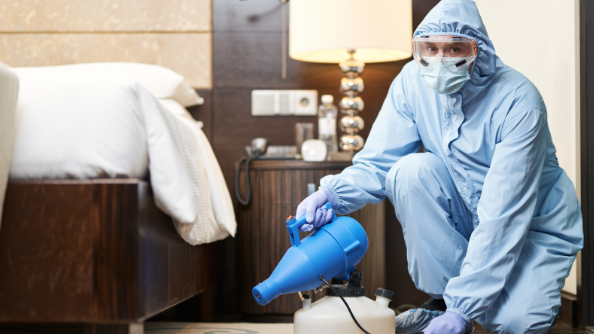
For straightforward household pest problems, professional treatment may begin at around S$140 based on Aardwolf’s current published HDB pricing.
More difficult infestations move into several hundred dollars because they require additional visits, monitoring, specialist equipment or more extensive treatment.
Structural termite programmes can move into the thousands.
This means there is no useful single answer such as:
“Pest control in Singapore costs S$150.”
A more accurate answer is:
Basic crawling-pest treatments may start around S$140, while multi-visit bed bug, rodent and termite programmes can cost several hundred to several thousand dollars depending on the treatment required.
The difference between a session, package, programme and annual contract should therefore be established before two quotations are compared.
How Much Does Ant Treatment Cost?
Aardwolf’s 2026 general price guide places one-off ant treatment from approximately S$140 for an HDB flat, increasing toward S$250 for a large bungalow.
Its published bi-monthly annual ant programmes range from roughly S520toS750 per year, depending on the property and scope.
The treatment cost changes according to how widespread the infestation is.
A small ant trail associated with one kitchen area is different from activity involving several rooms, built-in cabinets, wall voids and external areas.
The cheapest advertised ant-control price should therefore be checked against the number of areas and visits actually included.
How Much Does Cockroach Treatment Cost?
Cockroach treatment follows a similar price pattern.
Aardwolf’s current guide places a one-off HDB treatment from around S$140, rising toward approximately S$230 for a three-storey house.
Bi-monthly annual cockroach programmes are listed at approximately S520toS860 per year depending on the property and treatment requirements.
A light cockroach problem concentrated around one kitchen may require a smaller scope than an established infestation involving cabinets, drains, service areas and several rooms.
Recurring cockroach activity may also make scheduled treatment more economical than repeatedly purchasing separate one-off visits.
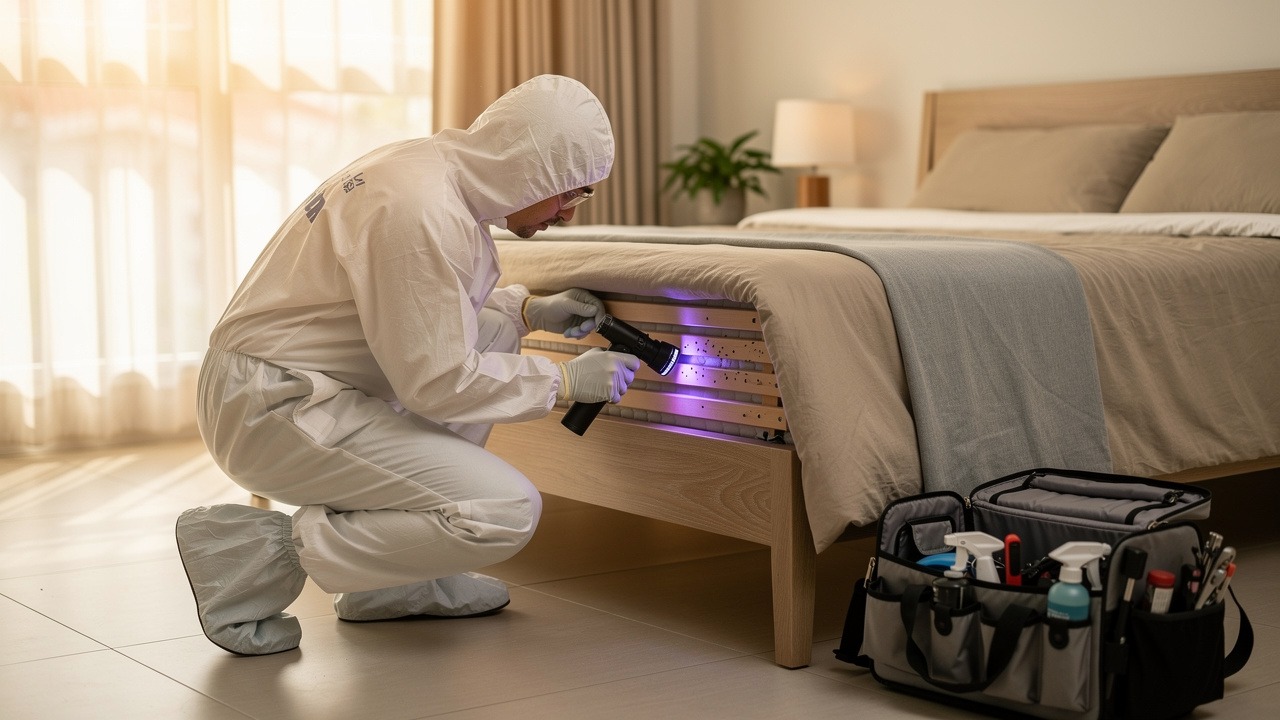
How Much Does Bed Bug Treatment Cost?
Bed bugs sit toward the higher end of residential pest-control pricing because the treatment often needs to cover beds, surrounding furniture and other harbourage areas.
Aardwolf’s 2026 guide places packages from approximately S$450 for a three-room HDB flat, with larger bungalow treatments reaching around S1,200toS1,500.
These figures are better viewed as programme or package prices rather than the cost of one spray.
Bed bug treatment often requires more than one visit because the technician needs to address hidden harbourage and determine whether activity continues after the initial treatment.
A problem confined to one room therefore cannot be compared directly with bed bugs that have spread through multiple bedrooms.
How Much Does Rodent Control Cost?
Aardwolf’s current pricing places a structured four-week HDB rodent programme at approximately S$450, while landed-home rodent work begins around S$500 or more.
The HDB programme typically involves repeated visits rather than a single trap placement.
Rodent control may include trapping or baiting, monitoring and investigation of the conditions allowing rodents to remain at the property.
Commercial programmes are normally customised because an F&B outlet, warehouse or shopping facility may contain several monitoring areas, refuse zones, loading points, kitchens and structural access routes.
The number of visits and monitoring points therefore matters as much as the initial treatment method.
How Much Does Termite Treatment Cost?
Termite pricing requires more care because a small localised timber treatment and a full subterranean termite programme are completely different services.
Aardwolf’s current termite-specific guidance gives approximately S150toS500 per visit for localised spot or wood treatment.
A full termite baiting programme is approximately S800toS3,000 or more, while liquid soil treatment can range from approximately S1,000toS3,500 or more.
These method-specific figures are more useful for budgeting than relying on a single generic termite “per-session” number.
Subterranean termite control around a large landed house can require bait stations, soil work and continuing monitoring.
A drywood infestation confined to one piece of timber may require a much smaller treatment.
The termite species and treatment direction should therefore be established before price comparisons are made.
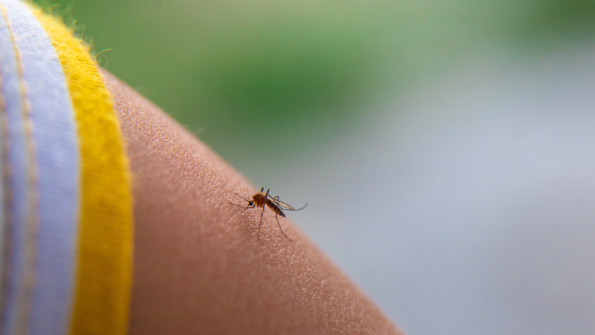
How Much Does Mosquito Pest Control Cost?
Aardwolf’s current 2026 guide places mosquito fogging or larviciding at approximately S70toS150 per session.
The service scope matters because fogging and larviciding do not do the same job.
Fogging primarily targets adult mosquitoes, while larviciding targets immature mosquitoes developing in suitable water.
A property with persistent mosquito activity may therefore need breeding-site inspection and source reduction rather than simply purchasing repeated fogging sessions.
For larger commercial or managed properties, mosquito control may form part of a recurring pest-management programme rather than being purchased one session at a time.
How Much Does Fly Treatment Cost?
Aardwolf’s published guide lists fly treatment at approximately S80toS100 per session.
For F&B businesses, wet-market environments and other premises with ongoing fly pressure, treatment may instead form part of a broader recurring pest-management programme.
The final cost can therefore depend on whether the requirement is one localised treatment or continuing management across food-preparation, refuse and service areas.
Why Does Property Type Affect Pest Control Prices?
Property type affects the amount of space technicians need to inspect, the number of potential pest harbourages, accessibility and the amount of treatment required.
HDB Flats
HDB flats often sit near the lower end of residential pricing because the floor area is generally smaller than that of landed homes.
Aardwolf’s published starting price of around S$140 for basic ant or cockroach treatment illustrates this.
However, unit size alone does not determine cost.
Built-in cabinets, false ceilings, severe infestation, clutter and difficult access can increase the treatment scope.
Bed bugs and rodents are also more expensive than basic crawling insects because their programmes usually require several visits or broader investigation.
Condominiums
Condominium pricing can resemble HDB pricing where unit size and infestation conditions are similar.
However, larger floor plans, balconies, private outdoor areas and access arrangements can increase the treatment scope.
There can also be a distinction between pest activity inside the individual unit and conditions originating from common property.
Paying repeatedly to treat one unit will not necessarily solve a pest problem if the supporting condition is outside that unit.
Landed Homes
Landed properties commonly cost more because technicians may need to inspect several storeys, gardens, roof spaces, external perimeters, drains and soil-contact areas.
Aardwolf’s general guide shows this difference clearly: one-off ant treatment can rise from around S140foranHDBflattoapproximatelyS250 for a large bungalow, while large bungalow bed bug packages can reach around S$1,500.
Termite treatment can show an even larger difference because landed properties may require baiting or extensive soil treatment around the structure.
Commercial and F&B Properties
Commercial pest-control pricing is generally more customised.
Restaurants, warehouses, offices, retail outlets and industrial facilities may contain several treatment zones, refuse areas, loading bays, kitchens and operational restrictions.
The service may also require regular inspection, monitoring, reporting and corrective recommendations.
For this reason, comparing a commercial pest-management contract with a S$140 residential one-off treatment is rarely meaningful.
What Is Usually Included in a Pest Control Price?
This is one of the most important questions to ask before comparing quotations.
A price may include only treatment, or it may include inspection, treatment and one or more follow-up visits.
For rodents, the price may include several weeks of trap or bait monitoring.
For termites, a baiting programme may include station installation, monitoring and bait replenishment.
For bed bugs, the package may include more than one treatment visit.
For commercial pest management, service reports and scheduled monitoring may form part of the contract.
A useful quotation should therefore state which pest is being treated, which areas are included, which treatment method will be used, how many visits are included and what happens if activity continues.
Two S$200 quotations are not necessarily equivalent if one includes a single treatment and the other includes inspection and follow-up.
Is There Usually an Inspection or Call-Out Fee?
There is no universal Singapore inspection or call-out fee that applies to every pest-control company.
Some providers may charge separately for assessment, while others may include the inspection within the treatment price or credit the assessment fee toward the eventual service.
Complex inspections may also be treated differently from straightforward household treatments.
The safest approach is to ask:
Is there a separate inspection or call-out charge, and if I proceed with treatment, is that amount included or credited toward the final bill?
Do not assume that an inspection is free unless the quotation explicitly says so.
Does Pest Control Pricing Include GST?

Do not assume that every advertised pest-control price includes GST.
The quotation should clearly state whether the figure is GST-inclusive or GST-exclusive and whether any other charges may be added.
This matters when comparing providers because a lower headline price can become more expensive once GST, additional visits, special equipment or excluded work is added.
The most useful comparison is the final amount payable for the actual service scope, not simply the number appearing in the advertisement.
What Other Costs Should You Clarify Before Treatment?
Follow-up visits deserve particular attention.
Ask whether additional visits are included in the package or charged separately.
For termite programmes, clarify whether monitoring and bait replenishment form part of the quoted price.
For rodents, establish whether proofing or structural sealing is included or merely recommended for separate repair work.
For bed bugs, determine how many treatments and rooms are covered.
For larger jobs, customers should also clarify whether repair, reinstatement or replacement of pest-damaged materials is excluded.
A quotation is more transparent when these conditions are known before work begins.
What Factors Affect the Final Pest Control Quote?
Pest type is one of the largest price drivers.
Ants and cockroaches can sit near the lower end of treatment pricing, while bed bugs, rodents and termites generally require more labour, more visits or more specialised treatment.
Infestation severity also matters.
A recently detected problem in one location is usually easier to manage than an infestation that has spread through several rooms or remained hidden for months.
Property size affects both inspection and treatment time.
A technician working in a compact apartment does not have the same number of rooms, external areas and potential harbourages to assess as one working across a large landed property.
Accessibility can also raise the scope where pest activity occurs inside false ceilings, roof spaces, built-in furniture, gardens or other difficult areas.
Treatment method produces another substantial price difference.
Targeted gel or bait applications do not require the same time, equipment or monitoring as extensive termite baiting, soil treatment or specialist bed bug programmes.
Finally, service frequency matters because recurring contracts divide inspection and preventive work across multiple visits rather than treating each appointment as an independent emergency call-out.
Is a One-Off Treatment or Annual Pest Control Contract Better Value?
One-off treatment makes sense when the pest issue is isolated and the conditions supporting it have been corrected.
An annual or recurring programme is more suitable where pest pressure remains predictable throughout the year.
Aardwolf’s published cockroach example illustrates the difference.
A one-off HDB treatment is around S$140, while a bi-monthly programme can cost around S$520 for six visits, equivalent to roughly S$87 per scheduled visit.
The annual programme costs more in total because six services are being provided.
Its value comes from the lower approximate cost per scheduled visit and continuing monitoring.
The decision should therefore be based on risk and recurrence, not simply on which option has the smallest total number.
Which Pest Is Usually the Cheapest to Treat?
Based on Aardwolf’s published 2026 figures, straightforward mosquito or fly sessions can sit at the lower end on a per-session basis, at approximately S70toS150 for mosquito fogging or larviciding and around S80toS100 for fly treatment.
That does not mean these pests always produce the lowest total bill.
Repeated mosquito treatments across a large site or recurring commercial fly management can cost more overall than one household ant treatment.
Again, session price and total programme price are different questions.
Which Pest Is Usually the Most Expensive to Treat?
Termites and bed bugs are generally among the higher-cost residential pests in Aardwolf’s current published ranges.
Large bed bug packages can reach approximately S1,200toS1,500, while full termite baiting can exceed S3,000andextensiveliquidsoiltreatmentcanexceedS3,500.
Termite costs become particularly high because treatment can involve structural areas, bait stations, drilling, soil treatment and extended monitoring.
Bed bugs can also become expensive when several rooms require repeated treatment.
How Should You Compare Pest Control Quotations?
Compare the scope first and the price second.
Start by confirming that both providers are quoting for the same pest and treatment area.
Then compare the treatment method, number of visits, follow-up policy and monitoring included.
Ask whether the price includes inspection, GST and any applicable callback or re-treatment.
For multi-visit work, confirm exactly how long the programme lasts.
For termite work, compare treatment methods rather than simply comparing the final dollar amount.
A S300localisedtreatmentandaS2,000 colony-management programme are not competing quotations if they are solving different problems.
The best comparison is therefore:
same pest → same treatment objective → similar scope → similar follow-up → final payable price.
Does a Pest Control Company Need to Be Licensed by NEA?
The answer depends on the pest and type of work.
Under Singapore’s Control of Vectors and Pesticides Act, NEA states that only licensed or registered Vector Control Operators may provide vector-control services for mosquitoes, flies, cockroaches, rats and rat fleas. Public-health pesticide products used against these vectors must also be registered with NEA.
NEA also requires VCOs to deploy appropriately licensed Vector Control Technicians or certified Vector Control Workers and to maintain records of inspections, findings and treatment work.
This requirement should not be carelessly extended to every pest.
Ants, bed bugs and termites do not fall under that same vector list simply because they are pests.
Customers should therefore avoid using the generic phrase “NEA-licensed pest-control company” as though one licensing rule applies identically to all pest services.
For regulated vector-control work, verify the provider’s VCO status.
For other pest work, evaluate the provider’s pest-specific experience, proposed treatment, applicable product or environmental requirements, scope and follow-up arrangements.
Why Consider Aardwolf Pestkare?
Aardwolf Pestkare was established in Singapore in 1997 and provides pest-management services across residential, commercial and industrial properties.
Its services cover common pest problems including ants, cockroaches, bed bugs, rodents, mosquitoes, flies and termites.
The value of a broad service range is not that every pest receives the same package.
The opposite should be true.
A S140anttreatment,aS450 four-week rodent programme and a S$3,000 termite baiting programme represent very different technical scopes.
Aardwolf’s current pricing material therefore works best as a starting reference rather than a replacement for diagnosis and quotation.
For price-sensitive customers, the useful question is not simply:
“Which company is cheapest?”
It is:
“What appropriate treatment, monitoring and follow-up am I receiving for the final amount I will pay?”
Frequently Asked Questions About Pest Control Prices in Singapore
How Much Does Pest Control Cost for an HDB Flat?
Aardwolf’s 2026 guide places basic one-off ant and cockroach treatments from around S$140 for an HDB flat. Bed bug packages start around S450,whileitsstructuredfour-weekHDBrodentprogrammeisapproximatelyS450. The final price depends on the pest, infestation severity, unit size and treatment scope.
What Is the Cheapest Pest Control Treatment?
Aardwolf’s current published ranges place fly treatment around S80toS100 per session and mosquito fogging or larviciding around S70toS150 per session. However, the lowest per-session rate does not necessarily mean the lowest total programme cost.
What Is the Most Expensive Pest to Treat?
Extensive termite programmes are among the highest current published ranges. Aardwolf lists termite baiting at approximately S800toS3,000+ and liquid soil treatment at around S1,000toS3,500+. Large bed bug treatments can also reach around S$1,500.
Why Does Termite Treatment Cost More?
Termite work may involve species identification, inspection, bait stations, drilling, soil treatment and extended monitoring. The visible termite activity can represent only part of a larger infestation, so treatment can be considerably more involved than a single surface application.
Does Pest Control Pricing Include Follow-Up Visits?
It depends on the programme. One-off services may include only a single treatment, while rodent, bed bug and termite programmes may include several visits or monitoring sessions. The quotation should state the number of visits and whether additional treatment is included.
Does Pest Control Pricing Include GST?
Do not assume that it does. Confirm whether the written quotation is GST-inclusive or GST-exclusive and whether any other fees can be added.
Is There an Inspection Fee?
Inspection policies vary between providers and pest types. Ask whether assessment carries a separate charge and whether that charge is credited toward treatment if you proceed.
Is Annual Pest Control Cheaper Than One-Off Treatment?
It can be cheaper on a per-visit basis where recurring treatment is genuinely needed. Aardwolf’s example compares around S140foraone-offHDBcockroachtreatmentwithapproximatelyS520 for six bi-monthly visits, or roughly S$87 per scheduled visit.
Are Pest Control Prices Regulated in Singapore?
NEA regulates vector-control operators, personnel and applicable public-health pesticide products, but it does not publish a fixed retail price list that all pest-control providers must charge. Customers should therefore compare quotations according to scope as well as price.
How Do I Know Whether a Pest Control Company Is Properly Licensed?
For vector-control services involving mosquitoes, flies, cockroaches, rats or rat fleas, verify that the company is an appropriately registered VCO. NEA also requires the personnel performing vector-control work to hold the applicable VCT licence or VCW certification.
Should I Get Several Pest Control Quotations?
For expensive or complex work, comparing more than one quotation can be useful. However, compare equivalent scopes. A lower price is not necessarily cheaper if it excludes inspection, monitoring or follow-up that another quotation includes.
Conclusion
A useful pest control Singapore price list should help you understand the likely scale of the cost, not suggest that every infestation has one fixed price.
Aardwolf’s current 2026 published pricing places basic ant and cockroach treatment from approximately S$140, bed bug packages from approximately S$450, a four-week HDB rodent programme at around S$450, mosquito treatment at around S70toS150 per session and fly treatment at approximately S80toS100 per session.
For termites, method-specific pricing is more useful: approximately S150toS500 for localised spot or wood treatment, S800toS3,000+ for termite baiting and S1,000toS3,500+ for liquid soil treatment.
Those numbers are only the starting point.
The final quotation depends on pest type, infestation extent, property size, treatment method, accessibility, number of visits, monitoring and follow-up.
Before accepting a quotation, establish exactly what is included, whether GST or inspection charges apply and what happens if pest activity continues after the initial treatment.
For vector pests such as mosquitoes, flies, cockroaches and rats, also verify that the work is being provided through Singapore’s applicable NEA vector-control framework.
The cheapest quotation is not automatically poor value, and the highest quotation is not automatically the best.
The useful comparison is:
What problem is being treated, what work is included, how long does the programme last, and what is the final amount you will actually pay?