Introduction
Termite baits can look slow, so it helps to know when they are actually working. In Singapore’s humid climate, that delay often worries property owners who fear growing damage and surprise repair bills.
Good news: when stations attract live termites, bait starts disappearing, mud tubes dry up, and new damage slows or stops, it shows the termite baits are doing their job. You can expect a program that begins with inspection, followed by several months of monitoring and feeding before the colony collapses.
This guide explains how termite baits work, the types of stations, how they compare with liquid treatments, what a typical program looks like in Singapore, and how to pick a reliable provider such as Aardwolf Pestkare. Keep reading to see how to stop termites without guesswork or nasty surprises.
Key Takeaways
Termite bait programs can feel complex at first glance. Use these quick points as a checklist while you read.
- Bait systems target the hidden colony, not just the building perimeter. Worker termites carry the toxicant back to the nest, which is why results take time.
- In-ground stations sit around the property to intercept foraging termites. Above-ground units go straight on live spots indoors. Many Singapore sites use both.
- Liquid termiticides act faster than baiting programs. Bait systems trade speed for less disruption and built‑in monitoring. Many serious cases use a mix of both methods.
- A professional baiting program has clear stages: inspection, installation, monitoring, feeding, and long‑term checks. Every visit should come with a written report.
- In Singapore, always check for an NEA license. Ask about termite species identification, warranty, safety measures, and reporting so you can compare providers fairly.
What Are Termite Baits and How Do They Work?
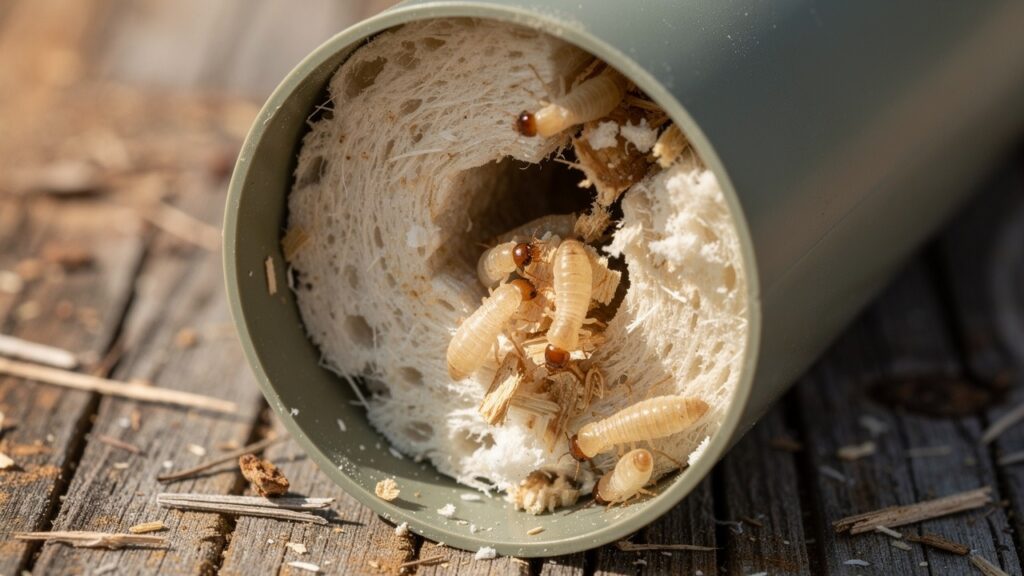
Termite baits are discreet feeding stations that lure worker termites, spread a slow toxin, and signal success through falling activity. When stations attract termites that keep feeding while new damage declines, the system is doing what it is designed to do.
Each bait station contains a cellulose material that termites like to eat. Worker termites from subterranean species such as Coptotermes gestroi find the station, feed, then share that food with nestmates through trophallaxis, the natural food‑sharing process. According to the US Environmental Protection Agency, bait systems use far smaller quantities of active ingredient than full soil treatments, which makes them a lower impact choice for many sites (US EPA).
The toxic part of most termite baits is an insect growth regulator (IGR). Common examples include hexaflumuron, noviflumuron, diflubenzuron, and chlorfluazuron, used in products from brands such as Sentricon and Exterra. These chemicals do not kill termites on contact. Instead, they block termites from forming new exoskeletons when they molt, so the insects die the next time they try to grow.
That delay is not a flaw; it is the whole strategy. Because termites feel normal after eating the bait, they keep feeding and keep sharing food with the queen, soldiers, and young. Field work published in the Journal of Economic Entomology reports colony elimination rates above 90 percent when bait stations are checked on schedule (Journal of Economic Entomology). Over several weeks to a few months, the colony stops replacing workers, numbers crash, and activity on your property fades out.
For property owners, the key point is simple: surface sprays only hit termites they touch, but termite baits move through the whole colony network. For SME owners handling inventory, equipment, or fit‑out costs, removing the source not only the visible symptoms gives far better long‑term protection.
To recap, visible signs that bait is working often include:
- Less fresh mud tubing on walls, columns, or foundations
- Reduced sightings of live worker termites at previous hot spots
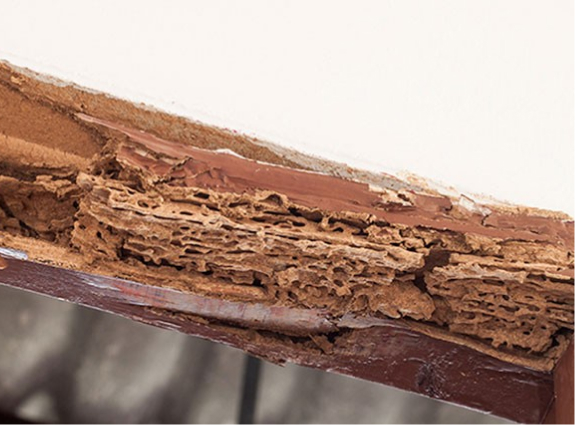
- No new timber damage around monitored areas
In-Ground vs. Above-Ground Termite Bait Stations: Which Type Do You Need?
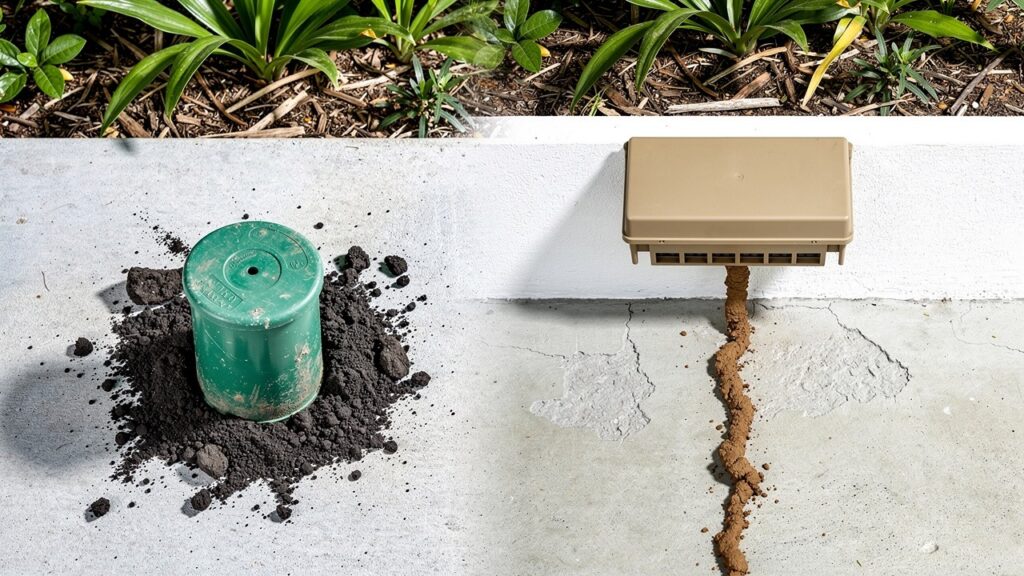
In‑ground and above‑ground termite bait stations use the same science, but they sit in different places and play different roles. The right mix depends on whether termites are already inside your building or still out in the soil.
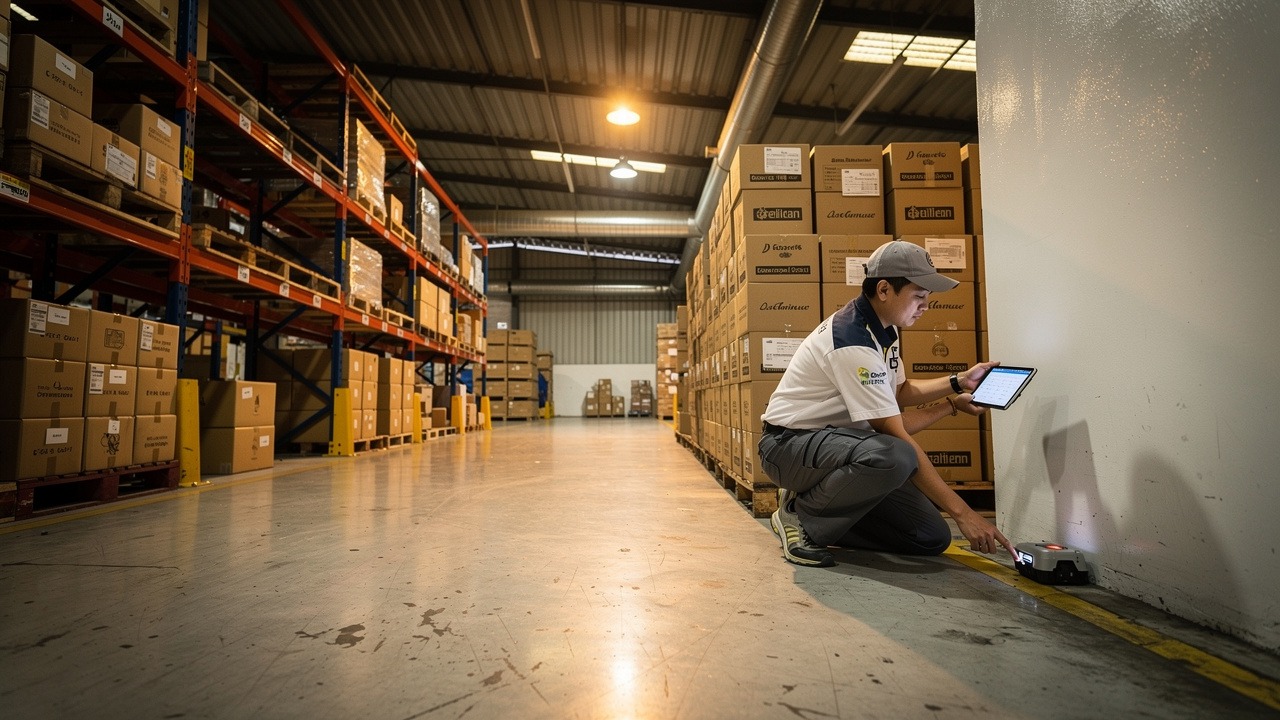
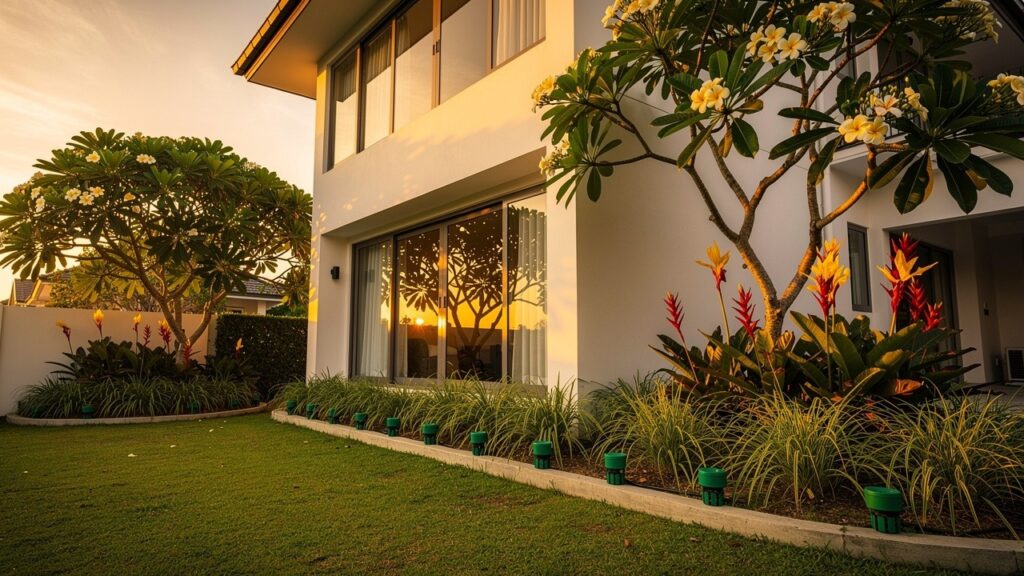
In-ground stations are buried around the perimeter, usually every two to three meters apart. They form a ring of monitors that pick up foraging workers before they reach structural timber, shelving, or stock. According to Sentricon installation guidelines, professional technicians check these stations every one to three months and add bait where termites are active (Sentricon). For many offices, warehouses, and ground‑floor shops, this approach acts as both early warning and treatment.
Above-ground stations sit directly over known activity. A technician fixes a plastic box over mud tubes, skirting boards, beams, or partition walls where live termites are present. Inside is the same cellulose bait matrix, already loaded with active ingredient. Because termites are already feeding there, above‑ground units can start pushing toxicant into the colony within days.
So when do you use which type? Here is a simple guide:
- Use mainly in-ground stations when you want preventive coverage around a sound building. This works well for SMEs that just signed a lease and want peace of mind, or for sites with past termite history but no current indoor damage.
- Add above-ground stations when termites have already invaded interior timber — for example live mud tubes on walls, hollow‑sounding door frames, or damaged pallets. Above‑ground units hit those hot spots while in‑ground units protect the rest of the site.
- Combine both types for large or high‑value properties in Singapore’s dense built areas. Subterranean colonies here can spread under several units or blocks, so a ring of in‑ground stations plus targeted above‑ground boxes gives both reach and speed.
Termite Baits vs. Liquid Termiticides: What’s the Better Investment for Your Property?
Comparing termite baits with liquid termiticides starts with one idea: baits aim to kill the colony, while liquids aim to shield the structure. For a Singapore SME, the better choice depends on how fast protection is needed and how much disruption the site can handle.
Here is a side‑by‑side view:
| Factor | Termite Bait Systems | Liquid Termiticides |
| Main Target | Colony elimination | Barrier around the building |
| Application | Stations in soil or on surfaces | Drilling and soil injection |
| Chemical Volume | Small amounts of IGR | Large volumes injected into soil |
| Speed Of Effect | Weeks to months | Days to establish a barrier |
| Disruption | Minimal, discreet stations | Noisy drilling, possible downtime |
| Monitoring | Ongoing inspections built in | Often one visit, limited follow‑up |
Research into who bears climate-related physical risk underscores that property owners not insurers absorb most of the financial burden from pest and environmental damage, making proactive termite control a critical investment rather than an optional expense. Seen against those numbers, spending on a careful control program is more like risk management than a simple maintenance bill.
“Termites cause more damage to homes than fires, floods and storms combined.”
— National Pest Management Association
For many commercial sites, termite baits fit better with daily operations; the effective reduction in natural non-target impacts from targeted bait station designs further supports their appeal as a low-disruption, environmentally considerate choice over broad-application chemical treatments. Restaurants, food production units, clinics, and childcare centers often prefer baiting because stations can be tucked out of sight with almost no smell or noise.
There is a place for liquid treatments too. Where termites are attacking main beams or electrical risers, technicians may first apply a non‑repellent liquid such as fipronil to stop immediate damage, then run bait stations to reach the colony. Think of liquid as a short‑term shield and termite baits as the longer‑range strike. When a provider explains both clearly, with costs and timelines, you can select the mix that fits your cash flow and risk level.
What To Expect From a Professional Termite Baiting Program in Singapore
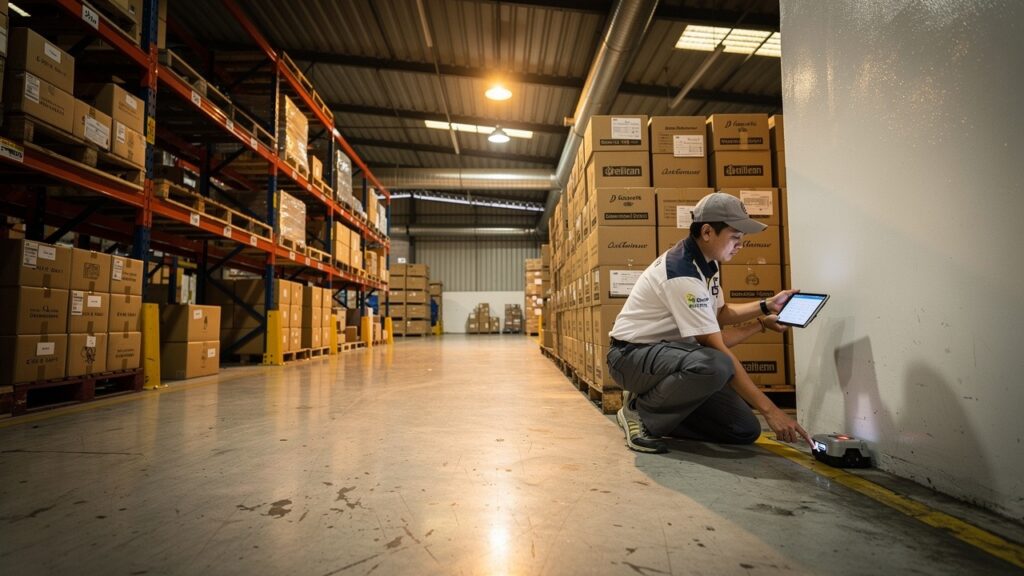
A professional termite baiting program in Singapore follows clear stages, from inspection to long‑term monitoring. Full colony elimination usually takes several weeks to a few months, depending on colony size and how quickly workers find the bait.
Singapore’s warm, wet climate keeps termites active all year. Research into efficacy of attractive targeted bait stations in tropical climates confirms that bait programs must account for year-round activity driven by heat and humidity, which is precisely why Singapore’s wet environment demands ongoing professional monitoring rather than one-time treatments. That constant pressure is why reputable companies treat baiting as an ongoing program, not a one‑time visit.
Here is what a six‑step program normally looks like:
- Initial Inspection
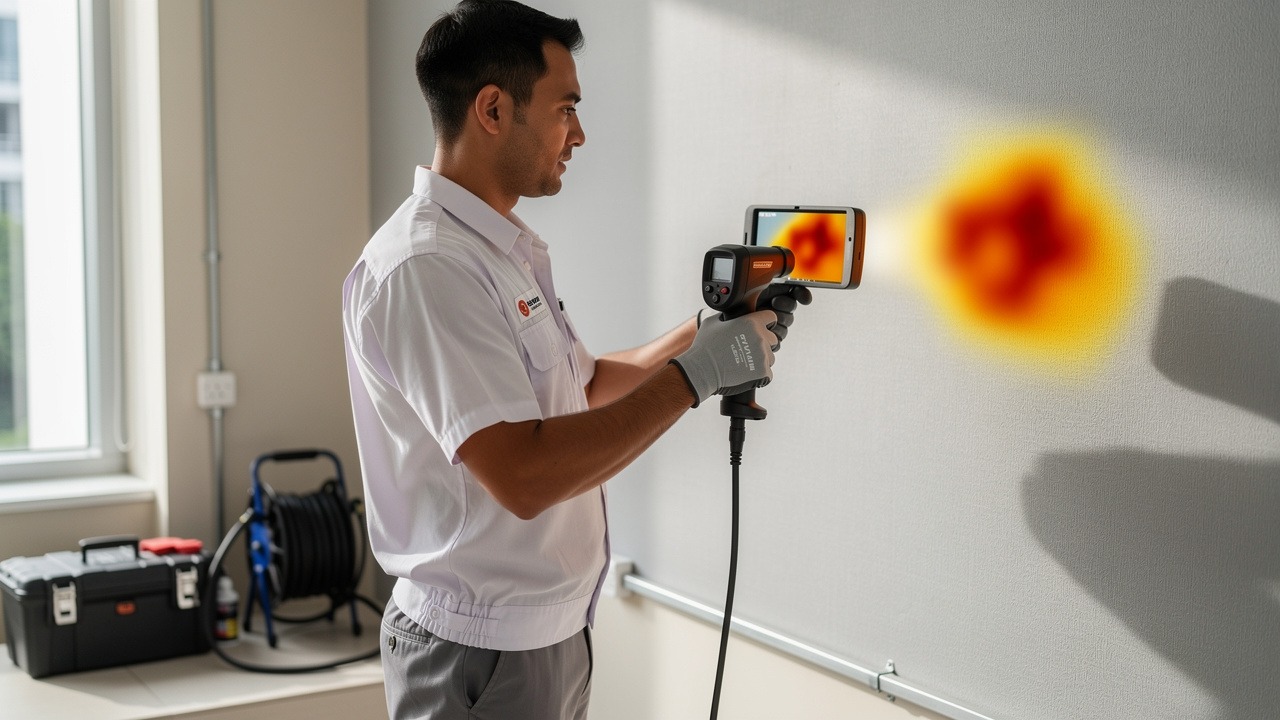
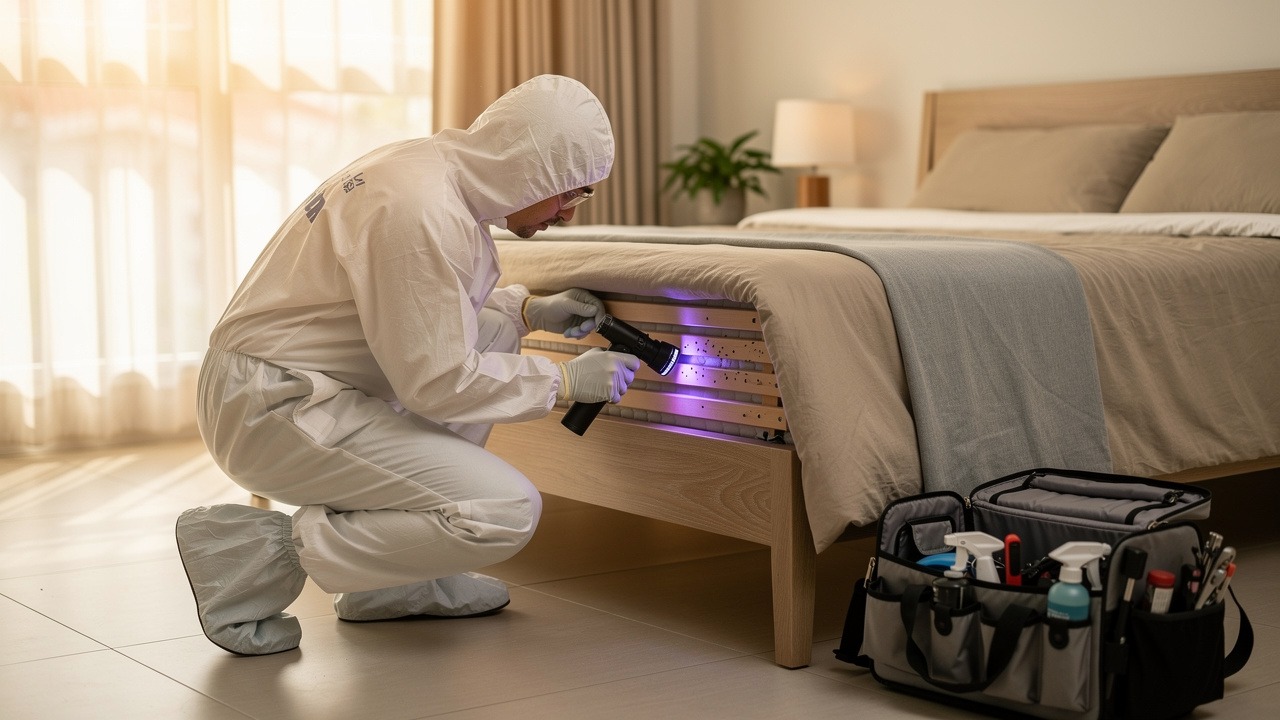
An NEA‑licensed technician from a company such as Aardwolf Pestkare checks the whole property, inside and outside. They look for mud tubes, damaged timber, high moisture readings, and entry points, and identify the termite species because bait layout depends on it. - Station Installation
In‑ground stations go into the soil around the building at spaced intervals. Where there is live indoor activity, above‑ground stations are fixed over those spots. The technician maps every station so future visits are consistent and traceable. - Monitoring Phase
In the first few months, visits are usually monthly. The technician opens each station, records whether termites are present, and checks moisture and bait condition. When termites appear, the plain timber or monitor is replaced with active bait. - Active Baiting Phase
Once termites start feeding, visits may stay monthly or move slightly closer together. Bait is topped up so workers never run out of treated food. Reports should show whether feeding is rising, steady, or falling. - Colony Elimination Confirmation
After a period, stations that had heavy activity fall quiet. No new mud tubes appear on walls or foundations, and damaged areas show no live termites. When all stations stay inactive for several visits, the provider records the colony as eliminated. - Ongoing Monitoring
Stations stay in place as a long‑term early warning system. Visits often move to a quarterly schedule, which matches the year‑round pressure in Singapore noted by the National Environment Agency (National Environment Agency).
Through every step, you should receive written or digital reports after each visit. These records make it easier to hold your provider accountable and to show future tenants, landlords, or auditors that termite risk is under control.
How To Choose a Trusted Termite Bait Service Provider in Singapore
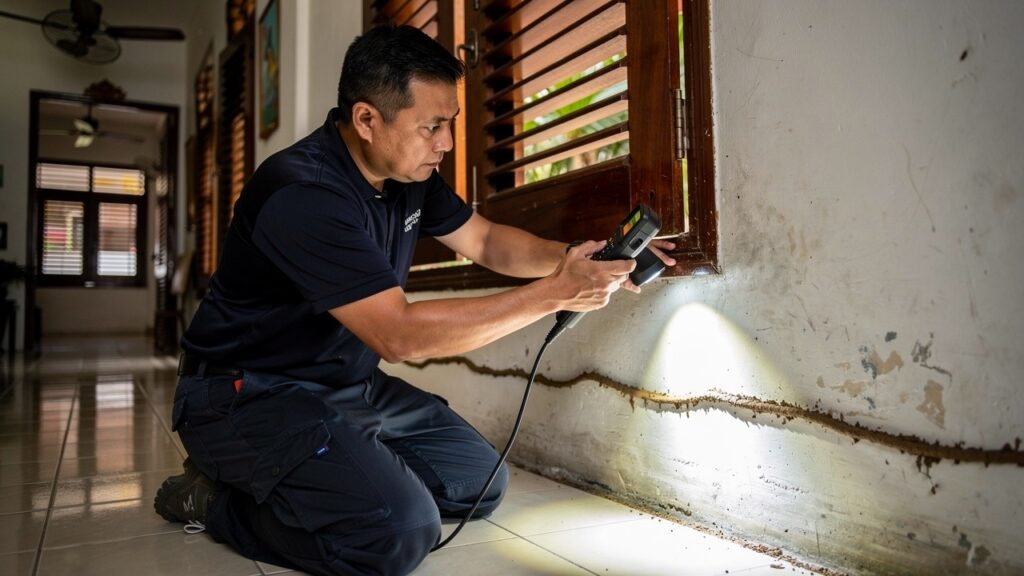
Choosing a termite bait provider in Singapore matters as much as the choice between baits and liquids. The same stations can work very well under a diligent company or poorly under a careless one.
Start with licensing and training. In Singapore, pest control companies must hold a valid license from the National Environment Agency, and technicians must complete approved courses. Aardwolf Pestkare (S) Pte Ltd, for example, operates from 26 Third Lok Yang Road and runs its own training facility recognised as a Certified On‑the‑Job Training Centre by ITE. The company joined the global Rollins Inc. group in 2018, which reflects ongoing investment in staff skills, systems, and technology.
“When Quality Pest Management Really Matters.”
— Aardwolf Pestkare
Next comes inspection quality and species identification. Your provider should explain clearly which termite species is present, how they confirmed it, and why a bait program suits that biology. If the first visit feels rushed, later work is unlikely to be detailed.
Reporting is another key filter. After every visit, you should receive a report listing each station, bait consumption, termite activity, and any new findings. Companies that use barcoded stations or app‑based logs make it easier for multi‑site SME owners to track risk and spot trends across locations.
Warranties also matter. Ask whether the contract includes retreatment if termites return within a set period and what conditions could cancel that promise. According to guidance from the National Pest Management Association, service contracts with clear, written terms reduce later disputes between clients and providers (National Pest Management Association).
Safety and commercial experience should round out your checks. Food and beverage outlets, childcare centers, and clinics need providers who understand audits, hygiene rules, and after‑hours work. Aardwolf Pestkare positions its work around quality pest management for both homes and commercial sites, with a focus on safety, technology, and environmental care.
The Bottom Line On Termite Baits for Singapore Property Owners
Termite baits give Singapore property owners a quiet, systematic way to wipe out hidden colonies with minimal disruption. They use tiny amounts of growth regulators, ride on termites’ own food‑sharing habits, and keep watching your site long after the first colony is gone.
For many SMEs, that mix of colony elimination, simple monitoring, and business‑friendly installation makes termite baiting systems a smart operational choice. An NEA‑licensed partner such as Aardwolf Pestkare can design and maintain a program that fits your specific premises, from homes and shophouses to warehouses and factories.
Do not wait for sagging floors or damaged stock to force your hand. Schedule a professional inspection, compare providers using the criteria in this guide, and lock in long‑term protection before small signs become large repair bills.
Frequently Asked Questions
Question 1: How long does it take for termite baits to eliminate a colony?
Most colonies are eliminated in several weeks to a few months. Large or multiple colonies can take longer, especially in Singapore’s year‑round termite season. Regular professional monitoring and steady bait consumption are the main factors that shorten the timeline.
Question 2: Are termite bait systems safe for food and beverage businesses?
Yes. IGR‑based bait systems use very small doses of active ingredient with low risk to people and animals. Stations are sealed and placed out of food handling zones. Your provider should always share active ingredient names and safety data sheets when asked.
Question 3: Can termite bait stations be used as a preventive measure before an infestation occurs?
Yes. In‑ground stations are often installed as an early warning network around uninfested buildings. They detect foraging termites before major damage develops. When activity appears, stations are switched from monitoring to active baiting to stop the colony.
Question 4: How often do termite bait stations need to be inspected?
Most Singapore programs use monthly visits during the early baiting phase, then move to quarterly checks after elimination. Tropical conditions keep termites active, so regular visits are very important. Your contract should state the inspection schedule in writing.
Question 5: What happens if termites return after a baiting program is completed?
If termites return, the provider should investigate whether they are from a new colony or a surviving one. Many reputable companies offer renewable annual warranties that include retreatment if activity restarts. Review these terms carefully and keep all service reports for future reference.